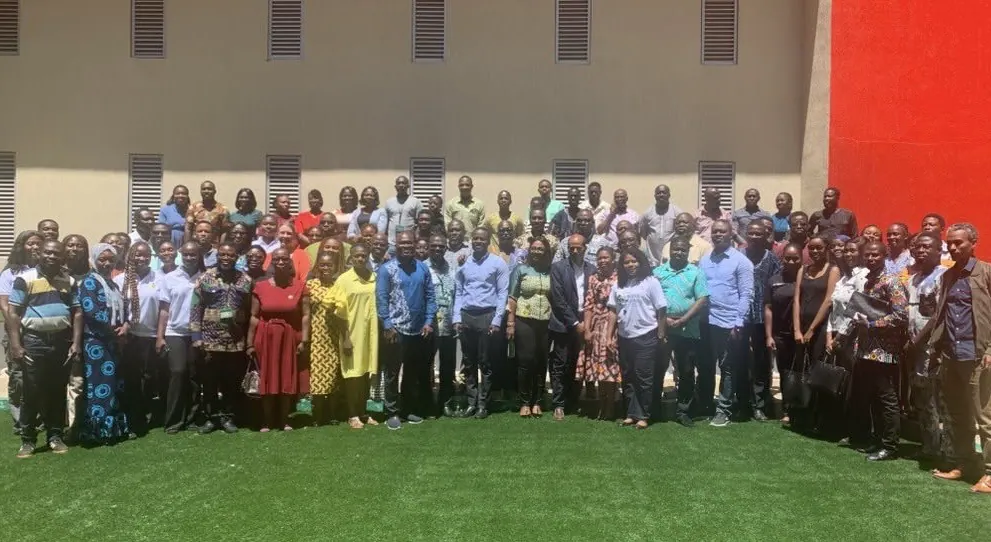
The Kwame Nkrumah University of Science and Technology (KNUST) has taken the lead in developing a comprehensive National Food Composition Database to transform Ghana's nutrition, health, and food systems. On October 6, the university hosted a stakeholder workshop under the Periodic Table of Food Initiative (PTFI). The workshop aimed to bring together stakeholders to discuss the development of the database. Professor Kwadwo Mensah-Darkwa of the Department of Materials Engineering, KNUST, represented the Vice-Chancellor at the event. He emphasized the need for a national database to address the limitations of existing food composition tables.
Ghana's existing food composition tables have significant limitations, capturing only a limited number of nutrients. Many values are derived from foods grown in other countries and under different soil conditions. This can lead to inaccurate dietary guidance and make it challenging for producers to prove the value of their products. Professor Mensah-Darkwa noted that food quality is linked to how food is produced, and the condition of the soil and environment influences what ultimately ends up on the plate. He called on regulators and policymakers to define the evidence required for standards and reviews.
The PTFI is helping to bridge the data gap through its Centres of Excellence, where a network of African scientists, including researchers from KNUST, analyze African foods in greater depth. Professor Mensah-Darkwa urged the appropriate ministries to provide a national home, sustained policy support, and investment for the database. He also tasked industry players to identify the data needed to support sourcing, formulation, and labeling. Additionally, he urged researchers to uphold the highest standards to ensure that Ghana's data gains credibility beyond its borders.
Professor Caleb Frimpong Kesse, Head of the Department of Biochemistry, highlighted the rapid changes in food systems in Africa, driven by population growth, urbanization, climate change, and evolving patterns of food production and consumption. While these changes present challenges to nutrition and public health, they also offer opportunities for African scientists to generate evidence to support healthier, more sustainable, and resilient food systems. Professor Kesse described the PTFI as an innovative approach that systematically characterizes the molecular composition of foods.
The PTFI approach has enormous potential for Africa, given the continent's exceptional diversity of crops, traditional foods, indigenous food systems, and ecological environments. However, these remain insufficiently characterized at the molecular level. Professor Kesse called for interdisciplinary collaboration to address the complex relationship between food, health, and the planet. This collaboration is crucial to develop effective solutions to the challenges facing Ghana's food systems.
Professor Charles Apprey, a Professor of Nutrition, emphasized the need for continental learning to develop an African solution to nutritional challenges. He commended the PTFI Global team and its funders for their commitment to the initiative and belief in its vision. The development of a National Food Composition Database requires a collaborative effort from various stakeholders, including researchers, policymakers, and industry players.
The KNUST workshop aimed to bring together stakeholders to discuss the development of the National Food Composition Database. The database will provide critical information on the nutritional content of Ghanaian foods, enabling policymakers to make informed decisions about food policy and nutrition interventions. Key stakeholders, including researchers, policymakers, and industry players, are expected to work together to ensure the success of the initiative.
Key points
- KNUST leads push for Ghana’s own food composition database
- The database will address limitations of existing food composition tables
- The initiative requires collaboration from various stakeholders