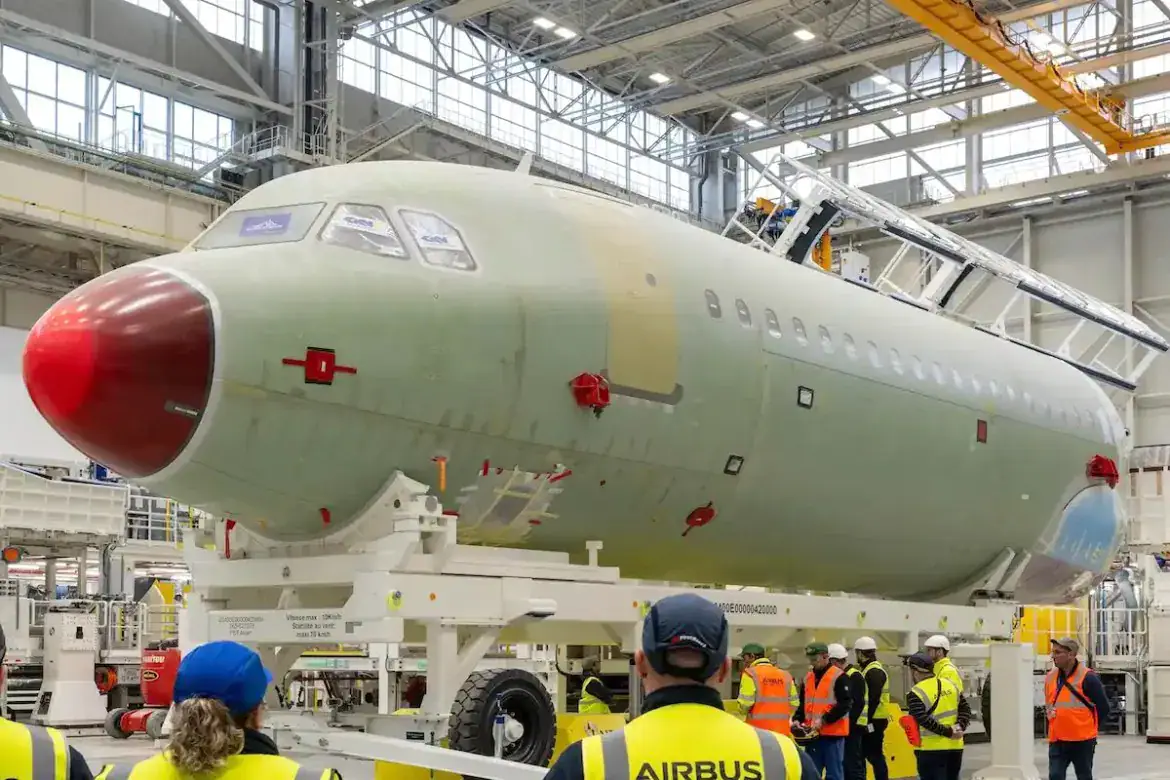
KLM Royal Dutch Airlines has dropped plans to take delivery of the Airbus A320neo as part of a broader restructuring effort. The Dutch carrier will instead focus on smaller Embraer E195-E2s to reshape its network. This decision was confirmed earlier this month, following a review of the airline's fleet strategy. The A320neos were initially part of a larger order from the Air France-KLM group, aimed at renewing narrowbody fleets across its airlines.
The fate of the A320neos has now been clarified, with Transavia set to take on the aircraft previously scheduled for KLM. Luchtvaartnieuws reports that 20 A320neos will be redirected to Transavia, while the A321neos will be retained by KLM. This shift in fleet strategy aims to drive profitability and simplify operations. KLM's decision to axe the A320neo plans was driven by a desire to better match network capacity with suitable aircraft.
KLM's initial order for 100 Airbus A320neo family jets, with options for a further 60, was aimed at addressing several areas of the business, including jets intended for KLM, Transavia Netherlands, and Transavia France. The airline began its narrowbody transition in 2024, taking delivery of its first A321neo in the second half of the year. The A320neos were expected to replace older Boeing 737s, but KLM has now opted for a different approach.
The Embraer E195-E2, with a capacity of 136 when configured for CityHopper, was identified as a more optimal jet for KLM's needs. This compares to the A320neo's capacity of around 180. The airline aims to simplify operations and improve cost management by reducing the utilization gap between its aircraft. By focusing on the larger A321neo and smaller Embraer jets, KLM aims to create a more streamlined fleet.
KLM will still operate the A320neo family, but with a focus on the larger A321neo. The Embraer E195-E2s will support European operations, providing a distinct line between the two fleets. This approach aims to avoid overcomplicating matters and ensure a clear role for each aircraft type. The A320neos originally intended for KLM will now be destined for Transavia France and Transavia Netherlands.
The changes to KLM's fleet strategy reflect the airline's efforts to adapt to a challenging operating climate. With profits lagging and financial concerns growing, decisions like axing the A320neo prove pivotal to giving the business a chance to stay on track. By prioritizing smaller, more efficient aircraft, KLM aims to improve its financial position and competitiveness.
The allocation of A320neos originally intended for KLM is still underway, but a large share has now found new homes. The airline's focus on Embraer jets and A321neos is expected to drive profitability and sustainability in the long term. As the aviation landscape continues to evolve, KLM's fleet strategy will play a critical role in shaping its future.
Key points
- KLM Royal Dutch Airlines has shelved plans to take delivery of the Airbus A320neo, opting for smaller Embraer E195-E2s instead.
Reporting sources
- KLM shelves plan to take delivery of the Airbus A320neo · The Tanzania Times – News from Tanzania, Africa, World, Breaking News, Weather, Environment and Climate Change