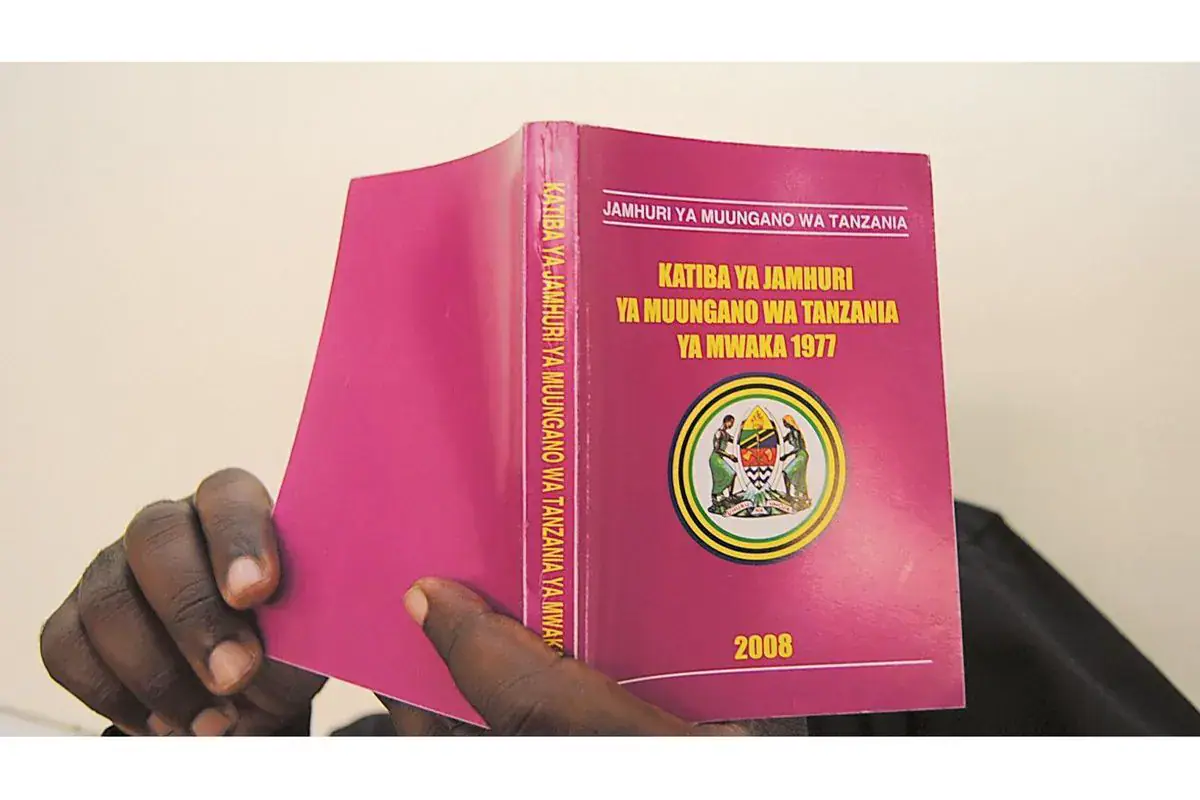
Tanzania's ambition to have a new or revised Constitution by 2028/29 is facing significant challenges. Analysts and civil society representatives say that the process will depend on political consensus, stakeholder cooperation, public participation, and the time available to complete the process. President Samia Suluhu Hassan announced on November 20, 2026, that the government was preparing to establish a Reconciliation Commission as part of efforts towards constitutional reforms.
The Reconciliation Commission will be established after consultations with various stakeholders, including religious institutions, political parties, and civil society organizations. President Samia said consultations with political parties and civil society organisations were progressing. Political analyst Dr Idd Mushi emphasized that stakeholders must agree on whether the country needs a new Constitution or amendments to the existing one.
Constitutional analyst Dr Stanley Maziku proposed reviewing the existing Constitution, the Warioba Commission's draft, and the Proposed Constitution of 2014 to identify areas of agreement and differences. He suggested that experts could reconcile competing proposals before allowing citizens to examine and make recommendations on a new draft. This approach could help expedite the process.
Political and governance analyst Dr Lazaro Swai suggested that preliminary consultations could be completed within two months if stakeholders agreed on the process early. He proposed holding public discussions across regions, gathering views through social media, and giving citizens a further two to three months to examine the draft before a referendum. However, he warned that public education is crucial.
Human rights activist Sauda Maimu identified the Union between Tanganyika and Zanzibar as one of the most contentious issues likely to shape the process. She emphasized that stakeholders needed to address the disagreements that emerged during the 2014 Constituent Assembly. The issue of transitional arrangements, including the time required to establish new institutions and appoint their leaders, also needs to be addressed.
Various stakeholders, including Chadema Mainland Deputy Secretary-General Amani Golugwa, religious leaders, and traditional institutions, have called for an inclusive process that reflects the interests of all Tanzanians. They emphasized that the Constitution must represent the entire population rather than the interests of politicians. Bishop William Mwamalanga and Sheikh Mussa Kundecha also stressed the importance of representation and inclusivity.
The proposed Constitution of 2014 provided for a four-year transitional period, during which laws would be amended and constitutional institutions established. However, that draft was never adopted. The current Constitution outlines a five-year term for the President and Parliament. The proposed transitional arrangements remain part of an earlier draft, not provisions of the current Constitution.
Key points
- The process will depend on political consensus, stakeholder cooperation, and public participation.
- Stakeholders must agree on whether the country needs a new Constitution or amendments to the existing one.
- The Constitution must represent the entire population rather than the interests of politicians.