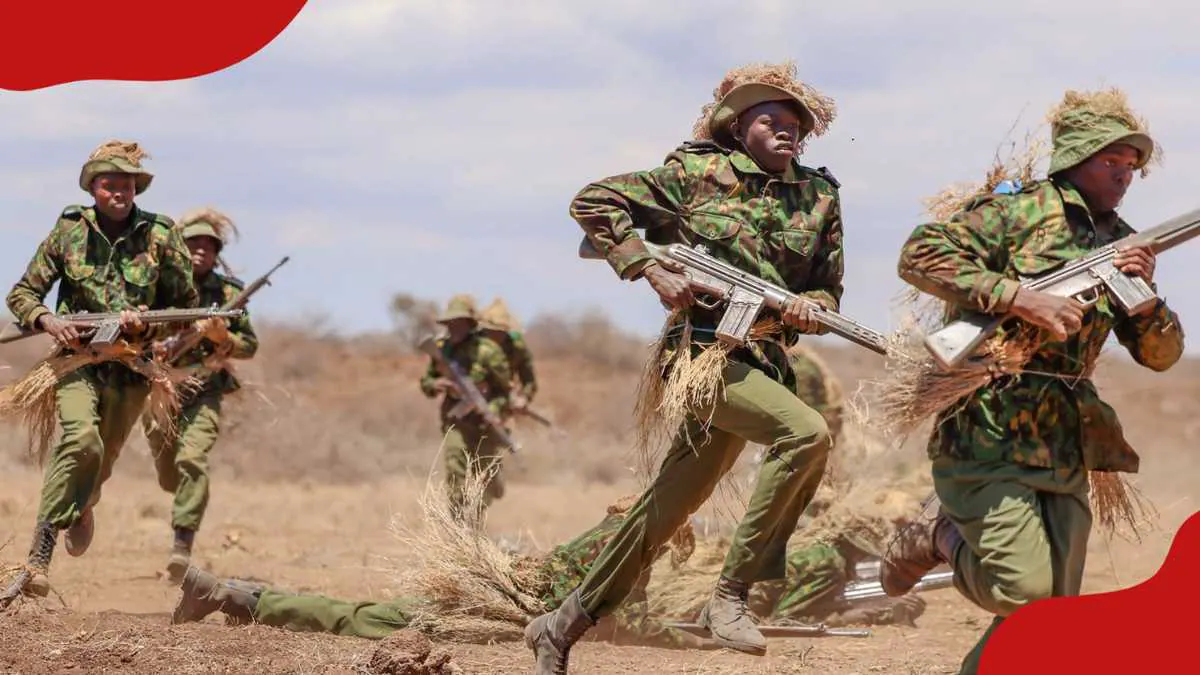
Interior Cabinet Secretary Kipchumba Murkomen on Wednesday, September 23, presided over the passing-out ceremony of 705 National Police Reservists (NPRs) at the Magado Field Training Camp in Meru County. The event marked a significant step in the government's efforts to bolster security in pastoralist and border regions. The newly graduated reservists, drawn from different communities and counties, completed a one-month intensive programme covering firearm handling, field operations, community policing, and crime prevention.
Among those who passed out were 11 chiefs and 7 women. The training of chiefs as police reservists follows a directive Murkomen issued during the Jukwaa la Usalama countrywide security tour, targeting areas facing persistent insecurity challenges. The ceremony brought together senior security officials, including Inspector General of Police Douglas Kanja, Deputy Inspector General of the Kenya Police Service Eliud Lagat, Deputy Inspector General of the Administration Police Service Gilbert Masengeli, National Police College Main Campus Commandant Munga Nyale, and Eastern Regional Commissioner Jacob Ouma.
Murkomen said the freshly trained reservists would be deployed to strengthen policing capacity in areas still grappling with cattle rustling and banditry, crimes that have long destabilised communities in northern and arid regions of Kenya. The government also outlined plans to improve the welfare of all serving NPRs. According to Murkomen, allowances are now being disbursed on time, while uniforms and boots are being issued to reservists.
The administration is additionally fast-tracking enrolment of NPRs into the Social Health Authority (SHA) and working to raise their monthly allowances. Murkomen said that all currently serving NPRs across the country would undergo similar training within the next eight months as part of a broader effort to standardise and elevate their operational capacity.
The NPR programme plays a complementary role to the regular police service, particularly in remote and underserved areas where maintaining a full-time police presence remains a logistical challenge. The reservists completed a one-month intensive training in firearm handling, field operations, and community policing. This was the first time NPRs from different communities and counties were being trained in one camp, enhancing camaraderie, intelligence sharing, and cohesion.
Murkomen noted that the training and arming of chiefs from areas with insecurity challenges is pursuant to his directive during the Jukwaa la Usalama countrywide tour. The Cabinet Secretary added that the government has committed to improving NPR welfare, including timely allowance payments, uniforms, boots, and enrolment into SHA.
The passing-out ceremony marked a significant milestone in the government's efforts to enhance security in the country. With the deployment of the newly trained NPRs, the government aims to strengthen policing capacity in areas facing security challenges. The event was attended by senior security officials and marked a major step towards bolstering security in pastoralist and border regions.
Key points
- The government has committed to improving NPR welfare, including timely allowance payments, uniforms, boots, and enrolment into SHA.
- 705 National Police Reservists completed a one-month intensive training in firearm handling, field operations, and community policing.
- The NPR programme plays a complementary role to the regular police service, particularly in remote and underserved areas.