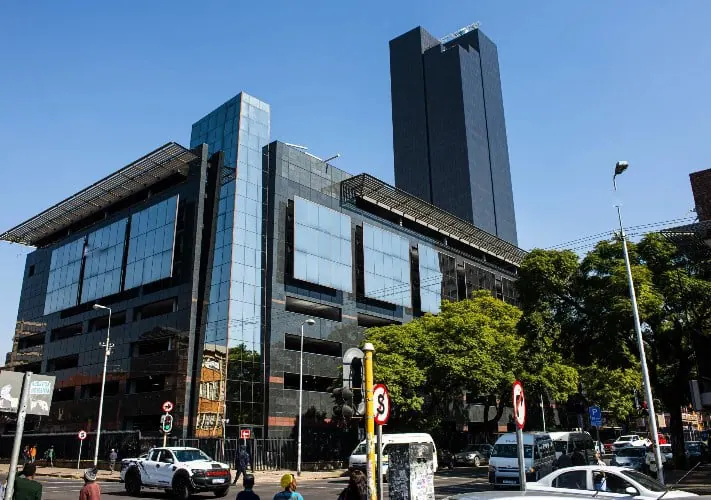
The South African Reserve Bank (SARB) has raised its main interest rate by 25 basis points to 7.25%, citing large and persistent price shocks due to the war related to Iran. This decision was made by the Monetary Policy Committee and aligns with the average expectations in a Reuters survey of economists. The move comes after major global central banks, including the US Federal Reserve, European Central Bank, and Bank of Japan, have also raised interest rates to address the impact of escalating hostilities in the Middle East.
SARB Governor Lesetja Kganyago stated that South Africa's economic growth recovery has slowed, while inflation has risen to levels far exceeding the bank's target range. He emphasized the importance of returning inflation to the target level of 3% as recent pressures from fuel prices subside. This comes after official data showed a slight increase in the annual inflation rate to 4.4% in August. Kganyago highlighted that the bank's goal is to bring inflation back within the target range.
The central bank has raised its near-term inflation forecasts and lowered its growth expectations for this year to 1.2% from 1.4% in previous estimates. The bank now expects the general inflation rate to exceed 5% later this year and return to around 3% by the end of 2027. Kganyago noted that global shocks are affecting the economy, and service sector inflation is a concern, although food prices have remained relatively under control.
The South African rand has shown resilience so far, despite the economic challenges. Kganyago mentioned that the Monetary Policy Committee discussed options of keeping interest rates unchanged or raising them by 50 basis points before settling on a 25 basis point increase. He stated that the committee is taking a measured and proportionate approach to addressing the issues.
The decision to raise interest rates was made with a focus on preventing high inflation from becoming entrenched. The bank's goal is to balance the need to control inflation with the potential impact on economic growth. The committee's approach aims to be responsive to the changing economic environment.
The SARB is set to make another interest rate announcement this year, scheduled for mid-November. The bank's actions are being closely watched by economists and investors, who are keen to see how the committee will respond to ongoing global economic challenges.
The interest rate hike is part of a broader effort by central banks to address the economic implications of global events. The SARB's decision reflects its commitment to maintaining economic stability and controlling inflation, while also supporting sustainable economic growth.
Key points
- South Africa's central bank raises interest rates to 7.25% amid inflation concerns
- Inflation expected to exceed 5% later this year, return to 3% by 2027
- Central bank aims to balance inflation control with economic growth concerns