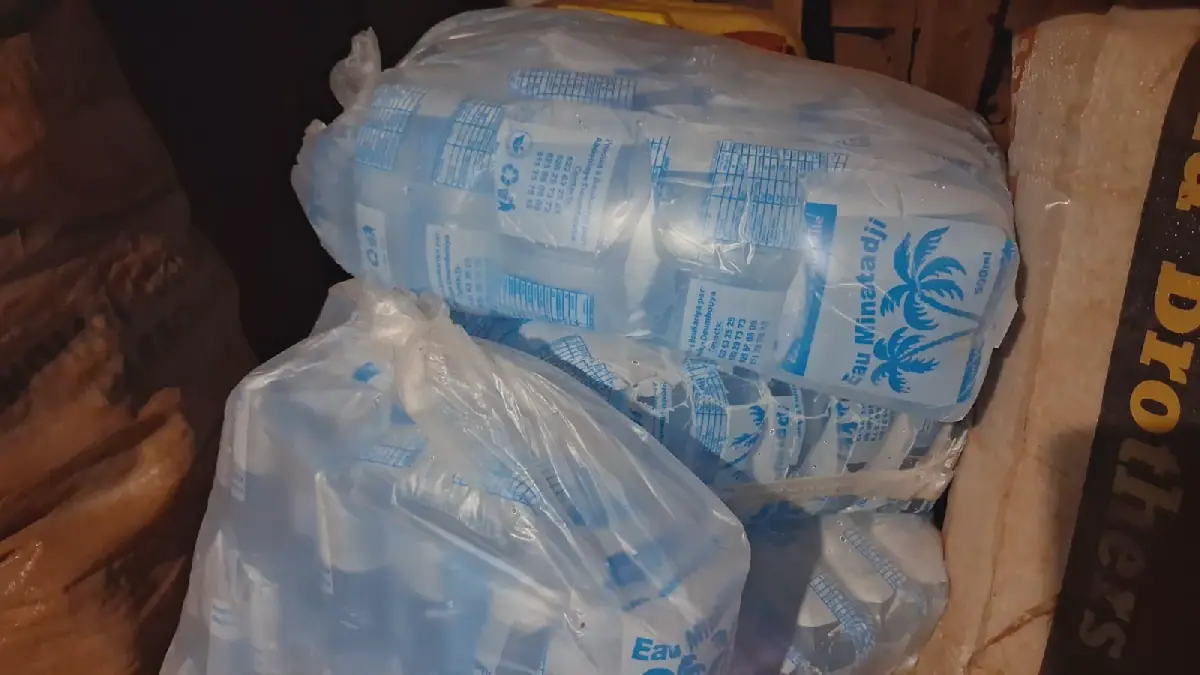
In the rural commune of Kintinian, Guinea, the price of water in plastic sachets remains high despite a government deadline for producers to comply with new regulations. The government's decision to ban single-use plastic bags led to a surge in water prices, with a packet increasing from 5,000 to 7,000, 8,000, or even 10,000 Guinean francs. Although the government later granted a six-month deadline for producers to adapt to the new regulations, prices have not decreased.
The commune's authorities, with the support of security forces, are now threatening to take action against producers who do not comply with the fixed price of 5,000 Guinean francs per packet. Moussa Doumbouya, head of the commerce commission, warned that producers selling water above the fixed price would face severe sanctions, including the closure of their production units. The commune aims to enforce its decision with the help of security forces.
Producers attribute the high prices to the scarcity of plastic on the market. Bhö Lancey Bérété, a water producer, explained that the increase in water prices is due to the rarity of plastic sachets, which have disappeared from the market since the government announced the ban. He claimed to be working to comply with the government's decision and plans to start producing water in bottles soon.
Consumers are expressing frustration and concern over the situation. Saran Savané, a local resident, called on producers to show responsibility and consider the difficulties faced by households. She demanded that the packet price return to its previous level of 5,000 Guinean francs and rejected the producers' argument of plastic scarcity.
The situation in Kintinian highlights the challenges of balancing environmental protection with the need to maintain affordable prices for essential goods. The government's ban on single-use plastic bags aims to protect the environment, but it has led to increased prices for water, a vital resource. The commune's authorities are taking steps to address the issue, but the problem may require a broader response from the government.
The issue of water pricing in Kintinian has sparked a wider debate about the role of government in regulating markets and protecting consumers. While the commune's authorities are taking action to enforce the fixed price, the effectiveness of their measures remains to be seen. The government is expected to play a role in monitoring the market and enforcing regulations to ensure that producers comply with the new rules.
The Kintinian commune's efforts to regulate water prices and enforce environmental regulations reflect the complexities of addressing social and environmental issues in Guinea. The situation requires a coordinated response from government agencies, producers, and consumers to ensure that essential goods are available at affordable prices while protecting the environment.
Key points
- The commune of Kintinian is taking action to enforce a fixed price of 5,000 Guinean francs for water packets.
- Producers attribute the high prices to the scarcity of plastic on the market.
- The situation highlights the challenges of balancing environmental protection with the need to maintain affordable prices for essential goods.