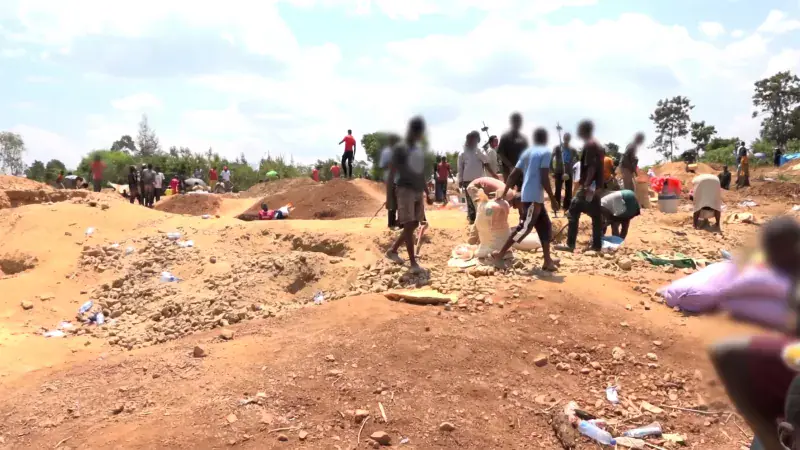
In the gold mining areas of Siaya and Migori counties, hundreds of children, some as young as 15, are working in mines, risking their education and safety. Brian, a 15-year-old Grade 9 pupil, works in a mine to help his mother with school fees and family expenses, earning Sh1,000 on a good day. He dreams of becoming a pilot but has to balance school with work, often missing classes to work in the mine.
The situation is similar for Jay, 17, who has spent two years working at a gold mine while preparing for his final secondary school examinations. As the firstborn in a family of four, he feels pressure to help his household, where one parent farms and the other mines. Despite his mother's disapproval, Jay continues to work, earning up to Sh10,000 on a good day, which helps pay school fees and support his family.
Sly, another secondary school pupil, knows how absence can affect academic performance, having missed examinations while in Form 2. She believes she could have scored a B+ instead of the C+ she received. Her parents struggle to provide for her and her four siblings, and she sends the money she earns from mining to her mother to help buy food for the household.
A parent whose child works at a mine says the decision is driven by financial hardship rather than a desire to keep the child out of school. The parent wants their child to go to school and have a better future but feels forced to make difficult choices due to financial constraints. They worry about their child's safety in the mine and want help to provide for their family so that their child can leave the mines and return to school.
The impact of child labor in mines is also felt in schools, where attendance is irregular. At a school in Awendo, Migori county, pupils attend on some days but miss others, making it difficult for teachers to maintain continuity and for learners to keep up with their work. The school has tried to encourage attendance through support, including a miner offering Sh2,000 per term towards one pupil's lunch on condition of consistent attendance.
Experts say poverty and lack of decent work for adults push children into labor. Chris Agunga, an International Labour Organisation officer, and Chris Owala of the Community Initiative Action Group Kenya, attribute the trend to poverty and the high cost of education. They warn that without adequate family support and alternative learning arrangements, mining could trap children in a cycle of poverty, exposing them to risks to their health, safety, and dignity.
The risks faced by children working in gold-mining areas include exposure to harsh mining conditions, handling minerals with bare hands, and inhaling dust. A survey by Owala's organisation found a high proportion of reported upper respiratory illnesses among people seeking treatment. There are also concerns about sexual abuse and the denial of children's right to play, privacy, and protection, highlighting the need for enforcement of child-protection laws and collective action to keep children out of hazardous work.
Key points
- Poverty and lack of decent work for adults push children into labor.
- Children working in gold mines face hazardous conditions, including exposure to dust and risk of shaft collapses.
- Experts call for collective action to enforce child-protection laws and provide alternative learning arrangements to keep children out of hazardous work.