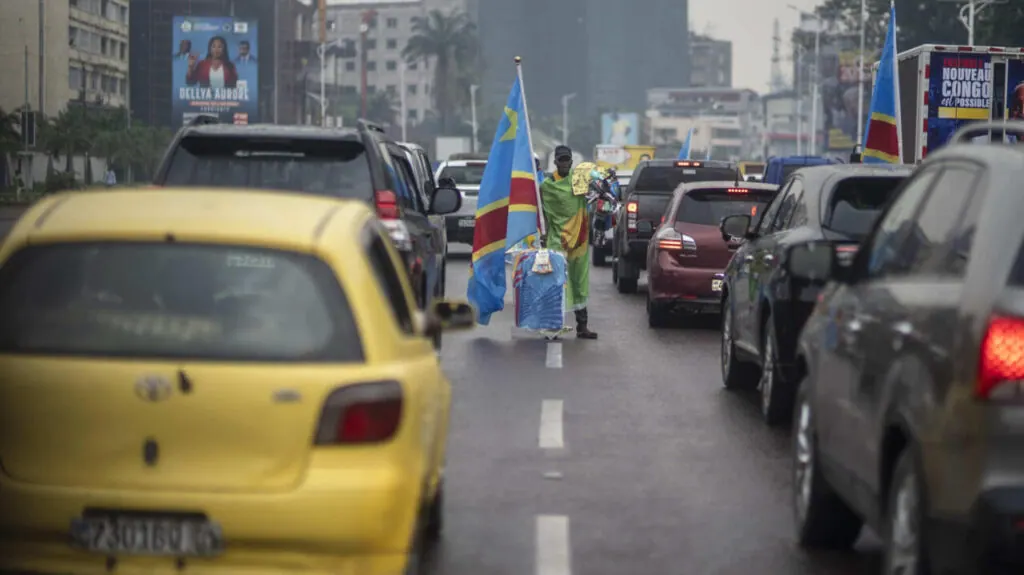
The first phase of a new traffic plan has been implemented in Kinshasa, Democratic Republic of the Congo, starting Sunday, September 20, 2026. This initial phase, known as Zone A, covers a key area including the axis between Kintambo Magasin and Gare centrale. The plan also encompasses avenues leading to Boulevard du 30 Juin and those connected to Avenue de la Libération, formerly known as 24 novembre.
In preparation for the new traffic configuration, the provincial Minister of Transport and Urban Mobility, Jésus-Noël Sheke, oversaw the deployment of necessary infrastructure during the night of Saturday to Sunday. This included the installation of signposts, barricades, and barrels at strategic locations. These temporary metallic markers are meant to materialize areas reserved for future reinforced concrete separators, which will help close certain intersections and better channel vehicle movements.
The primary goal of this reorganization is to reduce traffic conflicts at intersections and improve fluidity on the main axes concerned. The new plan involves not only physical adjustments but also the deployment of brigadiers to reinforce the work of the road traffic police. On Thursday, September 17, 2026, Kinshasa Governor Daniel Bumba Lubaki launched the training of the first contingent of 280 support agents for road regulation.
The training program for these agents covers five main modules: ethics and deontology, general notions of road code, road signaling, traffic regulation, and intersection management. These agents will assist the road traffic police in enforcing the road code and respecting new measures. They will also participate in implementing specific traffic plans, especially in areas where intersection configurations and traffic flow are set to change.
The initiative aims to enhance traffic regulation and improve travel conditions in Kinshasa, a city that faces daily congestion. Zone A is the first step in this process, with plans for gradual expansion to other sectors of the city. The provincial Ministry of Transport and Urban Mobility hopes that this reorganization will lead to better-managed traffic and reduced congestion.
The new traffic plan and the deployment of support agents are part of a broader strategy to tackle Kinshasa's notorious traffic issues. By systematically organizing traffic flow and ensuring that both police and support agents are present to manage and enforce regulations, the authorities hope to make significant improvements. This phase's success will likely influence the implementation of subsequent phases.
As the city adjusts to the new traffic configuration, residents and commuters are encouraged to familiarize themselves with the changes and comply with the new traffic rules. The authorities have emphasized the importance of cooperation and understanding from the public in making this initiative a success. The effectiveness of this plan will be closely monitored, with potential adjustments made as necessary to ensure smooth traffic flow and enhanced road safety.
Key points
- The first phase of Kinshasa's new traffic plan covers the area between Kintambo Magasin and Gare centrale.
- The plan includes the deployment of 280 support agents to assist the road traffic police.
- The initiative aims to reduce traffic conflicts and improve travel conditions in Kinshasa.