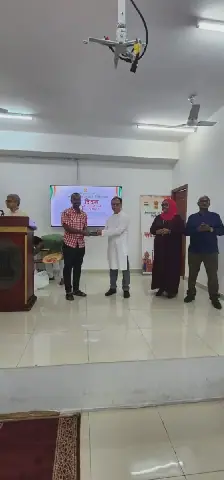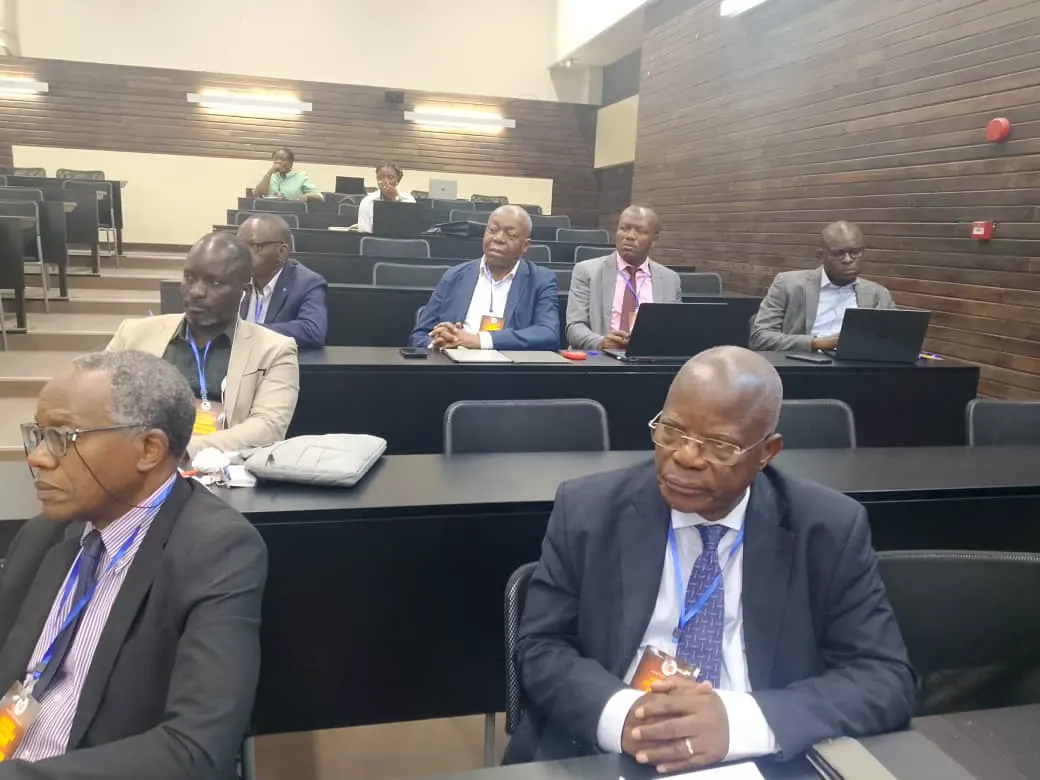
The Congolese Academy of Sciences (Accos) recently organized a workshop in Kinshasa, the capital of the Democratic Republic of Congo, to discuss the digital revolution and artificial intelligence (AI). The event, which took place on September 27, 2026, was part of Accos' 2026 academic year opening ceremony. The workshop focused on the theme "Environment and Sustainable Development in the DRC in the Era of Digital Technology and Artificial Intelligence: Opportunities, Challenges, and Perspectives."
Dr. Franck Otete, advisor to the Minister of Higher Education, University Research, and Innovation, launched the workshop. He emphasized the need to balance the digital revolution and AI with environmental preservation and sustainable development. The DRC, with its rich forests, biodiversity, and critical minerals, is well-positioned to be a solution-provider on the international stage, according to Dr. Otete. He noted that the country's natural resources are essential for the global energy transition.
Dr. Otete highlighted the benefits of harnessing digital technology and AI in the DRC. These technologies can help model ecosystems in real-time, optimize agriculture, monitor deforestation, and map mineral resources. This, in turn, can enhance the country's ability to prevent natural risks. The DRC's digital revolution is aligned with President Félix Antoine Tshisekedi's strategic vision, which emphasizes the role of technology in driving socio-economic development and modernization.
The workshop addressed various themes, both in-person and remotely, with participation from scientists in Kinshasa and worldwide. The event provided a platform for experts to share knowledge and discuss the implications of digital technology and AI on the environment and sustainable development in the DRC. The sector's environmental impact was also discussed, with statistics showing that it accounts for around 5% of global greenhouse gas emissions and over 4% of energy consumption.
Dr. Otete noted that while digital technology and AI offer opportunities, they also pose risks and complexities. The production, disposal, and management of electronic waste are significant concerns. He praised the workshop, organized by Accos, and acknowledged the leadership of the academicians in promoting scientific exchange and discussion.
The DRC government, under the coordination of the Prime Minister, is working to implement the President's vision for the digital sector. This includes ensuring that technological advancements are sovereign, inclusive, and environmentally friendly. The government aims to promote a harmonious and determined intersectoral approach to drive the country's digital revolution.
The workshop concluded with a call for responsible and informed use of digital technology and AI in the DRC. The country's academic and scientific communities must work together to address the challenges and opportunities presented by these technologies. By doing so, the DRC can harness the benefits of digitalization while preserving its environment and promoting sustainable development.
Key points
- The DRC can leverage digital technology and AI to drive sustainable development and environmental preservation.