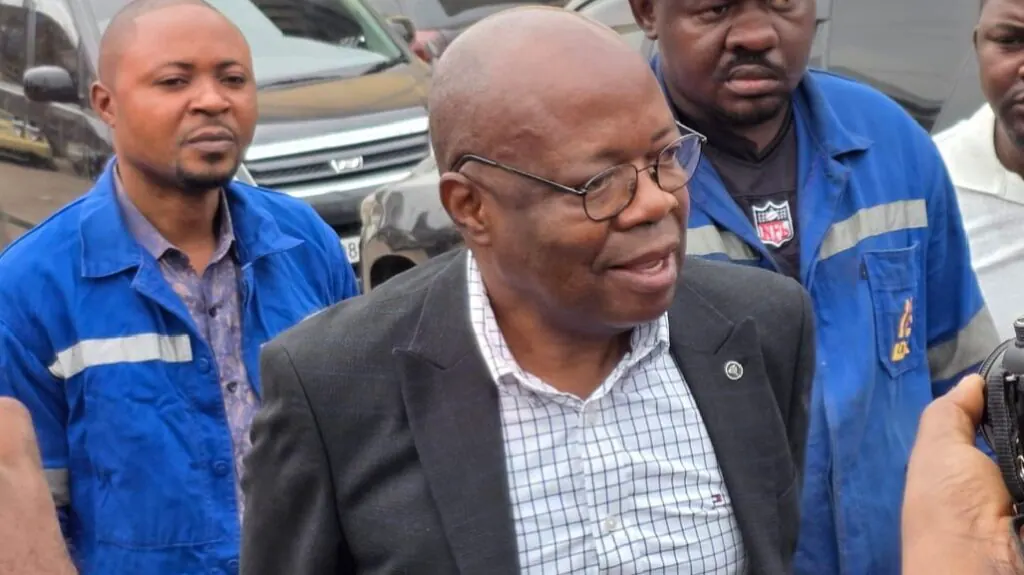
The director of Kinshasa's Distribution Department, Zephyrin Kazadi, recently addressed the issue of power rationing in the capital city of the Democratic Republic of the Congo. He explained that the current dry season has led to a decrease in water levels in the Congo River and other rivers that supply the country's hydroelectric dams. As a result, the national electricity company, SNEL, is experiencing a reduction in power generation.
The decrease in water levels has directly impacted hydroelectric production, leading to power rationing in several neighborhoods of Kinshasa. The reduced water flow in the Inkisi River, located in the Kongo Central province, has resulted in a decrease in available power. To mitigate the effects, SNEL has been forced to adapt its production and distribution temporarily. This has led to power outages of up to eight hours in some areas.
Kazadi emphasized that SNEL produces electricity, not water, highlighting the company's dependence on hydrological conditions. He noted that the low water levels are a seasonal issue and that SNEL is working to reduce the impact of such episodes on the city's power supply. The company is investing in new infrastructure and reinforcing its existing facilities to improve its ability to manage fluctuations in water levels.
The power rationing has affected several neighborhoods in Kinshasa, with residents experiencing frequent outages. The SNEL team is working to resolve the issue, but the company's efforts are hindered by the seasonal nature of the problem. In the meantime, residents are advised to be patient and understanding of the challenges faced by the power company.
To address the issue, SNEL is prioritizing dialogue with communities and stakeholders. In the Bandalungwa area, for example, the company is engaging with residents who have encroached on high-tension power lines. The goal is to find a mutually beneficial solution that balances the needs of residents with the requirements of maintaining a stable power supply.
The power outages have also highlighted the need for alternative energy sources in the country. While SNEL continues to invest in hydroelectric power, there is a growing recognition of the importance of diversifying the energy mix. This could include investing in other forms of renewable energy, such as solar or wind power, to reduce dependence on hydroelectric power.
The situation in Kinshasa serves as a reminder of the challenges faced by many countries in Africa, where power generation is often dependent on hydrological conditions. As the continent continues to urbanize and economic growth accelerates, the need for reliable and sustainable energy sources will become increasingly important. SNEL's efforts to address the current power rationing issue are a step in the right direction, but more needs to be done to ensure a stable and reliable power supply for the future.
Key points
- The power rationing in Kinshasa is caused by a combination of low water levels in the Congo River and other rivers that feed the country's hydroelectric dams.
- The reduced water flow has resulted in a decrease in available power, leading to power outages of up to eight hours in some areas.
- SNEL is working to reduce the impact of the power rationing by investing in new infrastructure and reinforcing its existing facilities.