An exhibition titled "ELIKIA-Archéologies" featuring works by four artists from Eastern Democratic Republic of Congo was recently presented at a memorial space in Kinshasa. The exhibition, which focuses on memory and resilience, was initiated by a collective and aims to highlight the importance of preserving memories and promoting peace and dignity for communities affected by armed conflicts. Sanny Mabala, coordinator of the Genocost memorial site in Kinshasa, welcomed guests to the event, expressing gratitude to the ELIKIA collective for their efforts in promoting memory, peace, and resilience.
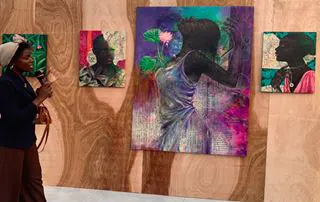
The exhibition features works by four artists from Eastern DRC, including painter Edith Congane, who presented a series titled "archéologie de la résilience" (archaeology of resilience). Her works showcase the strength, vitality, and survival capacity of populations in Eastern DRC. Congane's paintings aim to highlight the transformative power of art in turning trauma into force and creation. Her work "Fragile" is a poignant representation of the trauma, resilience, and transmission of memory, featuring a woman who hides her face to protect her identity and emotions.
Edith Congane's artistic approach explores the body as a space of memory and resistance, using techniques such as superposition and fragmentation to establish a link between past and present. Born in 2003 in South Kivu, Congane was trained at the Kinshasa Academy of Fine Arts and has become a prominent visual artist and curator. Her work draws inspiration from the history and mutations of cities such as Bukavu, Goma, and Kinshasa. The exhibition provides a platform for Congane and three other artists from Eastern DRC to share their perspectives on memory, resilience, and the impact of conflict on local communities.
The exhibition is part of a broader initiative dedicated to memory, peace, resilience, and dignity for communities affected by armed conflicts. Sanny Mabala emphasized the significance of the event, stating that it serves as a space for reflection, transmission, and awareness-raising. The exhibition aims to promote a deeper understanding of the experiences of communities in Eastern DRC and to encourage dialogue and empathy. By showcasing the works of four talented artists, the event seeks to inspire a new perspective on the region's complex history and ongoing challenges.
The works presented at the exhibition offer a powerful testament to the resilience and creativity of communities in Eastern DRC. Through their art, the participating artists aim to convey the complexities and nuances of their experiences, challenging viewers to engage with the region's history and ongoing struggles. By exploring themes such as memory, trauma, and resilience, the exhibition provides a unique opportunity for cultural exchange and understanding.
Edith Congane's work "Fragile" is a particularly striking example of the exhibition's focus on memory and resilience. The painting depicts a woman who covers her face, symbolizing the fragility and vulnerability of those who have experienced trauma. Congane's explanation of the work highlights the importance of listening to and sharing stories as a means of healing and promoting understanding. The exhibition offers a powerful platform for artists to share their stories and perspectives, promoting empathy and awareness among viewers.
The "ELIKIA-Archéologies" exhibition serves as a poignant reminder of the impact of conflict on communities in Eastern DRC. By showcasing the works of four talented artists, the event promotes a deeper understanding of the region's complex history and ongoing challenges. The exhibition's focus on memory, resilience, and dignity provides a powerful testament to the creativity and strength of communities affected by armed conflicts.
Key points
- The exhibition "ELIKIA-Archéologies" features works by four artists from Eastern DRC, focusing on memory and resilience in the face of conflict.
- Artist Edith Congane's work "Fragile" explores the themes of trauma, resilience, and transmission of memory.
- The exhibition aims to promote a deeper understanding of the experiences of communities in Eastern DRC and to encourage dialogue and empathy.