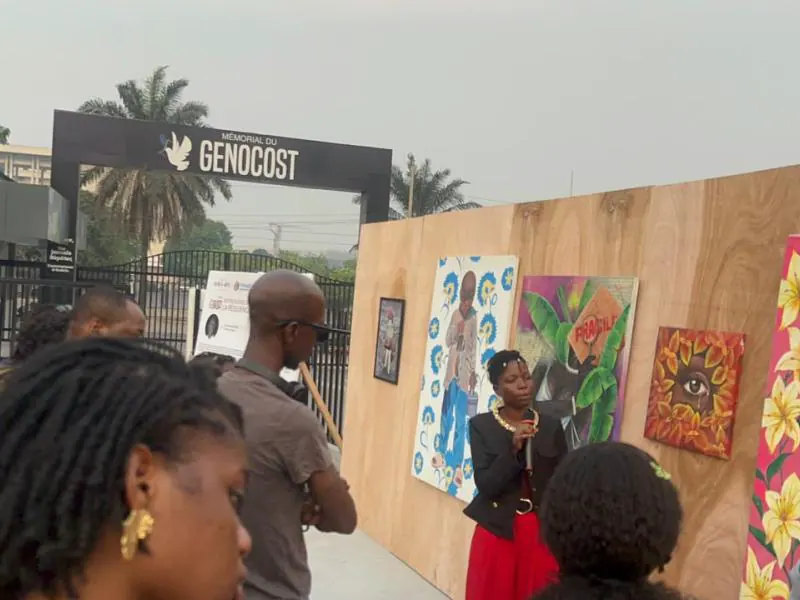
An art exhibition titled "Elikia – Archéologies de la Résilience" has opened in Kinshasa, showcasing the impact of decades of conflict in eastern Democratic Republic of Congo and the resilience of its people. The exhibition features works by four artists from Goma: John Primo Mulimbi, Ushindi Mpigiri Destin, Olinabanji Nshombo Subira, and Edith Congane. Their works explore the human cost of natural resource exploitation, the strength of women, and the paths to healing and a peaceful future.
The exhibition, which opened on September 25, 2026, at the Mémorial du Genocost in Kinshasa, presents a different perspective on eastern DRC, highlighting not only the wounds left by conflict but also the forms of life and resilience that continue to exist. The artists' approach is not to reproduce the horror of war but to focus on what remains after trauma: memory, dignity, resistance, beauty, and the capacity for reconstruction. According to John Primo, one of the artists, the exhibition aims to show that eastern DRC is not just war, but also resilience.
John Primo's work consists of four paintings that represent different stages of his journey from Goma to Kinshasa. His paintings create a link between the two cities, using blue tones to evoke the Congo River and warm colors to characterize Kinshasa. Primo's work reflects his personal experience and his desire to share a message of peace, highlighting the resilience of the people in eastern DRC. He explains that his paintings are a way to create a bridge between Goma and Kinshasa.
Olinabanji Nshombo Subira's work also draws on her personal experience in eastern DRC. Her paintings explore the consequences of war on civilians, particularly children, and the ways in which people cope with trauma. Subira's work features flowers and nature, which are important to her because of her childhood and her father's love of nature. She explains that her paintings are a way to show that, despite suffering, there is still beauty in eastern DRC.
The exhibition is curated by Grâce Kalima, who explains that the works do not aim to reproduce horror or transform suffering into spectacle. Instead, they focus on what remains after trauma and how memory can be carried and transformed. The exhibition is organized around several themes, including the human cost of natural resource exploitation, the role of women, and the paths to healing and a peaceful future.
The exhibition also features a collective work, "La Fresque du Devenir," which was created with visitors. This initiative aims to symbolize a shared memory and a reconstruction that is not just individual. According to James Mutuba, the exhibition is a way to look at eastern DRC through what continues to live, rather than just what has been lost.
The exhibition "Elikia – Archéologies de la Résilience" runs at the Mémorial du Genocost in Kinshasa and features works by four artists from Goma. The exhibition explores the impact of conflict in eastern DRC and the resilience of its people, highlighting the human cost of war and the paths to healing and a peaceful future.
Key points
- The exhibition showcases the resilience of people in eastern DRC.
- The artists' works explore the human cost of natural resource exploitation and the strength of women.
- The exhibition aims to promote a message of peace and highlight the beauty that still exists in eastern DRC.