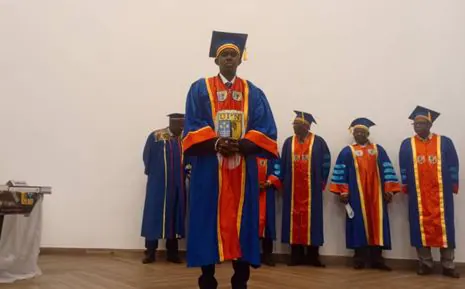
A thesis on democratic governance and its influence on development in Lomami province was recently defended at the Université pédagogique nationale in Kinshasa. The study, conducted by Alex Lenge, examines the institutional, political, and social mechanisms that explain the difficulties of development in the province. It highlights the importance of citizen participation, transparency in public resource management, and accountability in promoting inclusive and sustainable development. The research aims to understand why Lomami province struggles to achieve development despite its significant natural and human resources.
The study focuses on the reasons behind the province's stagnation and identifies key sectors that can drive development, including agriculture, road infrastructure, electricity, education, healthcare, and mining. Lenge emphasizes the need for good governance, provincial cohesion, and a shift in mindset to accompany development efforts. The research also highlights corrupt practices, clientelism, and favoritism as obstacles to effective governance in the province. These findings suggest that addressing these issues is crucial to promoting development in Lomami.
According to Lenge, the study's hypotheses point to various challenges in the functioning of provincial governance, including corruption, clientelism, and the predominance of private interests. To address these issues, the study recommends strengthening the independence and effectiveness of the judiciary to combat impunity and promote accountability among leaders. This, in turn, can help foster a culture of responsibility and respect for institutional rules.
The research also underscores the need for an integrated approach to development in Lomami, taking into account the province's political, economic, social, historical, and territorial dimensions. This approach can help address the complex challenges facing the province and promote sustainable development. By examining the interplay between governance and development, the study provides valuable insights into the dynamics of development in Lomami.
The study's findings have significant implications for policymakers and stakeholders seeking to promote development in Lomami and other provinces in the Democratic Republic of Congo. By highlighting the importance of good governance, accountability, and citizen participation, the research provides a roadmap for addressing the province's development challenges. The study's recommendations can inform policy initiatives and programming aimed at promoting sustainable development in the region.
Alex Lenge's thesis was defended on September 26, 2026, at the Université pédagogique nationale in Kinshasa. The successful defense of his thesis earned him a doctorate in political and administrative sciences with a distinction. The study contributes to the growing body of research on governance and development in the Democratic Republic of Congo, providing valuable insights into the complex relationships between governance, accountability, and development.
The study's focus on Lomami province highlights the need for context-specific approaches to development that take into account the unique challenges and opportunities facing different regions. By examining the interplay between governance and development in Lomami, the research provides a nuanced understanding of the dynamics of development in the province and offers practical recommendations for policymakers and stakeholders.
Key points
- The study emphasizes the importance of good governance, accountability, and citizen participation in promoting inclusive and sustainable development in Lomami province.
- Corrupt practices, clientelism, and favoritism are significant obstacles to effective governance in Lomami province.
- An integrated approach to development that takes into account the province's political, economic, social, historical, and territorial dimensions is necessary to promote sustainable development in Lomami.