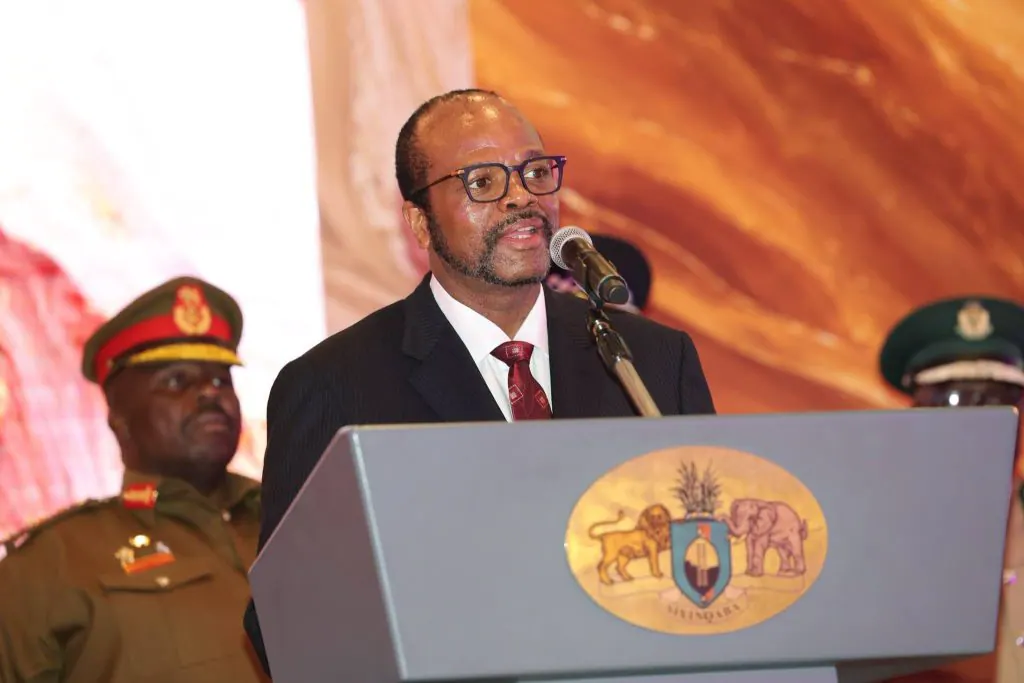
His Majesty King Mswati III has called for increased investment in Africa's seed sector, urging private investors and development partners to bring capital, technology, and skills. Speaking at the African Union Seed Summit dinner at Ezulwini Palazzo on Tuesday evening, the king emphasized that a reliable seed sector was critical to Africa's food sovereignty and agricultural future. He made a direct appeal to development partners and the private sector to support the continent's seed industry.
The king highlighted that investment was essential to building a dependable supply of viable, high-yielding, and affordable seed. He noted that investors would need confidence in the operating environment before committing resources to the sector. To achieve this, he urged governments to provide stable policies, harmonized regulations, and predictable conditions capable of attracting long-term investment into seed production and related agricultural value chains.
King Mswati III also called for greater regional cooperation, noting that seed systems, genetic resources, pests, diseases, and markets do not stop at national borders. He emphasized that no single member state could build a secure seed system alone. The African Union, he said, had an important role in providing common frameworks, harmonized standards, and accountability mechanisms to enable countries to work together.
The king linked stronger seed systems to Africa's broader agricultural transformation, calling for countries and regions to focus on crops suited to their production capabilities while supporting one another through regional trade. He highlighted the African Continental Free Trade Area as a means to connect producers to wider markets, but noted that this would require better transport infrastructure, including road, rail, shipping, and air links.
On climate change, the king emphasized that Africa needed to improve its plant genetic resources and breeding programs to develop varieties capable of withstanding changing climatic conditions. He highlighted Eswatini's efforts, including the upgrading of its gene bank for indigenous plant genetic resources, multiplication of seeds and germplasm, farmer training, and support for small-scale seed production groups.
The king also stressed the importance of protecting Africa's genetic resources and combining scientific innovation with indigenous knowledge, particularly in supporting vulnerable communities and smallholder farmers. He emphasized that the summit should ultimately move beyond policy commitments to practical action, stronger investment, and growth across the seed industry.
King Mswati III also linked the seed sector to youth jobs, noting that Africa's seed industry could create meaningful opportunities for young people as countries seek to tackle unemployment. He encouraged young people to see agriculture not only as farming but as an industry offering opportunities in seed production, processing, and trade.
Key points
- The king called for private sector investment in Africa's seed industry to ensure food sovereignty and tackle youth unemployment.
- He emphasized the need for greater regional cooperation and harmonized standards to build a secure seed system.
- The king linked stronger seed systems to Africa's broader agricultural transformation and youth job creation.