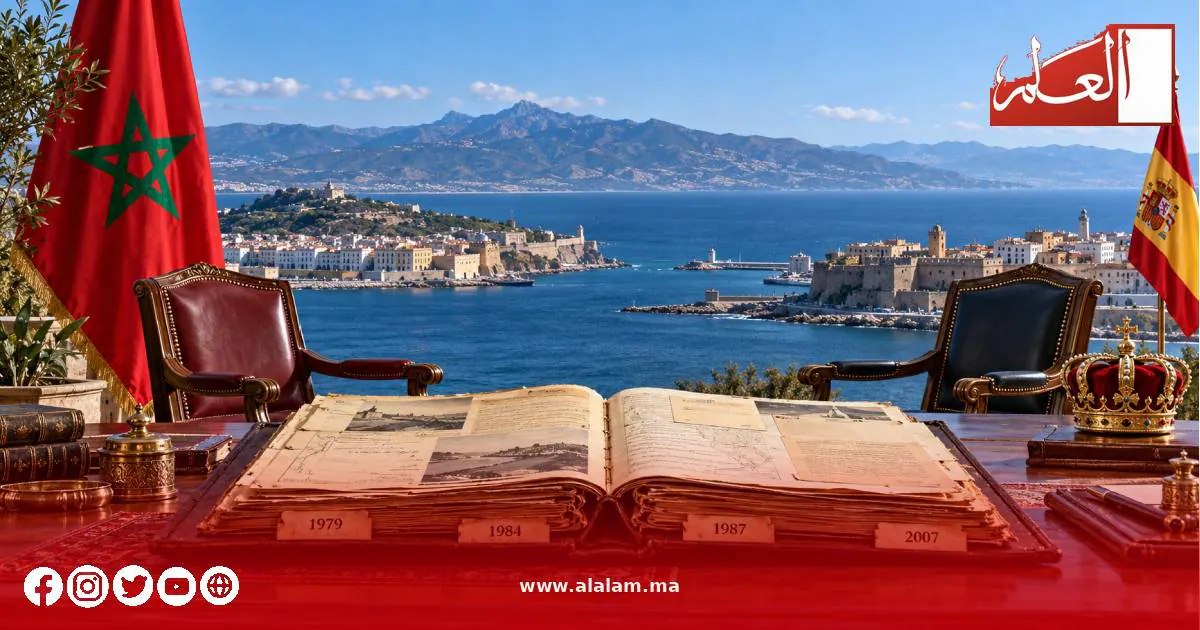
King Felipe VI and Queen Letizia of Spain are set to visit Ceuta on October 13 and Melilla on October 14, 2026, in their first visit to the cities since Felipe VI ascended to the throne in 2014. The visit has sparked controversy and questions on the sovereignty of the two cities, which are claimed by Morocco. The Moroccan government has long considered Ceuta and Melilla to be part of its territory, while Spain maintains that they are an integral part of its national territory.
Historical documents reveal that the Spanish monarchy has previously discussed the possibility of transferring sovereignty of the cities to Morocco. In 1979, King Juan Carlos I discussed the issue with US Senator Ed Muskie, suggesting that Melilla could be transferred to Morocco in a relatively short period. Ceuta, however, was considered more complex due to the large number of Spanish residents. This discussion has been seen as an acknowledgment that the status of the cities is not a closed issue.
In 1984, King Juan Carlos I instructed the head of Spain's intelligence agency, General Emilio Alonso Manglano, to prepare for negotiations with Morocco on the future of Ceuta and Melilla. Manglano's notes from the meeting reveal that the King believed Melilla was not easy to defend and that Spain should be prepared to negotiate its future. This has been interpreted as a sign that the Spanish monarchy has historically considered the cities' status to be negotiable.
In 1987, Moroccan King Hassan II proposed the creation of a joint committee with Spain to study the future of Ceuta and Melilla. The committee was intended to find a solution that would respect Morocco's "non-negotiable rights" while also taking into account Spain's vital interests in the region. However, Spain rejected the proposal and maintained its stance that the cities' sovereignty was not open to discussion.
The issue of Ceuta and Melilla's sovereignty has also been discussed between King Juan Carlos I and King Hassan II. In his memoirs, King Juan Carlos I recalled that King Hassan II told him that the next generation would have to resolve the issue. With King Mohammed VI of Morocco and King Felipe VI of Spain now on the throne, the issue remains unresolved.
A previous visit to Ceuta and Melilla by King Juan Carlos I and Queen Sofia in 2007 sparked a strong reaction from Morocco, which considered the visit to be a provocation. The Moroccan government recalled its ambassador to Spain and described the cities as "occupied Moroccan territories." The visit was seen as a significant escalation of the dispute over the cities' sovereignty.
The upcoming visit by King Felipe VI and Queen Letizia has sparked concerns that it may further complicate relations between Spain and Morocco. While the visit is seen as a symbol of Spain's sovereignty over the cities, it has also been interpreted as a missed opportunity to address the underlying issues and find a solution to the dispute.
Key points
- The visit by King Felipe VI and Queen Letizia to Ceuta and Melilla has sparked controversy and questions on the sovereignty of the two cities, which are claimed by Morocco.
- Historical documents reveal that the Spanish monarchy has previously discussed the possibility of transferring sovereignty of the cities to Morocco.
- The issue of Ceuta and Melilla's sovereignty remains unresolved, with Morocco claiming the cities as part of its territory and Spain maintaining that they are an integral part of its national territory.