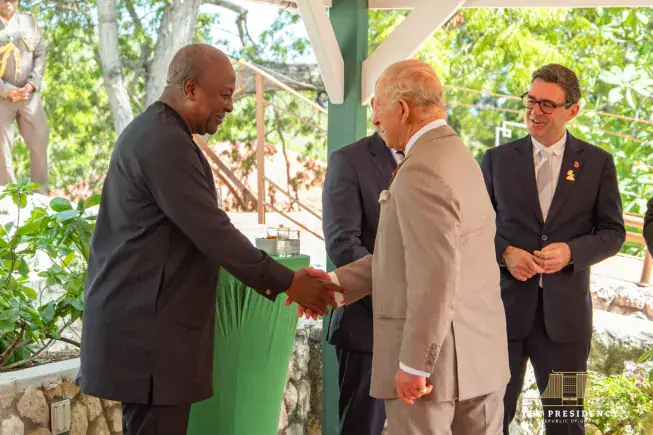
King Charles III, Head of the Commonwealth, has acknowledged the transatlantic slave trade as a shameful chapter in human history. Speaking at the 28th Commonwealth Heads of Government Meeting (CHOGM) in Antigua and Barbuda, the monarch expressed personal sorrow over the horrors and grave abuses of the trade. He emphasized the need for Commonwealth nations to work together to address the lasting consequences of those injustices. The King's remarks come amid growing demands for reparatory justice from Caribbean governments and advocacy groups.
The King's speech highlighted the importance of learning from the past and moving forward. He noted that history is not something that can be changed, but it can be learned from. The monarch emphasized areas such as access to education, investment in jobs and opportunities, increased intra-Commonwealth trade, and climate resilience as key to building stronger partnerships and improving the lives of disadvantaged communities. This approach was seen as a way to address the socioeconomic effects of slavery without issuing a formal apology.
The debate over reparations remains a significant issue at the Commonwealth summit. Caribbean governments and advocacy groups are calling for recognition, accountability, and concrete measures to address the socioeconomic effects of slavery. The issue has gained momentum in recent years, with many countries and leaders acknowledging the historical injustices of the transatlantic slave trade. The Commonwealth Heads of Government Meeting provides a platform for leaders to discuss this issue and potential solutions.
UK Prime Minister Andy Burnham has signaled Britain's readiness to consider a formal state apology for its past involvement in human trafficking. Before the Commonwealth meeting, Burnham proposed alternative forms of support, such as debt restructuring and more favorable repayment terms for the poorest Commonwealth countries. This move is seen as a step towards honest dialogue and acknowledging the UK's role in the transatlantic slave trade.
The 28th Commonwealth Heads of Government Meeting is being held in Antigua and Barbuda. The meeting brings together leaders from across the Commonwealth to discuss key issues affecting member states. The summit provides a platform for leaders to share perspectives and work towards common goals. This year's meeting has been marked by discussions on reparations and the legacy of the transatlantic slave trade.
King Charles III's remarks have been seen as a significant moment in the debate over reparations. While the monarch stopped short of issuing a formal apology, his acknowledgment of the shameful chapter in human history was seen as a positive step. The King's commitment to working with Commonwealth nations to address the lasting consequences of the transatlantic slave trade has been welcomed by many.
The Commonwealth is taking steps to address the socioeconomic effects of slavery. The organization is working to build stronger partnerships and improve the lives of disadvantaged communities. Areas such as education, job creation, and climate resilience are being prioritized. The debate over reparations is expected to continue, with many leaders calling for concrete measures to address the legacy of the transatlantic slave trade.
Key points
- The Commonwealth is working to address the socioeconomic effects of slavery through education, job creation, and climate resilience.
- King Charles III has acknowledged the transatlantic slave trade as a shameful chapter in human history.
- The debate over reparations remains a significant issue at the Commonwealth summit.