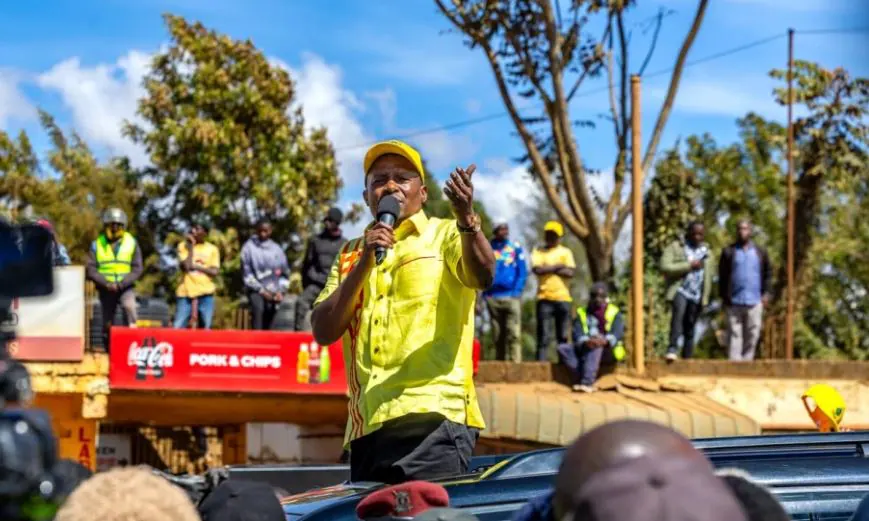
Deputy President Kithure Kindiki has announced a renewed effort to eliminate illicit brews from the Kenyan market, warning that the government will no longer tolerate businesses that expose young people to severe health risks through toxic alcohol. Speaking in Nyambari, Lari Constituency, Kiambu County, Kindiki confirmed that government agencies have joined forces to tackle the issue. He emphasized that the government will subject every alcohol manufacturer in the country to a fresh vetting process to ensure compliance with health and quality standards.
Kindiki's announcement comes amid concerns over non-compliant businesses that continue to brew and sell dangerous drinks despite previous warnings. He noted that several previously flagged manufacturers have been allowed to operate, and insisted that authorities must revoke the licenses of these non-compliant operations immediately. The Deputy President warned that those selling alcohol containing chemicals and substances that harm young people will face consequences, stating that "your days are numbered."
To execute the nationwide crackdown, Kindiki plans to convene an urgent high-level meeting with officials from the Kenya Revenue Authority (KRA), the Anti-Counterfeit Authority (ACA), the Ministry of Interior, security organs, and other key sector stakeholders. The meeting aims to coordinate efforts to eliminate illicit brews and ensure compliance with regulations. Kindiki emphasized that all alcohol manufacturers in Kenya, regardless of the type of alcohol they produce, will be vetted afresh and their licenses reviewed.
The government's renewed stance stems directly from a concerning spike in dangerous brews circulating in local communities. Kindiki directed all security agencies and relevant government agencies, including the Kenya Revenue Authority, the Anti-Counterfeit Authority, and the Kenya Bureau of Standards, to work together with citizens to eliminate alcohol that is harmful to the health of young people. He vowed to bring the same energy and determination that helped the country defeat terrorists and bandits to the renewed fight against illicit brews.
Kindiki urged leaders to depoliticize public health enforcement and allow security personnel to perform their duties without political interference. He emphasized that the fight against illicit and poisonous alcohol is a matter of security and public health, and that politicians should focus on development projects rather than interfering with enforcement efforts. The Deputy President's remarks were made while inspecting national government development projects in Lari Constituency.
During the visit, Kindiki assured citizens that the administration remains on track to fulfill its development commitments, advising the public to ignore naysayers attempting to derail progress. He expressed confidence that the government will succeed in its efforts to eliminate illicit brews, just as it did in defeating Al-Shabaab and bandits. Kindiki's determination to tackle the issue was echoed by his assertion that the government will not be defeated by alcohol cartels.
The fresh vetting process is a follow-up to a similar exercise carried out in 2024, when the government vetted manufacturers of second-generation alcoholic drinks. Kindiki's efforts to curb the sale of illicit brews have been welcomed by citizens, who are concerned about the impact of toxic alcohol on public health. The government's move is expected to have a significant impact on the alcohol industry in Kenya, with manufacturers expected to comply with strict regulations to avoid facing consequences.
Key points
- The Kenyan government will subject every alcohol manufacturer in the country to a fresh vetting process to ensure compliance with health and quality standards.
- Deputy President Kindiki has warned that non-compliant businesses will face consequences, including the revocation of their licenses.
- The government has convened an urgent high-level meeting with officials from various agencies to coordinate efforts to eliminate illicit brews.