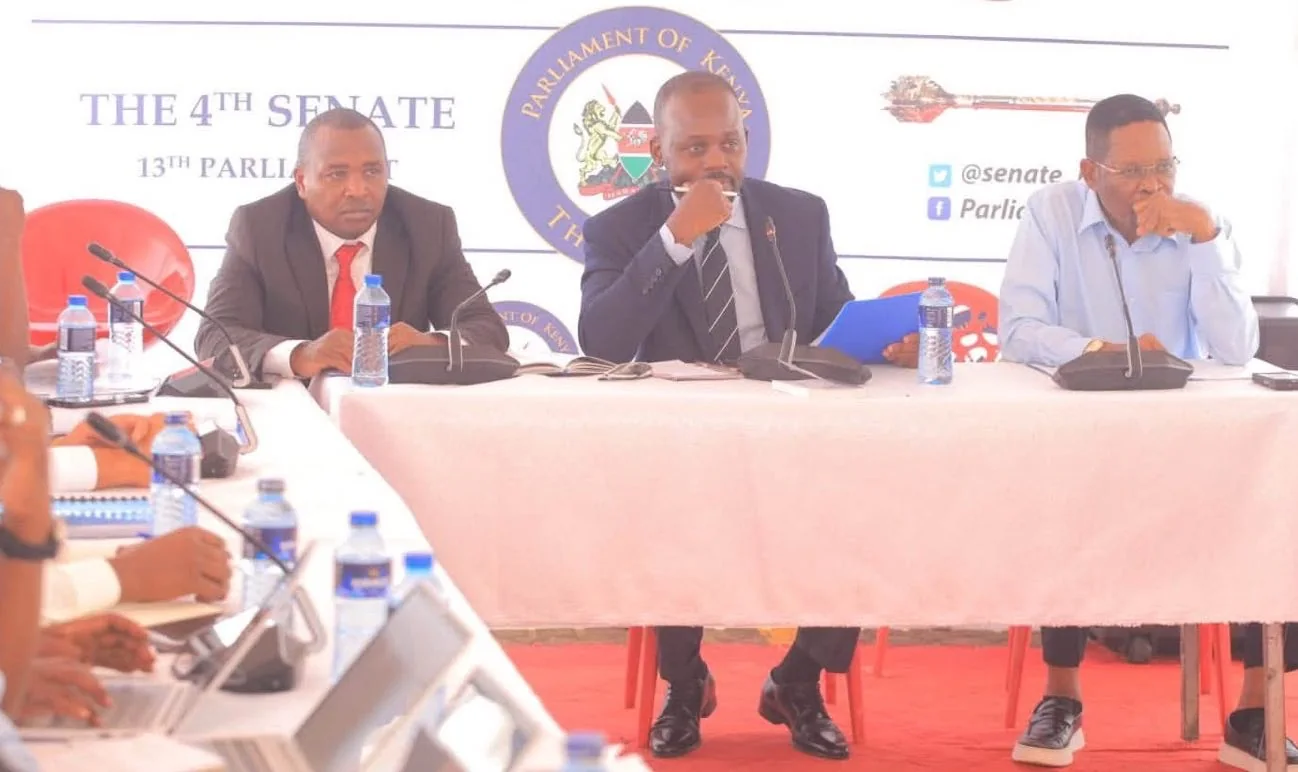
The Senate County Public Accounts and Investments Committee has launched an investigation into Kilifi County's Sh10.7 billion debt, with suppliers and contractors warning that delayed payments are threatening their survival. The committee, led by Homabay Senator Moses Kajwang, met with suppliers and contractors at the Kilifi County Assembly in Malindi to discuss the impact of unpaid county contracts. Suppliers alleged that the county's delayed payments have left them struggling to meet their financial obligations, with some facing bankruptcy and possible auction of their assets.
The Sh10.7 billion debt makes Kilifi the second-most indebted county after Nairobi, according to figures presented to the committee. Committee chairman Moses Kajwang described the financial position as one that required urgent attention, warning that the unpaid bills were hurting businesses and the wider local economy. Suppliers and contractors told senators that unpaid Kilifi county bills are pushing local businesses toward collapse. They detailed the impact of unpaid county contracts, with one supplier telling the committee that the county owes him Sh17 million, while another said he was owed Sh16 million.
The suppliers also raised questions about previous efforts to verify the outstanding claims. At least two task forces had been formed to validate the pending bills, but their findings were never made public, according to Joshua Chai, chairman of the Kilifi County Merchants & Contractors Association. The committee further raised concerns over county financial management after data from the Office of the Controller of Budget showed that 612 transactions worth Sh3.2 billion had been voided in IFMIS.
Suppliers alleged irregularities in the payment process, including claims that vouchers belonging to some suppliers were used to initiate requisitions before payments were made to others. They also alleged that politically connected businesses and suppliers willing to offer bribes received preferential treatment. The claims have not been established and require investigation. Governor Gideon Mung'aro was scheduled to appear before the committee but did not attend after reporting that he was indisposed.
The committee instead directed Deputy Governor Florence Chibule to appear and explain the county's financial position. Kajwang has proposed a framework through which verified and properly documented bills could, where legally possible, be paid at source. He has also called for National Treasury Cabinet Secretary John Mbadi to be involved in resolving the issue. The committee is seeking an explanation of how the Sh10.7 billion debt accumulated, records supporting the pending bills and a clear account of how legitimate suppliers will be paid.
Kilifi received Sh14.3 billion in total revenue in the 2024/25 financial year, comprising Sh12.8 billion in equitable share and Sh1.5 billion in own-source revenue. The pending bills therefore amount to about 70 per cent of the county's revenue for the financial year, according to the figures presented to senators. Kajwang said the situation was having consequences beyond the county government's accounts, warning that the unpaid bills were removing suppliers from business and killing the economy.
The committee has challenged the Kilifi County Assembly to use its oversight powers to establish how the debt accumulated and demand answers from the County Executive. The suppliers' concerns have sparked a renewed push for accountability and transparency in county financial management. The Senate's scrutiny of Kilifi County's debt is ongoing, with the committee expected to present its findings and recommendations in the coming weeks.
Key points
- The Senate has launched an investigation into Kilifi County's Sh10.7 billion debt.
- Suppliers and contractors have warned that delayed payments are pushing businesses into financial distress.
- The county's debt is equivalent to about 70 per cent of its revenue for the 2024/25 financial year.