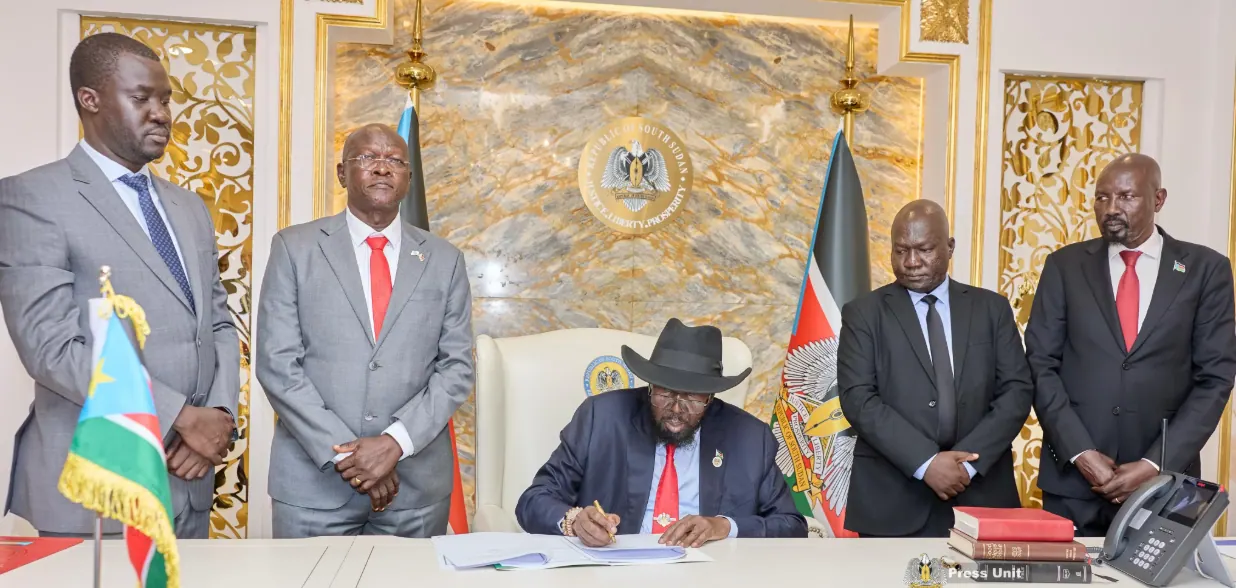
South Sudan President Salva Kiir Mayardit signed amendments to the country's election law into force on September 21, 2026, hours after parliament passed them. This development paves the way for elections scheduled for December 22, 2026. The amended National Elections Act, 2012, allows the incumbent president to remain in office and exercise his constitutional powers during the election period. This move comes as South Sudan approaches a key stage in preparations for its first general election since independence in 2011.
The amended law provides for the First Vice President and other vice presidents to leave office within three months before the election. It also separates the conduct of elections from the permanent constitution-making process and the national population and housing census. This allows the National Elections Commission to proceed with preparations without those processes being completed first. Minister of Presidential Affairs Africano Mande Gedima stated that the amendments aimed to harmonize the existing election law with the Transitional Constitution and address inconsistencies in the legislation.
The legislation sets the National Legislative Assembly at 270 members, while each state legislative assembly will have 58 members and each administrative area legislative council will have 20 members. The law also provides for the allocation of parliamentary seats and sets out the mandate of high elections committees in states and administrative areas responsible for implementing the electoral process. These changes are crucial as the country prepares for its first general election since gaining independence.
The signing of the bill comes amid political disagreements over changes to the country's transitional arrangements and electoral laws. The South Sudan Opposition Alliance, a coalition of opposition parties and armed groups, expressed concerns that amendments to the 2018 peace agreement, the transitional constitution, and election laws were made without adequate consultation among the agreement's signatories. This criticism highlights the challenges facing the country's transition to a more stable and democratic governance structure.
South Sudan's elections are scheduled for December 22, 2026, after years of delays since independence. The vote is intended to mark the end of the country's transitional period, which was established under a 2018 peace agreement. The National Elections Commission has been advancing preparations for the vote, although voter registration had not begun. The commission's efforts are critical to ensuring a smooth and transparent electoral process.
Kiir's signing of the law also comes a day before September 22, when the three-month period before the scheduled election begins. Under the amended legislation, the transitional executive arrangements would change during that period, with the president remaining in office while the vice-presidents leave their positions. This transition is expected to have significant implications for the country's governance structure and stability.
The amendments and the upcoming elections are significant steps towards consolidating peace and stability in South Sudan. However, the country still faces numerous challenges, including the need for adequate consultation and inclusivity in the electoral process. The international community and local stakeholders will be watching closely to ensure that the elections are free, fair, and transparent.
Key points
- President Salva Kiir signs election bill into law, allowing him to remain in office during the election period.
- The amended law separates the conduct of elections from the permanent constitution-making process and national census.
- The elections are scheduled for December 22, 2026, marking the end of the country's transitional period.