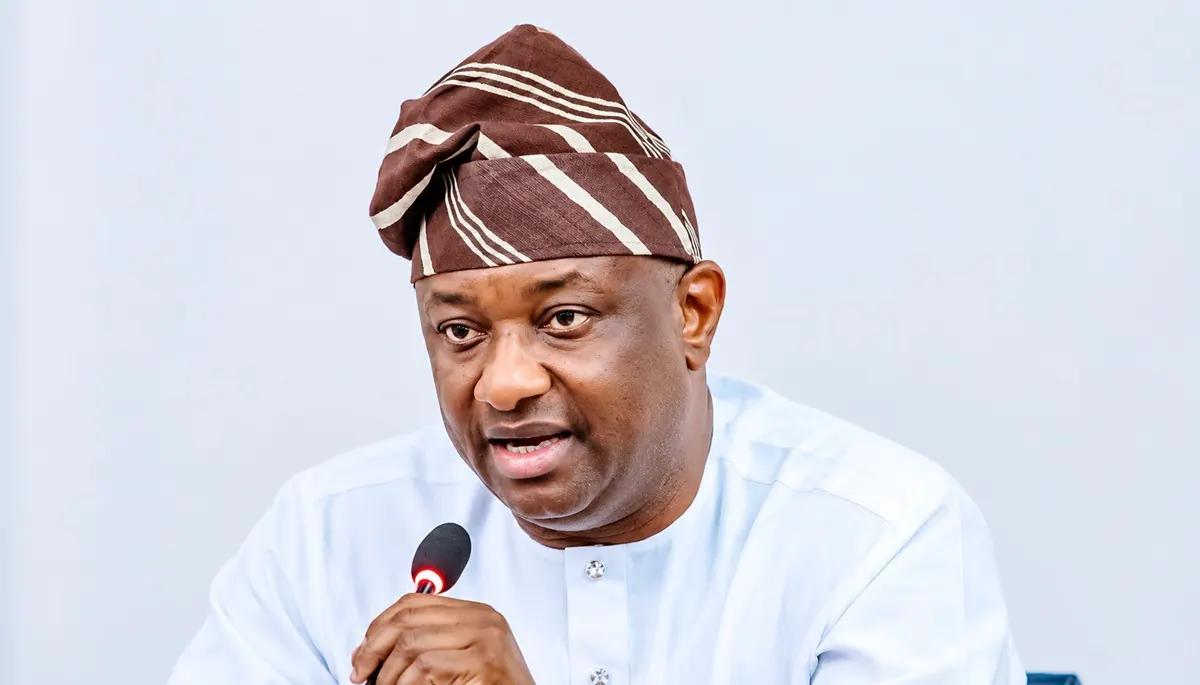
The Minister of Aviation and Aerospace Development, Festus Keyamo, has disclosed that the removal of the petrol subsidy has enabled the Federal Government to mobilize about $500 million for the reconstruction of critical aviation infrastructure, including the Lagos airport. This investment was not borrowed and was made possible by improved liquidity and stronger foreign reserves following the administration's economic reforms. Keyamo made this statement at the 67th anniversary of Aero Contractors in Lagos.
According to Keyamo, the funds for the projects were not raised through borrowing, but attributed the government's increased capacity to fund infrastructure to improved liquidity and stronger foreign reserves. The country's foreign exchange reserves have strengthened significantly, with the Central Bank of Nigeria reporting reserves of $55.25 billion in September 2026. This increase in reserves has created the conditions required to attract capital, develop infrastructure, and generate employment.
The Federal Government had previously announced a $500 million investment in the reconstruction and modernization of the Murtala Muhammed International Airport in Lagos. Keyamo said in June that the funding was from national savings rather than borrowing. The minister argued that the broader economic benefits of the reforms should also be assessed through improvements in liquidity, external reserves, and the country's ability to attract investment for infrastructure.
Keyamo defended the administration's emphasis on investment as a route to job creation, arguing that employment would ultimately depend on infrastructure development and private-sector investment. He stated that jobs don't fall from heaven, but come as a result of either the infrastructure built or investments made. The minister also highlighted that stronger external buffers and investor confidence could create the conditions required to attract capital, develop infrastructure, and generate employment.
Beyond the Lagos airport reconstruction, Keyamo said the administration was moving ahead with the long-delayed second runway at the Nnamdi Azikiwe International Airport, Abuja. President Bola Tinubu had approved the return of China Civil Engineering Construction Corporation (CCECC) to the project. The project has faced years of delays, with funding and cost concerns contributing to the stalled construction.
The second runway project in Abuja was previously estimated at ₦45 billion but faced resistance over the proposed expenditure. However, Keyamo recalled that the prolonged delay has substantially increased the cost of the project, which he now puts at nearly ₦500 billion. The project illustrates the rising cost of delayed infrastructure development, as construction expenses and other project inputs have increased significantly over the years.
Aero Contractors' Managing Director, Captain Ado Sanusi, called for aviation to receive a more deliberate role in Nigeria's economic development strategy. He stated that aviation should not be viewed solely as a transportation sector, but as a sector that can support tourism, trade, employment, and foreign investment. Sanusi emphasized that Nigeria's aviation infrastructure and industry needed sustained investment to remain competitive and retain economic activity that could otherwise move to other regional markets.
Key points
- The removal of petrol subsidy helped unlock $500m for Lagos airport reconstruction.
- The funds for the projects were not borrowed but came from improved liquidity and stronger foreign reserves.
- The administration is also moving ahead with the long-delayed second runway at Abuja airport.