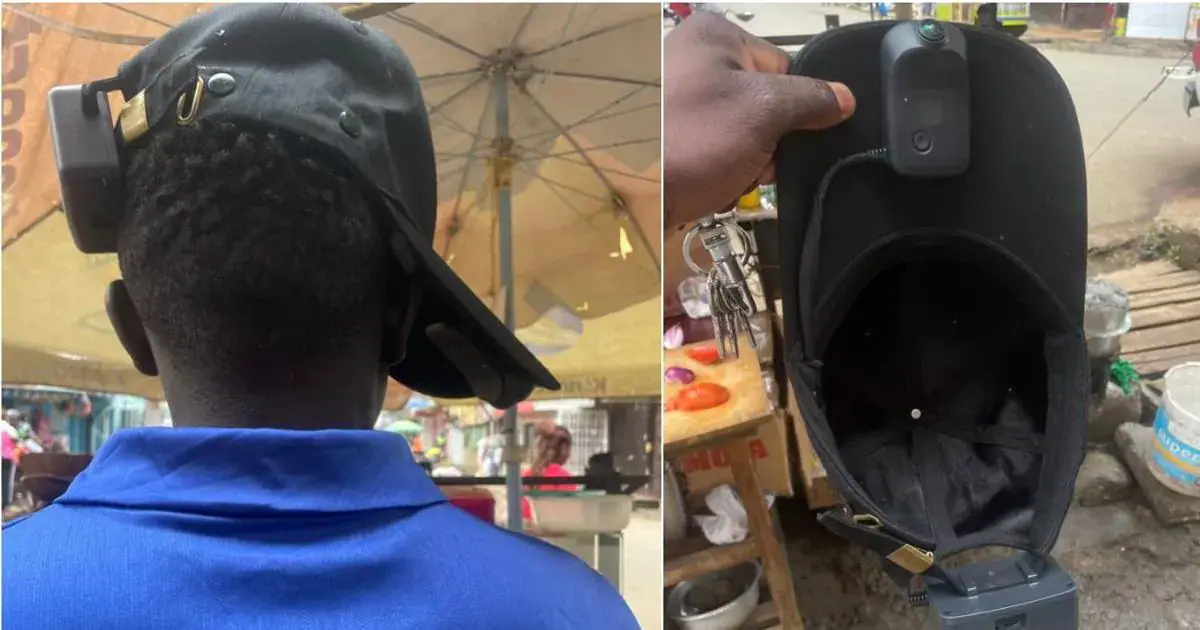
Unusual caps fitted with miniature cameras have been spotted in different parts of Nairobi, sparking curiosity and privacy concerns among Kenyans. The wearers reportedly capture footage of their routine activities while working or moving around public spaces. The devices appear to be wearable first-person camera systems fitted with two small lenses positioned side by side, capturing footage from the wearer's point of view.
According to reports, people wearing the camera-fitted caps are being paid approximately KSh50 to KSh90 per day to record their daily activities. A shoemaker claimed that workers in the Jua Kali sector were being paid KSh50 an hour to wear the cameras while carrying out their normal duties. The exact organisation behind the arrangement and the recruitment terms for participants have not been publicly confirmed.
The footage collected through the devices is linked to the development of artificial intelligence and robotics systems, specifically embodied AI, which involves developing machines that can interact with and perform tasks in the physical world. The technology requires data showing how humans handle objects, operate tools, move items, and interact with their surroundings. Footage recorded from a person's perspective can provide examples of these activities, helping developers train machines to perform similar tasks.
However, the devices have raised questions about privacy, particularly because they may capture people who are not aware they are being recorded. The cameras could potentially film customers, shoppers, business owners, and other members of the public as wearers go about their activities. This has prompted concerns over whether people appearing in the recordings have been informed or given consent to be filmed.
Questions have also emerged over who owns the footage, where it is stored, who can access it, and how long it is retained. There are further concerns about whether the devices record audio alongside video and what measures are in place to protect the information from unauthorised access or misuse. The identity of the organisation commissioning the recordings and the precise arrangements governing the project remain unclear.
As the camera-fitted caps attract attention in Nairobi, the debate has shifted beyond the payments offered to wearers to the need for transparency about what is being recorded and how the resulting data will be used. Kenyans are calling for answers to questions about the ownership and operation of the cameras, what is being recorded, and what happens to the recordings.
The situation highlights the need for clear regulations and guidelines on the use of wearable cameras and the collection of personal data. It also underscores the importance of informed consent and transparency in the use of technology, particularly when it involves the collection of data from members of the public.
Key points
- The payments to wearers range from KSh50 to KSh90 per day.
- The footage is being used for embodied AI development.
- Concerns have been raised over privacy, consent, and data ownership.