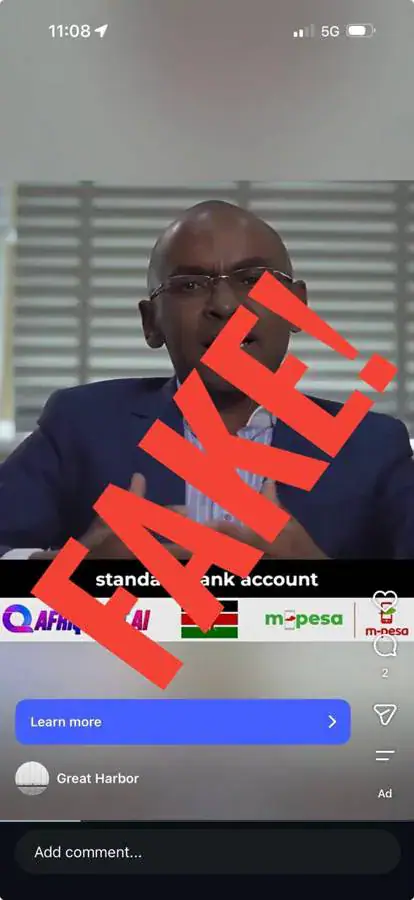
In Kenya, a growing number of people are falling prey to deepfake scams targeting Safaricom's Fuliza service, an M-PESA overdraft feature allowing users to complete transactions even with low balances. With 17.7 million M-PESA customers utilizing Fuliza, scammers see an opportunity to deceive people with fake offers. These scams involve AI-generated videos that mimic Safaricom executives, promising to double or increase Fuliza limits for a small fee.
Safaricom's Fuliza service, launched in partnership with NCBA Bank Kenya and KCB Bank Kenya, allows users to borrow up to a certain limit, charging a one-off 1% access fee and a daily maintenance fee of between KSh1 and KSh30. The service has become increasingly popular, with disbursements rising 49% to KSh1.47 trillion and the average loan standing at about KSh218. However, this popularity has also attracted scammers who use generative AI tools to create convincing videos and web pages.
The scams typically involve a video appearing on social media or messaging platforms, featuring a well-dressed individual who looks and sounds like a senior Safaricom executive. The video promises to double or increase the viewer's Fuliza limit, often with a sense of urgency. The scammers then use cloned web pages to steal personal details, M-PESA PINs, or money from unsuspecting victims. Experts warn that these scams are becoming increasingly sophisticated and difficult to spot.
To avoid falling victim to these scams, experts recommend a simple yet effective approach: Stop, Think, Act/Verify. This involves stopping to consider the offer, thinking critically about its legitimacy, and verifying it through official Safaricom channels. The Macho, Masikio, Akili (Eyes, Ears, Mind) check can also help identify potential scams. This includes checking for mismatched lips and words, robotic or flat pitches, and unrealistic promises.
Safaricom has also taken steps to educate its customers about the risks of deepfake scams. The company has emphasized that it will never ask for M-PESA PINs, SIM passcodes, or passwords. Customers are advised to be cautious when receiving unsolicited offers and to verify them through official channels, such as the My Safaricom app, the official website, or customer care.
The trend of deepfake scams is not limited to Kenya, with cybersecurity firm ESET warning that deepfake-driven investment fraud is a top risk for the country. In 2025, Africa Check examined a Facebook ad that appeared to show a well-known Kenyan TV journalist interviewing a businessperson about an "investment opportunity." The ad promised KSh130,000 a week from a KSh32,000 start, but was later found to be fake.
To stay safe, Kenyans are advised to be vigilant and cautious when receiving unsolicited offers, especially those promising unusually high returns or increases in Fuliza limits. By being aware of the risks and taking steps to verify offers, individuals can protect themselves from falling victim to these scams. Key to this is verifying information through official channels and being wary of urgency or pressure to act quickly.
Key points
- Scammers use AI-generated videos to impersonate Safaricom executives and offer fake Fuliza limit increases.
- Experts recommend the Stop, Think, Act/Verify approach to avoid falling victim to deepfake scams.
- Safaricom customers are advised to verify offers through official channels and be cautious of unsolicited messages.
Reporting sources
- How to Avoid Fuliza Deepfake Scams · techmoran.com