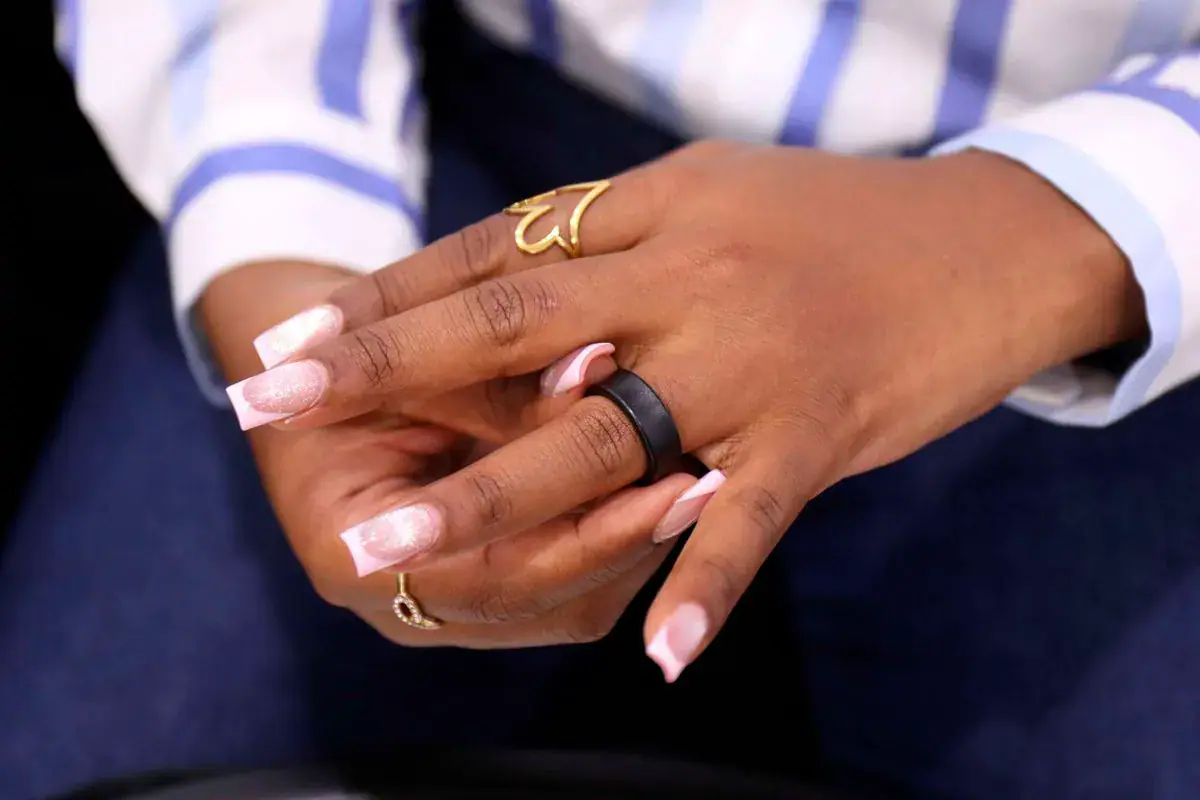
A new category of wearable technology, smart rings, is gaining popularity among Kenya's fitness enthusiasts. These compact devices resemble ordinary jewelry and track health indicators without the bulk of a watch. Smart rings offer a discreet way to monitor health around the clock, collecting data on sleep patterns, heart rate, and activity levels. They operate in the background, sending data to a smartphone app for analysis. This technology is attracting interest among health-conscious consumers and tech enthusiasts in Kenya.
Despite the growing interest, uptake in Kenya remains slow due to high prices and limited awareness. Some high-end models retail for more than Sh45,000, while budget models start at Sh3,500. Phone Place Kenya, a Nairobi-based gadget store, has been selling smart rings since 2024 but reports slow sales. The store's head of marketing, Cate Manyuira, says customers who have researched the technology seek smart rings for their discreet design and ability to track health indicators continuously.
Smart rings use miniature sensors to collect physiological and movement data from the wearer's finger. Optical sensors shine light into the skin, while photodetectors measure changes in the reflected light as blood moves through vessels. These changes help estimate heart rate and heart-rate variability. An accelerometer detects movement, and temperature sensors track changes in skin temperature. Bluetooth transmits the collected data to a smartphone for analysis.
The finger offers a useful location for optical sensing due to its blood supply and proximity to blood vessels. However, the quality of readings depends on factors such as fit, movement, circulation, and technology used by each manufacturer. Dr. Zeeshan Chaudhry, head of accident and emergency at M.P. Shah Hospital in Nairobi, says smart rings' advantage over watches is their design and ability to collect continuous data comfortably, particularly during sleep.
Smart rings' greatest value lies in identifying trends and changes from an individual's normal baseline over time. Some advanced rings incorporate near-field communication, supporting functions such as contactless payments or access control. The Finnish company Oura helped shift the category toward health and sleep tracking with its first-generation ring in 2015. Today, brands available to Kenyan consumers include Samsung, Ultrahuman, and Porodo.
Budget models from Porodo start at about Sh5,000, while premium models from Samsung, Oura, and Ultrahuman can cost upwards of Sh45,000. The more expensive devices offer longer battery life, additional tracking functions, and more detailed analysis through their accompanying applications. Many rings can last between six and nine days on a charge, tracking activity, sleep, skin-temperature trends, and stress-related indicators.
As manufacturers add artificial intelligence-powered analysis to their applications, smart rings are evolving from passive trackers into systems that interpret data and suggest behavioral changes. Ultrahuman's mobile app offers detailed behavioral insights, including guidance on caffeine timing to minimize sleep disruption. The tech companies emphasize that these features are intended to help users understand patterns in their bodies over time rather than provide medical diagnoses.
Key points
- High-end smart rings retail for Sh45,000 in Kenya.
- Smart rings track health indicators such as sleep patterns, heart rate, and activity levels.
- The technology is gaining popularity among Kenya's fitness enthusiasts despite slow uptake due to high prices.