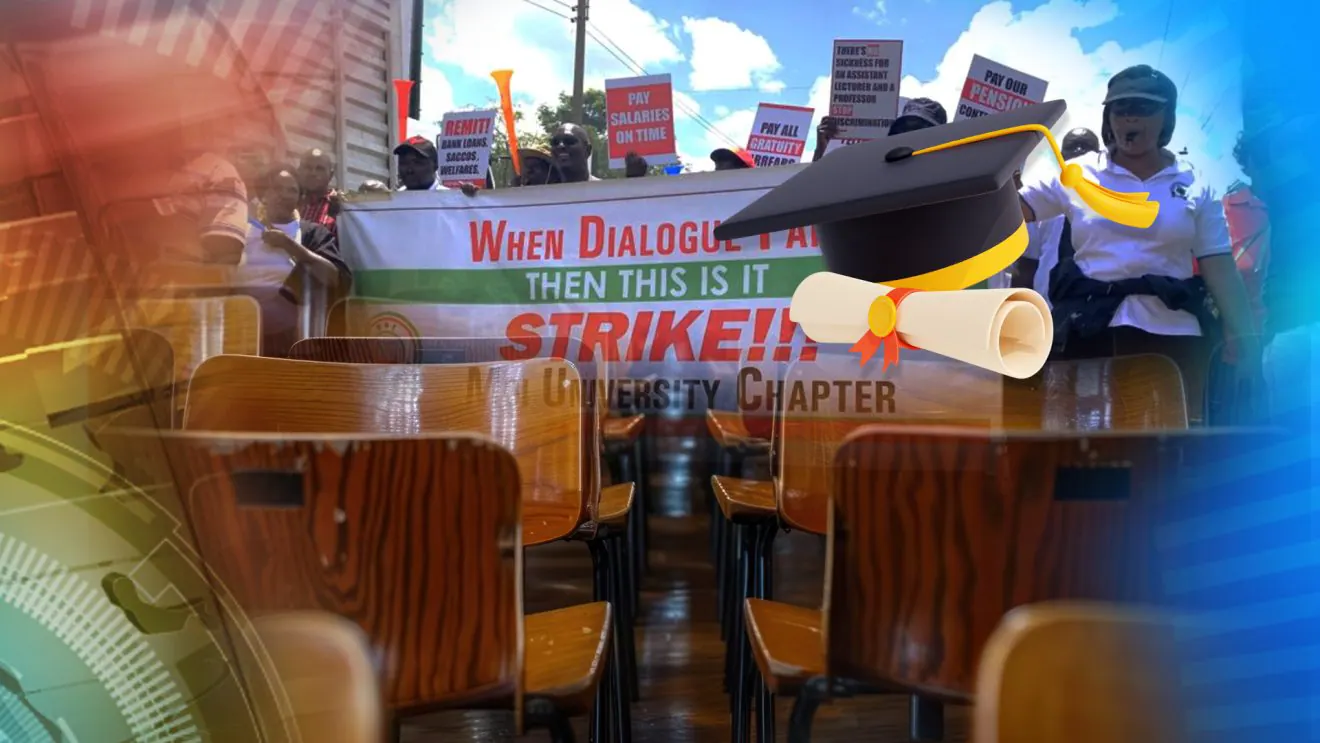
Lecturers and other staff members at Kenyan public universities have rejected a new proposal from the government regarding the Collective Bargaining Agreement (CBA) for 2025 to 2029. The main reason for the rejection is that the proposal does not meet their demands. The dispute involves a significant difference between the claims presented by the labor unions, including UASU, KUSU, and KUDHEIHA, and the proposals provided by the Inter-University Permanent Committee on Collective Bargaining Framework (IPUCCF), which represents the employers.
The labor unions had proposed a significant salary increase and various allowances. For instance, UASU had suggested a basic salary increase of between 36% and 68%, depending on the job grade. They also proposed a 57% increase in house allowance, a transport allowance of up to Sh60,000 for some grades, and a professor's allowance of Sh80,000. Additionally, the union suggested a book allowance of between Sh65,000 and Sh90,000 per year, a leave allowance of up to Sh70,000, and medical, dental, and eye insurance. However, the employers proposed a much lower increase.
After considering various options, IPUCCF proposed a salary increase of 2% every year for four years under the CBA. This translates to a total increase of only 8.25% by 2029. Dr. Constantine Wasonga, the General Secretary of UASU, stated that the labor unions were not fully involved in reaching this decision. He emphasized that a collective agreement requires real negotiations, saying, "We cannot be given a final figure and then told to accept it."
Dr. Charles Mukhwaya, the Chairman of KUSU, expressed frustration with the unproductive negotiations. He stated that the workers are tired of going around the same issue forever and are ready to take to the streets to demand what they deserve if their rights are not considered. KUDHEIHA also stated that the current proposal does not meet the workers' expectations and does not provide room for career advancement.
The rejection of the proposal may lead to industrial action by the lecturers and staff. The labor unions have been pushing for better terms, citing the high cost of living and the need for improved working conditions. The government, on the other hand, may be constrained by budgetary limitations. The negotiations are ongoing, with both parties seeking a resolution.
The dispute affects several public universities in Kenya, which are critical to the country's education system. The universities have been facing various challenges, including inadequate funding, outdated infrastructure, and a shortage of staff. The lecturers and staff are demanding better working conditions, including improved salaries and allowances, to enable them to provide quality education.
The outcome of the negotiations will have significant implications for the education sector in Kenya. If the parties fail to reach an agreement, it may lead to a prolonged strike, affecting thousands of students. The government and the labor unions must work together to find a solution that addresses the concerns of both parties and ensures the continued provision of quality education.
Key points
- The lecturers and staff at Kenyan public universities have rejected a new contract proposal from the government, citing it does not meet their demands.