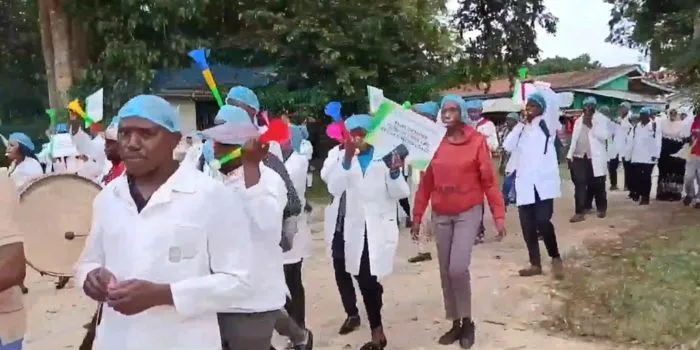
Kenyan public health officers have submitted four demands to the Ministry of Health, seeking a more comprehensive response to the country's first confirmed Ebola case. The demands, tabled on October 7, 2026, aim to strengthen the public-health response and prevent a potential crisis. The officers emphasize that effective Ebola control requires participation from all health workers, not solely physicians. They also highlighted shortcomings in applying international health regulations at border crossings.
The suspected patient, who tested positive for Ebola, had traveled from the Democratic Republic of Congo through Uganda into Kenya. Public health officers questioned whether proper screening and certification were carried out at each border, arguing that such checks should be performed by trained personnel. They warned that a weakened public-health infrastructure could expose Kenya to a crisis comparable to the COVID-19 pandemic, which also began with an imported case.
The Ministry of Health has stepped up contact-tracing, identifying 57 contacts linked to the case, and has placed ten individuals in quarantine facilities as of Wednesday morning. Public health officers are urging the ministry to engage them nationwide, resolve ongoing strikes, and ensure their full participation in the Ebola response. They also seek a comprehensive system that defines clear roles for public health staff, laboratory specialists, clinicians, nutritionists, and other health workers in managing Ebola and future epidemics.
According to the officers, roughly 4,791 health workers have received Ebola preparedness training, but the programme mainly targets senior officials rather than frontline responders. They are requesting additional training for public health officers and laboratory personnel on surveillance, detection, and response to ensure rapid action at the front line. This training is crucial in preventing the spread of the disease and responding effectively to potential outbreaks.
The public health officers also raised concerns about insufficient personal protective equipment, noting instances where staff have been exposed to potentially lethal pathogens while on duty. They emphasized that adequate protective gear is essential in preventing the spread of Ebola and ensuring the safety of healthcare workers. The officers' demands aim to address these gaps and strengthen Kenya's response to the Ebola outbreak.
The Ministry of Health has not publicly responded to the officers' demands, but officials have emphasized the importance of a coordinated response to the Ebola outbreak. The county-wide strengthening of the public-health response is critical in preventing the spread of the disease and responding effectively to potential outbreaks. The officers' demands highlight the need for a comprehensive and inclusive approach to addressing the Ebola outbreak in Kenya.
The situation in Kenya highlights the ongoing challenges of responding to infectious disease outbreaks in the region. The country's experience with COVID-19 has shown the importance of a robust public-health infrastructure in responding to emerging health threats. As the situation continues to unfold, it remains to be seen how the Ministry of Health will respond to the public health officers' demands and whether Kenya can effectively contain the Ebola outbreak.
Key points
- Public health officers demand broader Ebola response from Ministry
- 57 contacts linked to Ebola case identified, 10 in quarantine
- Officers seek comprehensive system defining clear roles for health workers