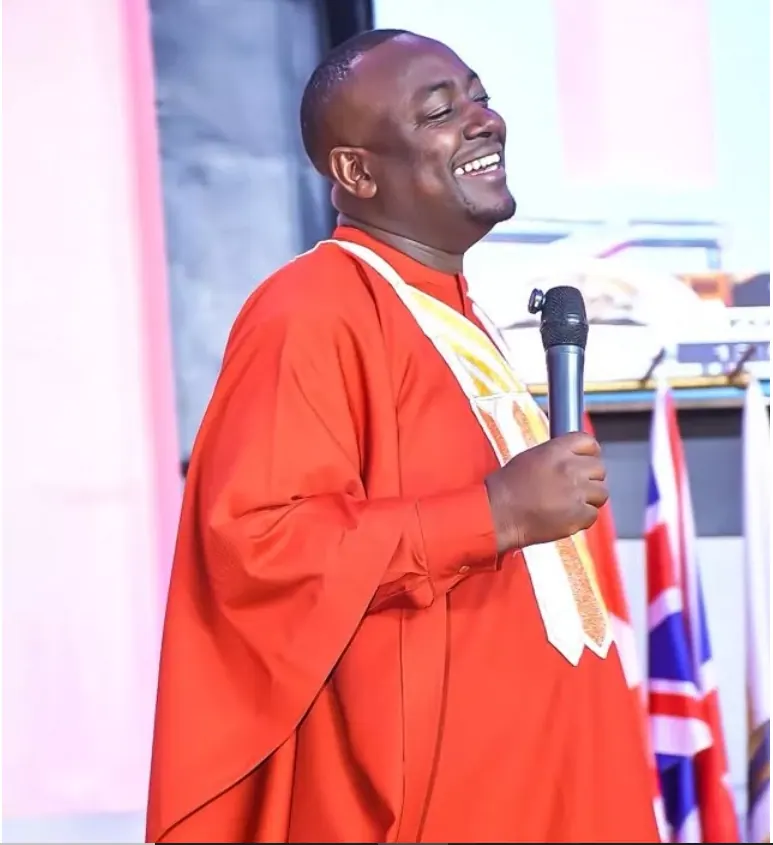
Kenyan preacher Victor Kanyari has spoken about the financial motivations behind his entry into Christian ministry. In a recent interview on Radio Maisha, Kanyari revealed that his decision to pursue ministry full-time was largely influenced by financial hardship. Growing up in difficult circumstances in Nairobi, Kanyari began assisting his mother, Prophetess Lucy Nduta, as she preached on the streets. He later started preaching independently in Kawangware after a local landlord offered him a hall for his services.
Kanyari's mother played a significant role in shaping his decision to become a preacher. He recalled witnessing her receive food and financial assistance from members of the public, which made him realise that preaching could provide a way out of his financial difficulties. Kanyari stated that he can't say he was called to ministry, but rather he saw an opportunity and took it. His mother, he said, had a compassionate approach to ministry, with no offerings required from her congregants.
Kanyari rose to national prominence in 2014 after being featured in a KTN Jicho Pevu investigation titled Makri ya Injili, or "Gospel Scam". The investigation accused him of staging miracles and using potassium permanganate to turn water red as part of demonstrations presented as supernatural acts. Despite the backlash, Kanyari retained a loyal following and continued operating his ministry in Nairobi. The investigation triggered widespread public criticism and calls for authorities to investigate the preacher.
Before finding success with his ministry, Kanyari struggled to raise money through his radio broadcasts. He initially asked listeners to send KSh1,000, then KSh700, and later KSh500, but the response was poor. He eventually lowered the requested contribution to KSh310, and the response changed dramatically. According to Kanyari, the strategy generated a significant flow of mobile-money transactions, with several phones receiving payments and the preacher claiming that collections exceeded KSh1 million per day during peak periods.
Kanyari's KSh310 "seed" strategy became a defining feature of his ministry. He said that people responded positively to the lower amount, and he was able to collect large sums of money. When asked what he did with the money, Kanyari gave a straightforward answer: "Zangu za kula na kusaidia watu," or "Mine to eat and help people." The preacher's approach to ministry has been a subject of controversy, with some critics accusing him of exploiting his congregants.
The 2014 investigation also prompted former journalist Mohammed Ali to campaign for Kanyari's arrest. However, Kanyari said law enforcement officers required people who believed they had been wronged to formally report the matter at police stations. With no formal complainants coming forward, Kanyari said authorities did not proceed with a prosecution, allowing him to continue with his ministry. Kanyari has maintained that he has done nothing wrong and has continued to operate his ministry.
Kanyari's ministry, the Salvation Healing Ministry, continues to operate in Nairobi. While some have criticised his approach to fundraising, Kanyari has maintained a loyal following. The preacher's comments about the financial motivations behind his ministry have sparked a renewed debate about the role of money in Christian ministry.
Key points
- Victor Kanyari's ministry began as a financial decision, not a divine calling.
- Kanyari's KSh310 "seed" strategy generated significant funds for his ministry.
- The preacher was not prosecuted after the 2014 investigation due to lack of formal complainants.