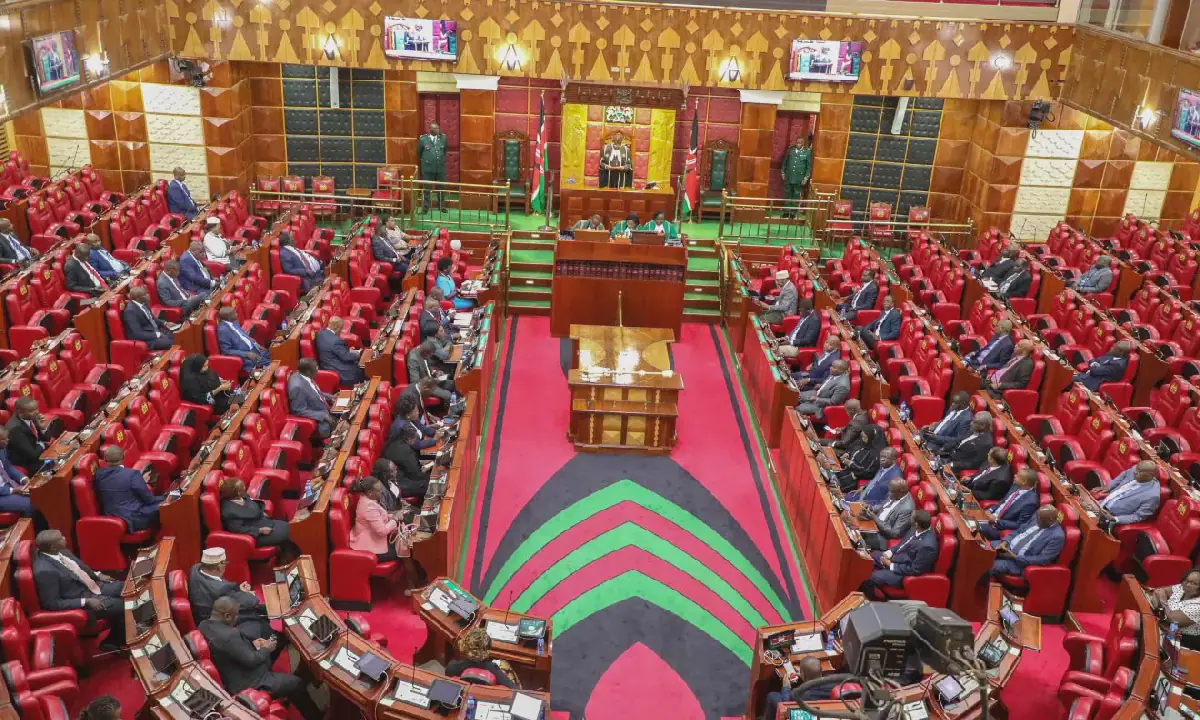
Kenya's National Assembly has rejected proposals to electronically transmit presidential election results, sparking controversy and debate among lawmakers. The proposals, which were put forward by the Senate, aimed to reduce delays in announcing presidential election results and increase transparency. The Senate had suggested that the Independent Electoral and Boundaries Commission (IEBC) transmit results from each polling station within two hours of counting.
The rejected proposals were part of a broader effort to reform Kenya's electoral laws, following a political agreement between President William Ruto and opposition leader Raila Odinga. The agreement, facilitated by the National Dialogue Committee (NADCO), sought to address concerns over the electoral process and prevent future disputes. However, lawmakers opposed to the proposals argued that they would undermine the existing electoral laws and potentially lead to chaos.
The debate over the proposals was marked by disagreements between lawmakers, with some arguing that electronic transmission of results would increase transparency and speed up the announcement of results. Mbunge wa Suba Kusini, Caroli Omondi, had suggested that results be displayed in real-time to allow citizens to track and verify the results. However, others argued that the proposals were unnecessary and would only lead to confusion.
The rejection of the proposals was led by Mbunge wa Homa Bay Town Peter Kaluma, who argued that the changes would be premature and potentially contravene the Kriegler report's recommendations. The report had suggested that electoral laws should not be changed within a year of a general election. Lawmakers also cited a recent court ruling that deemed the electronic transmission of results for public information purposes unconstitutional.
The controversy surrounding the rejected proposals has sparked concerns over the credibility of Kenya's electoral process. The opposition has long accused the IEBC of being biased and incapable of conducting free and fair elections. The rejection of the proposals has also raised questions about the government's commitment to electoral reform and transparency.
The National Assembly's decision has been met with disappointment from some lawmakers, who argue that the rejection of the proposals will perpetuate the status quo and undermine efforts to increase transparency and accountability in the electoral process. Mbunge wa Funyula Wilberforce Oundo expressed concern that Kenya's electoral process would continue to be marred by delays and disputes.
The debate over the proposals highlights the ongoing challenges facing Kenya's electoral process. The rejection of the proposals has set back efforts to reform the electoral laws and increase transparency. As the country prepares for the 2027 general election, lawmakers will need to revisit the issue and find a solution that balances the need for transparency and accountability with the concerns over the electoral process.
Key points
- The Kenyan parliament has rejected proposals to electronically transmit presidential election results.
- The proposals were part of a broader effort to reform Kenya's electoral laws and increase transparency.
- The rejection of the proposals has sparked concerns over the credibility of Kenya's electoral process.