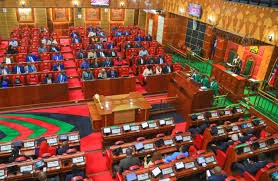
Kenyan lawmakers have clashed over proposed changes to election laws, with deep divisions emerging over the cost of elections, voter registration, and candidate qualifications. The debate centered on the Elections (Amendment) (No 2) Bill, which aims to strengthen the transmission and declaration of election results. The bill, a product of extensive public consultations, proposes changes to voter registration, results transmission, and candidate qualifications.
One of the most contentious proposals is the increase of the maximum number of registered voters per polling station from 700 to 1,000. The committee argues that this change would help reduce the cost of elections, as proposed by the Independent Electoral and Boundaries Commission (IEBC). However, some lawmakers, including Kesses MP Julius Rutto, have opposed the proposal, citing unique social and geographical circumstances that require flexibility in determining the number of voters served by a polling station.
The cost of elections was also a major point of contention, with Molo MP Kuria Kimani questioning why Kenya spends approximately Sh2,600 for every vote. Kimani compared this to South Africa, where it costs four times less to cast a vote. He argued that the money could be directed to other priorities, such as education and healthcare. National Assembly Majority leader Kimani Ichung'wah joined the debate, saying that Kenya's elections are among the most heavily policed and monitored due to a lack of trust among political players.
The proposed changes also include making it mandatory for the IEBC to rectify a voter's particulars where an error is identified during inspection of the register. Additionally, the committee has proposed deleting clauses that would effectively remove the existing recall mechanism for MPs. The committee argues that the grounds for recalling an MP introduced by the Senate would be difficult to measure and the issue could instead be dealt with through separate legislation.
Another contentious issue is the removal of education requirements for candidates seeking election as MPs and MCAs. The committee proposed deleting clauses that introduced educational requirements for candidates, citing a High Court ruling that declared the provisions unconstitutional. However, some lawmakers, including Baringo Woman Representative Jematiah Sergon and Ugenya MP David Ochieng, have opposed the removal, arguing that literacy is an important component of leadership.
The debate also touched on the definition of a political party, with the committee proposing changes to ensure that the existing legal definition is comprehensive and covers coalition political parties. On voter registration during a by-election, the committee proposed deleting a proposed new section that would have barred a person who registers as a voter during a by-election from contesting in the electoral area affected by that by-election.
The proposed changes to election laws are expected to have a significant impact on future elections in Kenya. The bill will now be put to a vote, with lawmakers expected to make a decision on the proposed changes. The IEBC estimates that the next year's election could cost more than Sh60 billion, raising questions about the value generated by such expenditure.
Key points
- The proposed changes to election laws have sparked a heated debate among Kenyan lawmakers.
- One of the most contentious proposals is the increase of the maximum number of registered voters per polling station from 700 to 1,000.
- The cost of elections was also a major point of contention, with lawmakers questioning why Kenya spends approximately Sh2,600 for every vote.