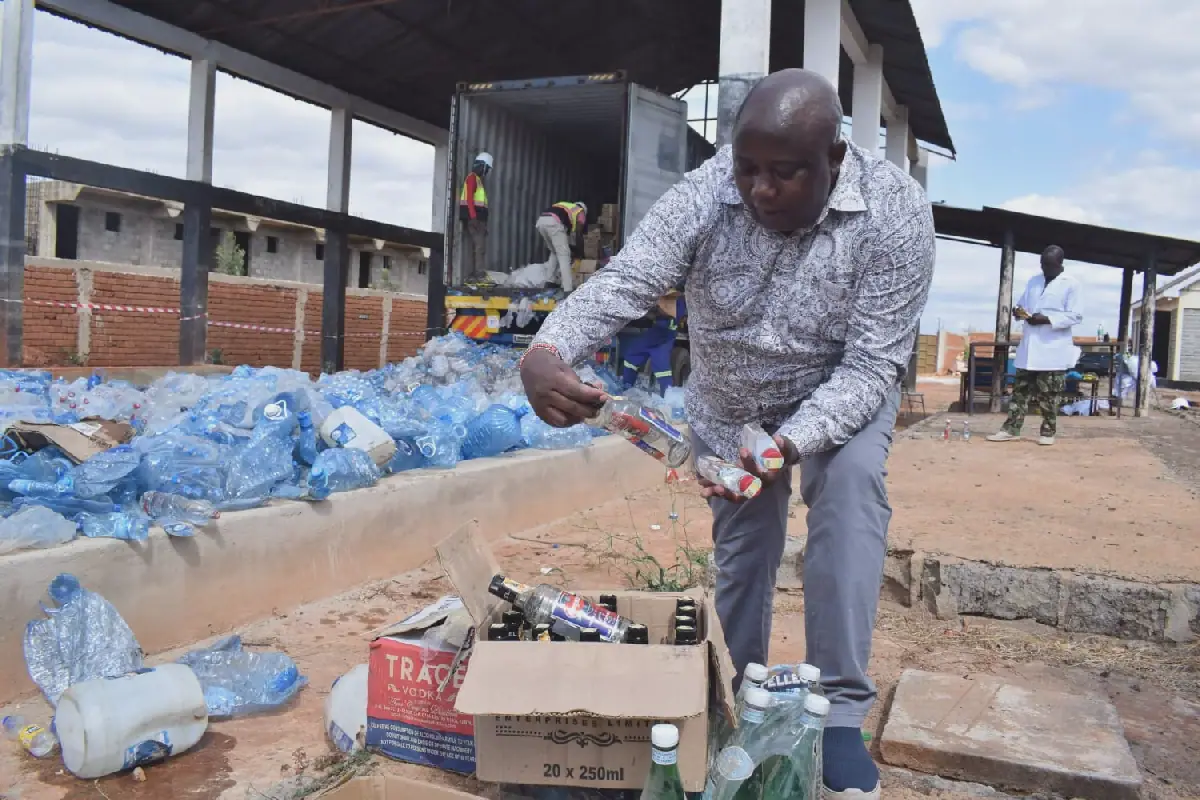
The Kenyan market is facing a significant challenge with a surge in counterfeit goods, including alcohol, medicines, cosmetics, and electronic devices. These items are increasingly appearing in informal shops and online marketplaces, raising serious concerns about consumer safety. According to authorities, the proliferation of fake goods is driven by weak enforcement, growing online sales channels, and consumer demand for cheaper alternatives.
Government data reveals a staggering 1,261% increase in seized contraband cigarettes, with 132,156 packs intercepted between September 2025 and August 2026, compared to 9,707 packs in the previous year. This surge is part of a broader trend of counterfeiting, with other confiscated items including 75,948 units of fake alcohol, 94,012 pieces of counterfeit polythene, and 37,270 liters of illicit ethanol.
The counterfeit trade is also affecting other sectors, with seizures of illegal sugar dropping sharply by 77%, indicating a shift in the types of contraband being trafficked. Other seized items include 478 bags of bogus fertilizer, 2,333 counterfeit US-dollar notes, and 11,400 packets of substandard milk. The report highlights collusion between certain officials and unscrupulous traders, as well as more sophisticated counterfeiting methods, as major barriers to curbing the trade.
The government attributes the surge in counterfeit goods to limited public awareness and the affordability of fake items, which continue to sustain demand despite associated health, safety, and fiscal risks. To combat this issue, the government has reinforced border controls, launched multi-agency operations, and expanded public-awareness campaigns about the dangers of fake products.
Future actions outlined by the government include stepping up arrests and prosecutions, tightening surveillance of online marketplaces, improving product authentication systems, and deepening regional cooperation to break cross-border smuggling networks. These efforts aim to address the root causes of the problem and reduce the prevalence of counterfeit goods in the market.
The impact of counterfeit goods on the Kenyan economy and public health is significant, with fake products posing serious risks to consumers. The government's efforts to combat counterfeiting will require cooperation from various stakeholders, including traders, consumers, and law enforcement agencies. Public awareness and education will play a crucial role in reducing demand for fake goods.
As the government implements new measures to curb counterfeiting, consumers are advised to be vigilant and cautious when purchasing products, especially online. By working together, it is possible to reduce the prevalence of counterfeit goods and promote a safer and more reliable market for consumers. The government's commitment to addressing this issue is a step in the right direction, but sustained efforts will be needed to achieve lasting results.
Key points
- A 1,261% rise in seized contraband cigarettes was recorded between September 2025 and August 2026.