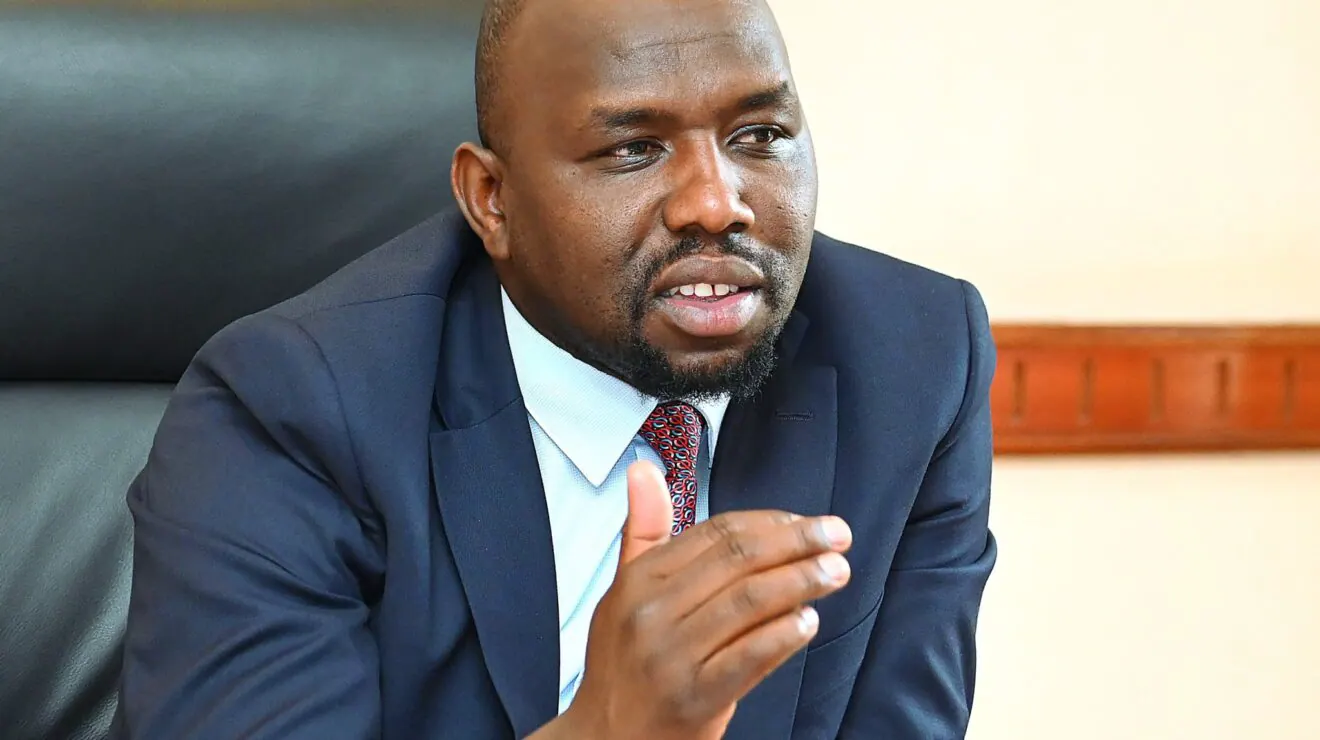
Interior Cabinet Secretary Kipchumba Murkomen has acknowledged that the Kenyan government misread the scale and nature of the 2024 Gen Z protests. Speaking at the National Defence College in Karen, Nairobi, Mr Murkomen said the government failed to recognise early enough that opposition to the Finance Bill could evolve from a budget dispute into a national security and governance crisis. The lecture, titled “Citizen Engagement as a Strategic Governance and National Resilience,” was attended by senior-ranking Kenyan officials and participants from 16 other African countries.
The protests, which began on June 18, 2024, were largely led by young Kenyans mobilising through social media against proposed tax increases. What began as opposition to specific provisions of the Finance Bill rapidly expanded into a broader expression of dissatisfaction with the cost of living, taxation, government spending, corruption, and political accountability. The scale of the unrest caught both the government and security agencies off guard, with protests spreading beyond Nairobi to several parts of the country.
On June 25, protesters breached Parliament after clashes with police, and parts of the building were set on fire. The country witnessed some of its most serious political unrest in years, with the Kenya National Commission on Human Rights documenting 60 deaths and 601 injuries linked to the protests between June 18 and July 15, 2024. The Armed Conflict Location & Event Data project recorded 96 political violence events and 82 reported fatalities between June 1 and July 12.
President William Ruto subsequently declined to sign the Finance Bill and announced its withdrawal, while his government underwent a major restructuring. On July 11, he dismissed almost his entire Cabinet, saying he intended to form a broad-based government and reassess his administration. Mr Murkomen, who had previously served as Cabinet Secretary for Roads and Transport, was eventually appointed Interior Cabinet Secretary.
Mr Murkomen said the government’s first mistake was to treat the crisis principally as a Treasury matter. He stated that the reality is that a problem that should have been seen from a national security perspective was initially viewed as a budget issue. This approach, he implied, contributed to the government's inability to effectively manage the crisis.
The lecture at the National Defence College was attended by senior-ranking Kenyan officials seconded to the college by various State departments and participants from 16 other African countries. The students are pursuing master’s degrees in National Security and Strategy. Mr Murkomen's admission offers a rare account from within government of how the administration viewed the protests that shook Kenya in June and July 2024.
Mr Murkomen's comments suggest that the government has been reflecting on its response to the protests and is seeking to learn from its mistakes. His statement that "it is a publicly acknowledged sentiment that we mismanaged the 2024 protests" indicates a willingness to acknowledge the government's shortcomings and potentially adjust its approach to citizen engagement and crisis management in the future.
Key points
- The Kenyan government misread the scale and nature of the 2024 Gen Z protests, failing to anticipate the speed and scale of opposition to the Finance Bill.
- The protests resulted in 60 deaths and 601 injuries, according to the Kenya National Commission on Human Rights.
- President William Ruto subsequently withdrew the Finance Bill and undertook a major reorganisation of his government.