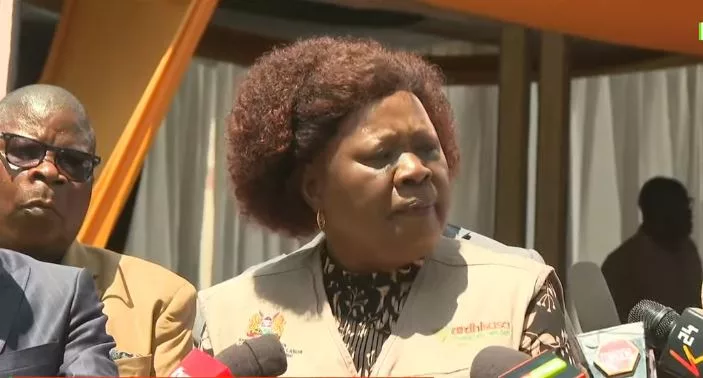
Lands Cabinet Secretary Alice Wahome has stated that the Kenyan government owns the majority of the land designated for the Sh2 trillion Dangote East Africa Refinery in Lamu. The project, launched by President William Ruto last week, aims to construct a refinery with a capacity of 700,000 barrels of crude oil per day. Wahome's comments come amid controversy over land ownership, with some residents challenging the government's claims in court.
Wahome accused some individuals opposing the project of being "enemies of development" and claimed they were deliberately creating obstacles. She assured that genuine squatters and landowners with legitimate claims would be identified and addressed. The government, she said, would support the project while handling individual cases found to be genuine. The refinery project involves multiple government departments, including lands, transport, defence, and interior.
President Ruto has echoed Wahome's sentiments, stating that no residents would be removed from the main refinery site as the land belongs to the government. On October 1, at State House Mombasa, Ruto disclosed that the government had secured about 10,000 acres and was seeking an additional 3,000 acres for the refinery and a planned special economic zone. He also mentioned efforts to remove administrative hurdles that could delay the project's implementation.
However, residents have challenged the government's position in court, arguing that they have occupied and used parts of the project area for generations. On September 28, Chandavai residents moved to the Malindi Environment and Land Court seeking to stop further development of the refinery on a specific parcel of land. They claim their families have farmed, grazed livestock, and built homes, mosques, and shrines on the land, with some relatives buried there.
The court did not halt the refinery's groundbreaking but ordered the parties to maintain the status quo on the disputed parcel until October 14, when the application is scheduled to be heard. Wahome urged people with genuine claims to approach the Office of the President, the National Land Commission, or the Ministry of Lands for assistance. She assured that the government has data on legitimate claimants and can address their concerns.
The Lamu refinery project, developed by Nigerian businessman Aliko Dangote, is a multi-agency project involving several government departments. Wahome emphasized that public participation and other issues arising during implementation would also be addressed. The government aims to ensure the project's success while considering the interests of all stakeholders.
The dispute over the Lamu refinery land highlights the challenges faced by large-scale development projects in Kenya. As the court hearing approaches, the government's handling of the situation will be closely watched. The project's success will depend on balancing the interests of investors, residents, and the government.
Key points
- The Kenyan government has defended its ownership of the Lamu refinery land, amid court challenges from residents claiming ancestral rights.
- President Ruto has assured that no residents will be removed from the main refinery site, as the land belongs to the government.
- The court has ordered the parties to maintain the status quo on the disputed parcel until October 14, when the application will be heard.