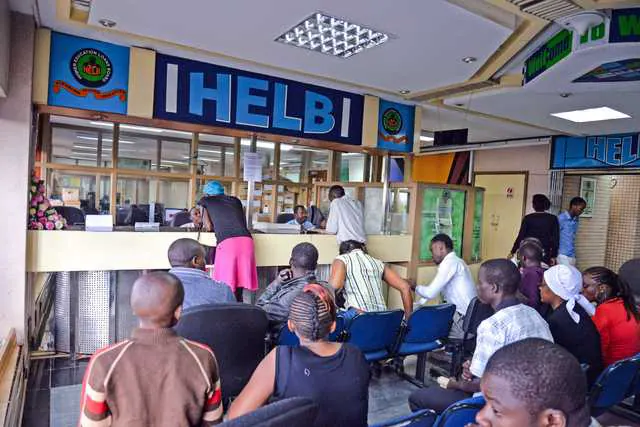
Education stakeholders in Kenya are calling for the removal of interest rates on student loans provided by the Higher Education Loans Board (HELB). They argue that this move will alleviate the debt burden on students and make it easier for them to repay their loans. The Muslim Education Board has proposed the removal of the interest rate clause in the 2026 University and Tertiary Education Funding Bill currently being discussed by the National Assembly's Education Committee.
Currently, students taking loans from HELB are charged an interest rate of 4% per annum on the outstanding debt, plus a Sh1,000 annual loan account management fee. Many students who apply for loans through HELB come from poor families and rely on the funds to cover tuition fees, accommodation, and daily expenses. As of June 2025, 256,000 students had defaulted on their loan repayments, which increased to 380,530 within five months.
Stakeholders believe that removing the interest rate will give beneficiaries a better chance to repay their loans without the burden of accumulating debt. The Kenya Union of Post-Primary Education Teachers (KUPPET) has expressed concerns about the proposed funding model, stating that it is not self-sustaining. KUPPET Secretary General Akello Misori warned that this could make annual allocations uncertain, leaving continuing students without funds to complete their courses.
The Education for Better Welfare Group (EBWG) has also urged the government to provide full funding for university and higher education students, covering tuition fees, accommodation, food, learning materials, and transport. The group recommends that funding be provided through grants, scholarships, and loans, depending on the student's needs and the type of expenses involved. EBWG representative Mohamed Farah stated that every admitted student in a public institution should receive sufficient support to cover their education expenses for the entire duration of their studies.
EBWG policy and strategy advisor Boaz Waruku suggested that HELB should provide grants, scholarships, or loans based on a student's needs. The Muslim Education Board's Said Abdalla emphasized that borrowers should only repay the amount they received, with possible discussions on a reasonable management fee. These proposals aim to address the challenges faced by students in repaying their loans and to make higher education more accessible.
The National Assembly's Education Committee is currently considering the 2026 University and Tertiary Education Funding Bill, which includes the contentious interest rate clause. The committee is expected to review the proposals and make a decision that will impact the future of higher education funding in Kenya. Stakeholders are eagerly awaiting the outcome, as it will determine the accessibility and affordability of higher education for Kenyan students.
The debate on HELB interest rates highlights the need for a sustainable and equitable funding model for higher education in Kenya. With many students relying on loans to access education, the removal of interest rates could be a crucial step towards reducing the debt burden and promoting education as a fundamental right. The government's decision will have far-reaching implications for the future of education in Kenya.
Key points
- Education stakeholders in Kenya are pushing for the removal of interest rates on HELB loans to ease the debt burden on students.
- The proposed 2026 University and Tertiary Education Funding Bill aims to reform the funding model for higher education in Kenya.
- Stakeholders recommend providing full funding for students through grants, scholarships, and loans based on individual needs.