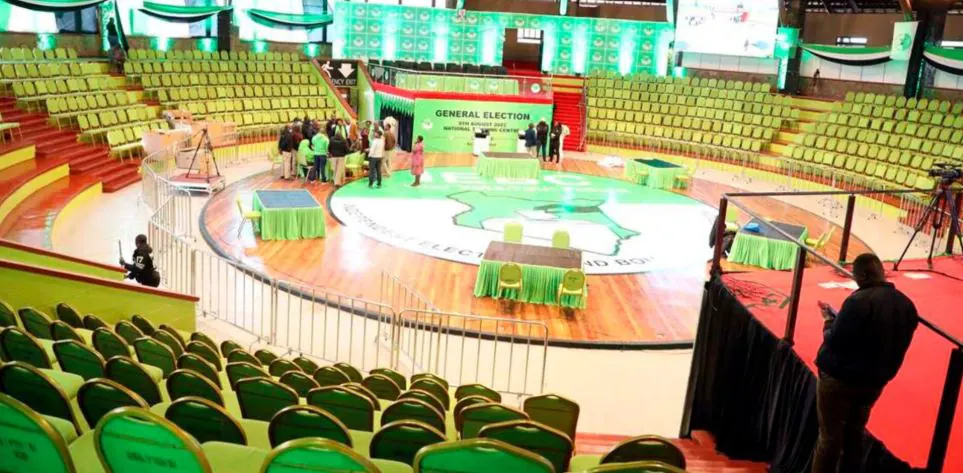
The High Court of Kenya has dismissed a petition filed by Busia Senator Okiya Omtatah, which sought to declare the national tallying and verification of presidential election results unconstitutional. In a judgment delivered on September 22, 2026, the court upheld Section 39(1C) of the Elections Act and Regulation 83(2) of the Elections (General) Regulations. This ruling confirms that the Independent Electoral and Boundaries Commission (IEBC) has the legal mandate to aggregate and verify presidential results at the national level.
Senator Omtatah had argued that the Constitution places the primary and final responsibility for tallying, verifying, and declaring presidential results strictly at the constituency level. He sought to bar the IEBC from re-tallying or re-verifying presidential results once constituency returning officers announce them. However, the court ruled that national aggregation is necessary to satisfy unique, nationwide electoral benchmarks. According to Article 138(4) of the Constitution, a winning candidate must secure more than 50 percent of the total votes cast nationally, as well as at least 25 percent of the votes cast in more than half of the 47 counties.
The judges observed that electoral officials cannot verify the dual threshold at the constituency or county level. They stated that national aggregation and confirmation exercise is not an arbitrary extra burden imposed on presidential candidates or voters. The court described the national process as a necessary and rational corollary of the Constitution's eligibility threshold for the presidency. This process ensures that presidential candidates meet the required national benchmarks.
The court also dismissed claims that national tallying creates unjustified differential treatment in violation of Article 27 of the Constitution. Regarding discrepancies between electronically transmitted results and physical documentation delivered from polling stations, the court affirmed that the result verified and declared at the polling station level shall prevail. This ruling provides clarity on the finality of polling station results.
The court declined to strike down Sections 39(1C) and 39(1G) of the Elections Act alongside Regulation 83, as other grounds raised in the petition failed to meet the required legal standard. The judges noted that claims touching on Article 35, ballot reconciliation, operational timelines, and broader Article 27 arguments were not substantiated. They stated that these claims proceed largely by way of general assertion and invocation of constitutional provisions without the requisite nexus to a demonstrated or imminent violation.
Looking ahead to the 2027 General Election, the High Court urged Parliament to enact meaningful reforms to Kenya's electoral laws. The court invoked philosopher John Rawls' concept of the "veil of ignorance," advising lawmakers to draft electoral frameworks from a neutral perspective. This approach ensures that election laws safeguard the broader democratic interests of all Kenyans rather than advancing narrow, temporal, and variable goals of the political class.
The court's ruling provides guidance on the role of the IEBC in the verification of presidential results. It emphasizes the importance of national aggregation in ensuring that presidential candidates meet the required constitutional benchmarks. The court's call for neutral electoral reforms ahead of the 2027 General Election is expected to shape the future of Kenya's electoral landscape.
Key points
- The Kenyan High Court upholds the IEBC's mandate to verify presidential results nationally.
- The court rules that national aggregation is necessary to satisfy unique, nationwide electoral benchmarks.
- The court urges Parliament to enact meaningful reforms to Kenya's electoral laws from a neutral perspective.