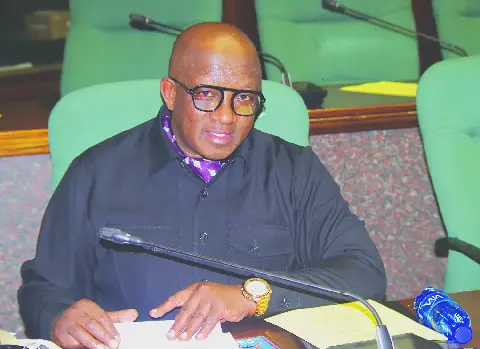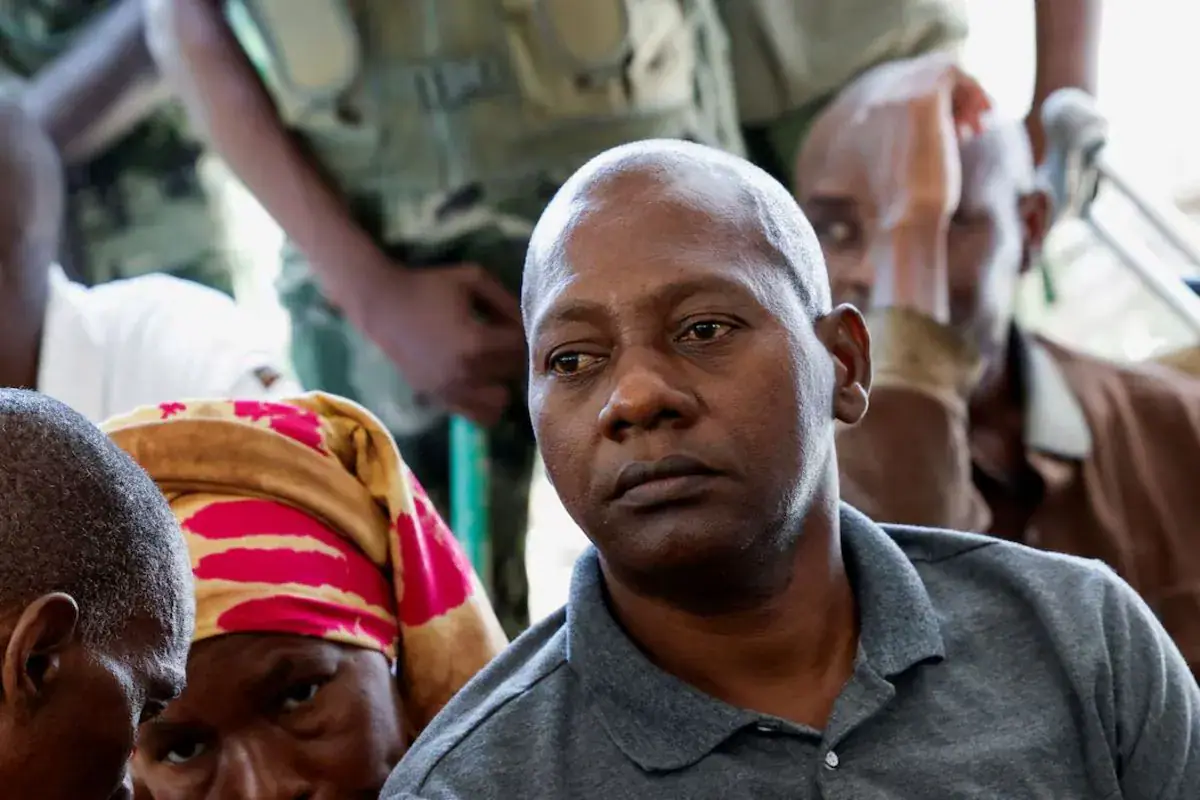
A Kenyan court has sentenced cult leader Paul Mackenzie to 200 years in prison for the murder of 190 children and one adult at Shakahola Forest. Justice Diana Kavedza handed Mackenzie two consecutive 100-year terms: one for murder by starvation and the other for direct homicide. Mackenzie led an apocalyptic Christian church near Kenya's Indian Ocean coast, where hundreds of people are suspected to have died in one of the country's worst mass killings.
Prosecutors said Mackenzie instructed followers to starve themselves and their children to death to reach heaven before the end of the world. His accomplices allegedly threatened and beat victims to ensure they followed his orders. The bodies were found in shallow graves and latrines, with some victims reportedly buried alive. Mackenzie had denied the murder charges, saying he did not force the victims to starve, but the court rejected his defence.
The case shocked Kenya in April 2023 when police began uncovering bodies in Shakahola Forest near the coastal town of Malindi. Although the trial covered the deaths of 190 children and one adult, the Kenya National Commission on Human Rights says 448 bodies were ultimately recovered from the forest. Mackenzie is also accused of ordering the deaths of 52 people whose bodies were found at a separate location in a village about 30 kilometres away.
The scale of the killings has been compared with the 2000 doomsday cult massacre in Uganda, in which more than 700 people died, and the 1978 Jonestown massacre in Guyana, where more than 900 people were killed. Stephen Mwiti, 48, whose six children were among Mackenzie's victims, expressed his disappointment with the sentence, saying he had expected Mackenzie to be sentenced to death or life imprisonment.
Dan Mackenzie, one of Paul's sons, described the sentence as justice for those who died. He said his father had not spared his own family and that he had lost friends and a younger brother. Mackenzie had been known to authorities since 2017, when police searched his premises. In 2019, authorities shut down his church in Malindi, prompting him to relocate to nearby Shakahola Forest.
The discoveries prompted calls for tighter oversight of religious groups. President William Ruto appointed a task force in May 2023 to review the legal and regulatory framework. Separate government-backed and Senate proposals were published in 2024 but have yet to become law. Ojiro Odhiambo, head of rapid response at the Kenya Human Rights Commission, described the conviction as an important step but said accountability should extend to local administrators, police, intelligence officers and religious leaders who failed to act on repeated warning signs.
In 2023, President Ruto said he took responsibility as President for the Government's failure to prevent the deaths. The conviction and sentencing of Mackenzie mark a significant step towards justice for the victims and their families. However, concerns remain about the extent of accountability and the need for greater oversight of religious groups to prevent similar tragedies in the future.
Key points
- Paul Mackenzie was sentenced to 200 years in prison for the murder of 191 people at Shakahola Forest.
- The killings have been compared with the 2000 doomsday cult massacre in Uganda and the 1978 Jonestown massacre in Guyana.
- Calls for greater accountability have been made, extending to local administrators, police, intelligence officers and religious leaders who failed to act on repeated warning signs.
Reporting sources
- Kenyan court sentences preacher Mackenzie to 200 years for the murder of 191 people · https://www.thecitizen.co.tz/