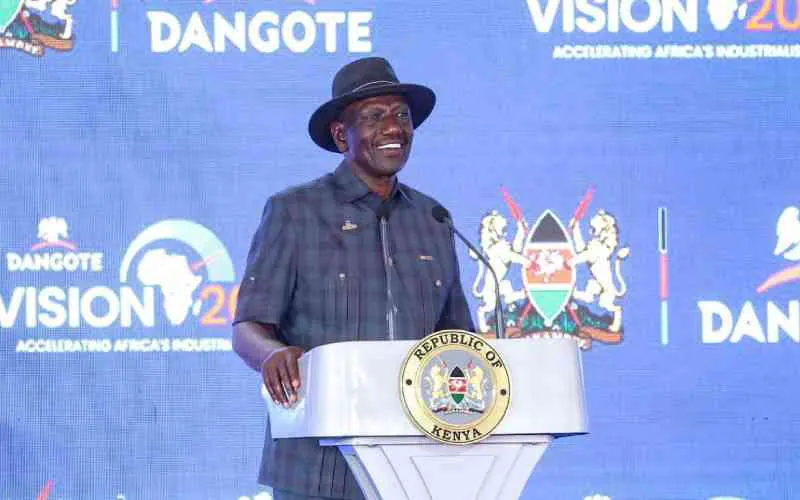
President William Ruto announced that Kenya expects to start extracting crude oil from Turkana and transporting it before December. He made the statement during a media interview at State House Mombasa. Preparations are already underway to advance oil production in Turkana, where Kenya's commercial oil discoveries have been concentrated.
The announcement comes as the government seeks to develop the proposed Lamu refinery into a major petroleum and industrial hub. The refinery is expected to process crude from Kenya as well as supplies sourced from international markets. Ruto said an agreement had been reached with Nigerian businessman Aliko Dangote for investment in a pipeline connecting Turkana to Lamu.
The proposed pipeline would provide a route through which crude produced in northern Kenya could be transported to the coastal refinery. Ruto said, "We have agreed with Dangote that he will invest in a pipeline from Lamu to Turkana so that we can bring the oil from Turkana to Lamu." This infrastructure project raises significant questions about how quickly Kenya can establish the transportation network needed to connect its inland oil fields with a major processing facility on the coast.
President Ruto also acknowledged that Kenya's domestic crude reserves would not be sufficient to supply the entire feedstock requirements of the planned refinery. He stated that even Turkana cannot produce 700,000 barrels of crude oil per day, which is the expected processing capacity of the refinery. Therefore, additional crude will be sourced from international markets.
The proposed refinery model is similar to the Dangote refinery in Lagos, Nigeria, which draws crude from different sources rather than relying entirely on domestic production. This approach would allow Kenya to combine local crude with imported supplies, potentially giving the Lamu facility access to a wider range of feedstock while maintaining a market for oil produced domestically.
The refinery is also being presented as more than a facility for processing crude. The government expects it to produce aviation fuel and other petroleum products for Kenya and the wider East African market. Its development is linked to plans for a broader industrial complex in Lamu, with the government seeking to attract investment in petrochemical, chemical, and plastics manufacturing.
The proposed industrial ecosystem could create additional demand for petroleum products and by-products, while supporting employment, trade, and other economic activities around the refinery. With the Lamu refinery, the government aims to create a major industrial hub that will drive economic growth and development in the region.
Key points
- Kenya will start extracting and transporting crude oil from Turkana before December.
- The planned Lamu refinery will have a processing capacity of up to 700,000 barrels of crude oil per day.
- The refinery will produce aviation fuel and other petroleum products for Kenya and the wider East African market.