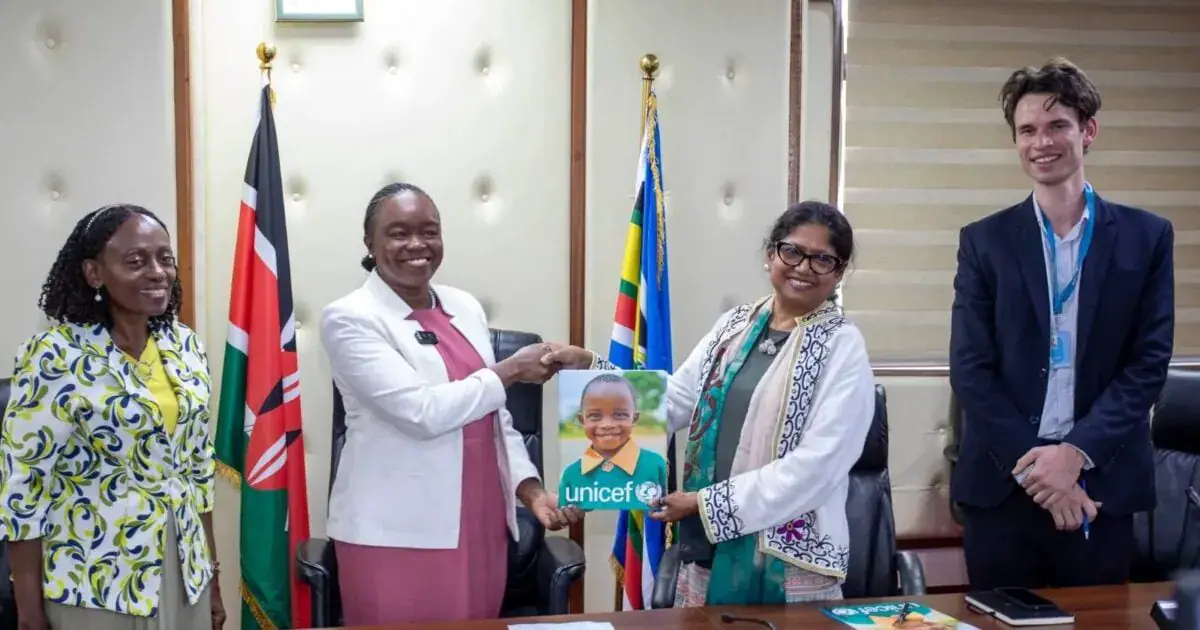
Kenya has signed an international climate declaration to protect children and young people from the effects of climate change. The declaration was signed by Environment, Climate Change and Forestry Cabinet Secretary Deborah Barasa during the 31st United Nations Climate Change Conference (COP31). This move fulfills a commitment made by Kenya at COP25 in 2019. The declaration aims to make the needs of children and young people a priority in climate policies and investments.
The declaration calls on governments to include children's rights and needs in national climate policies, investments, and decision-making. It also seeks to ensure that young people have a voice in developing climate solutions. According to figures cited in the announcement, about 12 million of Kenya's 24.6 million children face moderate to very high risks from climate change and disasters. Specifically, 2.4 million children live in seven counties classified as highly vulnerable to climate change.
Climate-related disasters, such as floods and droughts, threaten children's access to clean water, sanitation, healthcare, and nutrition. These disasters also disrupt education and expose children to other protection risks. Girls and children with disabilities are among those facing greater risks. UNICEF Representative to Kenya Shaheen Nilofer welcomed the signing, noting that children are bearing the effects of climate change through displacement, disrupted education, and interruptions to essential services.
The declaration is expected to guide government efforts to incorporate children's needs into climate planning. It will also ensure that vulnerable young people have a greater role in decisions affecting their future. Barasa stated that the government would use its National Climate Change Action Plan, Nationally Determined Contributions, and Gender and Climate Change commitments to guide implementation. Priority areas will include investment in climate-resilient essential services, accessible climate financing, and strengthening the ability of vulnerable communities to withstand climate-related shocks.
Barasa emphasized that children and young people would be involved in developing climate solutions rather than being treated only as beneficiaries of government interventions. Kenya will track progress through child-focused climate risk assessments and indicators measuring the resilience of essential services, funding directed towards those services, and youth participation in climate policy processes. This approach aims to ensure that children's rights and needs are considered in climate policies, financing, and implementation.
The signing of the declaration has been welcomed by UNICEF, with Nilofer stating that it would help ensure children's rights and needs are considered in climate policies, financing, and implementation. The government has committed to protecting children and young people from the effects of climate change, recognizing the disproportionate impact of climate-related disasters on this demographic. By prioritizing children's needs, Kenya aims to build a more resilient and sustainable future.
The declaration is part of a broader effort to address the impacts of climate change on children and young people. Kenya joins 80 countries that have signed the Intergovernmental Declaration on Children, Youth and Climate Action. The government has pledged to work towards a more sustainable and equitable future, one that prioritizes the needs and rights of children and young people.
Key points
- Kenya has signed the Intergovernmental Declaration on Children, Youth and Climate Action, joining 80 countries in prioritizing children's needs in climate policies and investments.
- About 12 million of Kenya's 24.6 million children face moderate to very high risks from climate change and disasters.
- The declaration aims to ensure children's rights and needs are considered in climate policies, financing, and implementation.
Reporting sources
- Kenya signs climate declaration to protect children and youth at COP31 · 98.4 Capital FM