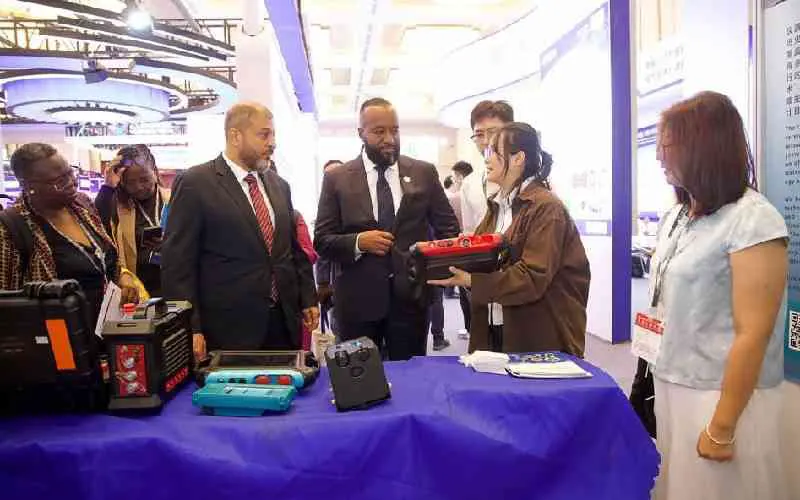
Kenya is seeking deeper Chinese investment in its mining sector as it pushes to transform mineral wealth into a driver of economic growth. Mining Cabinet Secretary Hassan Ali Joho made the announcement at the 28th China Mining Conference in Tianjin. Joho pitched Kenya's untapped mineral resources to global investors, highlighting significant deposits of critical minerals.
Joho emphasized Kenya's strategic role in the global energy and technology transition, anchored by significant deposits of coltan, copper, lithium, niobium, and rare earth elements. He said the conference provided a valuable platform to invite investors to be part of the country's next chapter of mineral-led economic transformation. The Cabinet Secretary was accompanied by Vice President of the Kenya National Chamber of Commerce and Industry Mustafa Ramadhan, Chairperson of the Mineral Rights Board Sophie Kutiti, and Board Director Lucy Micheni.
Kenya has embarked on a reform agenda to transform mining into a catalyst for sustainable and inclusive economic growth. The government is strengthening governance, enhancing transparency, and creating a predictable investment environment backed by competitive incentives. Joho said these efforts aim to make investments in Kenya profitable, inclusive, and fair. Kenya's mining sector remains largely underexplored, with many known deposits at the reconnaissance stage.
The government hopes that Chinese investment and technical expertise will help unlock the country's mineral potential. China has been a key partner in Africa's mining sector, with Chinese companies helping Zambia build copper hydrometallurgy capacities and Zimbabwe process lithium locally. In the DRC, the Tenke Fungurume Copper-Cobalt Mine operated by CMOC Group is a major engine for the economy.
China-Africa mining projects also focus on green and digital transformation. In Côte d'Ivoire, the Abujar Gold Project built integrated solar energy generation and storage capacities, with green electricity accounting for 35 percent of the mine's total electricity consumption. The utilization rate of return water in mineral processing reached 75 percent, saving 3.86 million cubic meters of water annually.
Joho's remarks come as Kenya seeks to position itself as a key supplier of minerals essential for renewable energy, battery technologies, and advanced manufacturing. The country has declared 14 minerals as strategic and critical, including rare earths, coltan, copper, lithium, niobium, and radioactive materials. Kenya recently launched a competitive tender for the Mrima Hill rare earths and niobium deposit, valued at an estimated $62 billion.
The tender has attracted interest from both Chinese and Western companies. The government hopes that Chinese investment and technical expertise, particularly in satellite remote sensing and green mining technologies, will help unlock Kenya's mineral potential. China has fully implemented zero-tariff treatment for 53 African countries that have diplomatic relations with China, creating favorable conditions for mining trade.
Key points
- Kenya seeks deeper Chinese investment in its mining sector to transform mineral wealth into economic growth driver.
- The country has declared 14 minerals as strategic and critical, including rare earths, coltan, copper, lithium, niobium, and radioactive materials.
- Kenya recently launched a competitive tender for the Mrima Hill rare earths and niobium deposit, valued at an estimated $62 billion.