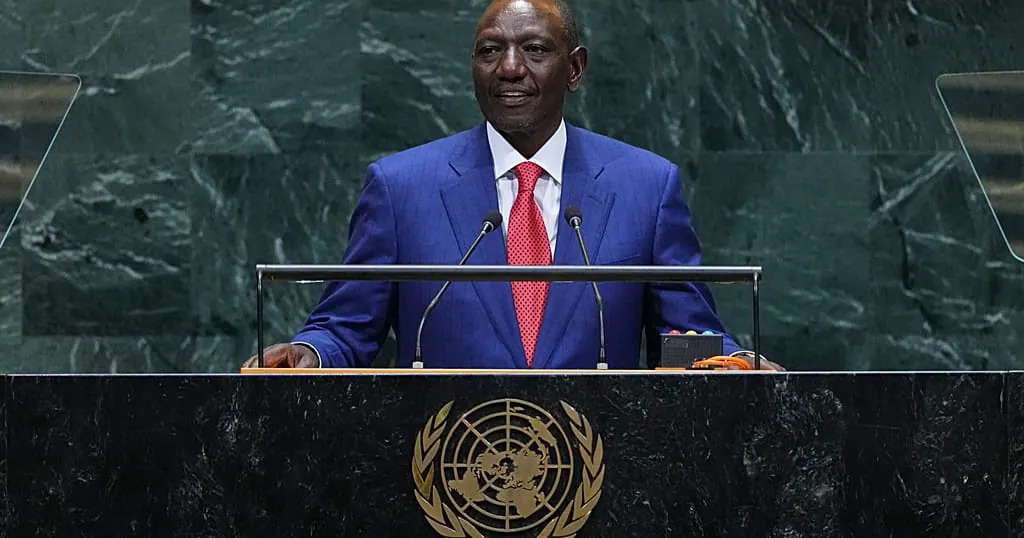
Kenyan President William Ruto addressed the United Nations General Assembly at UN headquarters in New York on September 23, 2026, calling for reform of the UN Security Council. He emphasized the need for permanent African representation on the body, citing Africa's significant presence in the assembly with 54 member states, yet lacking a permanent voice. Ruto expressed concern that Africa is frequently the subject of the council's decisions but is permanently excluded from its deliberations.
Ruto highlighted the disparities in the UN Security Council's composition, noting that it was created at a time when many Africans had neither a nation at the table nor a voice in shaping the institutions that govern international peace and security. He stressed that the world has since transformed, but the Council has not. The Kenyan president's comments echoed a similar call from the outgoing UN Secretary-General, Antonio Guterres, who stated that a 21st-century Security Council without permanent African representation is unjust and indefensible.
The Kenyan president's address to the UN General Assembly was part of a broader campaign by African leaders to push for a bigger voice at the world body. South Africa's Permanent Representative to the UN in New York, Ambassador Mxolisi Sizo Nkosi, had earlier told local media that the reform of the UN Security Council was an important part of his country's agenda. This year's UN event saw several African leaders advocating for greater representation and a more inclusive decision-making process.
Ruto's call for reform of the UN Security Council resonated with many African nations, which have long felt underrepresented in the body's decision-making processes. The UN Security Council has five permanent members and ten non-permanent members, with the permanent members holding veto power over its decisions. African nations have been seeking to increase their representation on the council, arguing that their voices and perspectives are essential to addressing global challenges.
The issue of UN Security Council reform has been a longstanding concern for African nations, with several leaders advocating for greater representation and a more inclusive decision-making process. The African Union has been actively pushing for a bigger voice at the world body, with several member states calling for permanent representation on the UN Security Council. Ruto's comments added to the growing momentum for reform and greater African representation in global governance.
The UN General Assembly has been a platform for African nations to raise their concerns and advocate for greater representation in global governance. The assembly's discussions on UN Security Council reform are expected to continue, with several nations calling for a more inclusive and representative decision-making process. The outcome of these discussions remains to be seen, but Ruto's comments have added to the growing pressure for change.
The push for UN Security Council reform is part of a broader effort to make global governance more inclusive and representative. African nations are seeking to increase their voice and influence in global decision-making processes, arguing that their perspectives and experiences are essential to addressing global challenges. The issue of UN Security Council reform is likely to remain a key concern for African nations in the years to come.
Key points
- Kenyan President William Ruto calls for permanent African representation on UN Security Council
- African nations seek greater representation and a more inclusive decision-making process in global governance
- UN Security Council reform has been a longstanding concern for African nations