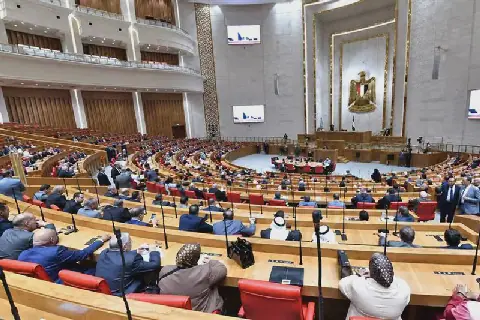
The Kenyan government is proposing a major restructuring of tertiary education financing, which includes a new funding law that could make loans the main route to financing university and TVET education. The National Assembly is currently considering the Tertiary Education, Placement and Funding Bill, 2026, which has sparked debate among education stakeholders. The Muslim Education Council has asked MPs to remove provisions allowing interest to be charged on education loans, citing concerns that it will make repayment harder for graduates.
The proposed legislation seeks to place tertiary financing under a new framework, with the Tertiary Education Funding Authority expected to replace the existing HELB, Universities Fund and TVET funding arrangements. The Bill proposes a system in which eligible students in public universities and TVET institutions receive funding through the new authority, with repayment becoming a central part of the arrangement. This new system aims to provide a more sustainable funding model for tertiary education in Kenya.
Under the current system, undergraduate and TVET loans attract 4% annual interest on the outstanding balance, alongside a Sh1,000 annual ledger fee. HELB has publicly rejected reports that the rate had been raised to 12%, saying the applicable rate remains 4%. The 4% interest rate has become one of the most contested parts of the Bill, with education stakeholders arguing that it will make repayment harder for graduates who struggle to find stable employment.
The concern over the interest provision is particularly significant because student-loan repayment already presents a collection challenge. According to recent reports, HELB defaulters rose from about 256,000 in June 2025 to 380,530 five months later. Education stakeholders are therefore asking Parliament to consider whether adding interest helps recover public money or makes repayment harder for graduates.
Other groups appearing before MPs have raised concerns about the reliability of the proposed funding system's source of money to keep financing students throughout their studies. The National Assembly is still collecting views on the education reform Bills, and the interest provision is therefore not yet a final change in law. The government aims to create a more sustainable funding model for tertiary education.
The proposed funding system may have a different financial equation for students, with graduates beginning repayment after entering employment, and deductions capped at 25% of earnings. A loan that covers tuition and other approved education costs may be much larger than the typical HELB loan under the existing funding model. Once interest is added, the amount eventually repaid can exceed the original principal.
The debate over the new Bill has sometimes been presented as though a 12% student-loan rate is being introduced, but HELB has clarified that this is not the case. The Bill's proposal to introduce interest on student loans has sparked a heated debate among education stakeholders, with some arguing that it will help recover public money, while others argue that it will make repayment harder for graduates.
Key points
- The proposed 4% interest rate on student loans has sparked debate among education stakeholders in Kenya.
- The new funding law aims to create a more sustainable funding model for tertiary education in Kenya.
- The interest provision has become one of the most contested parts of the Bill.