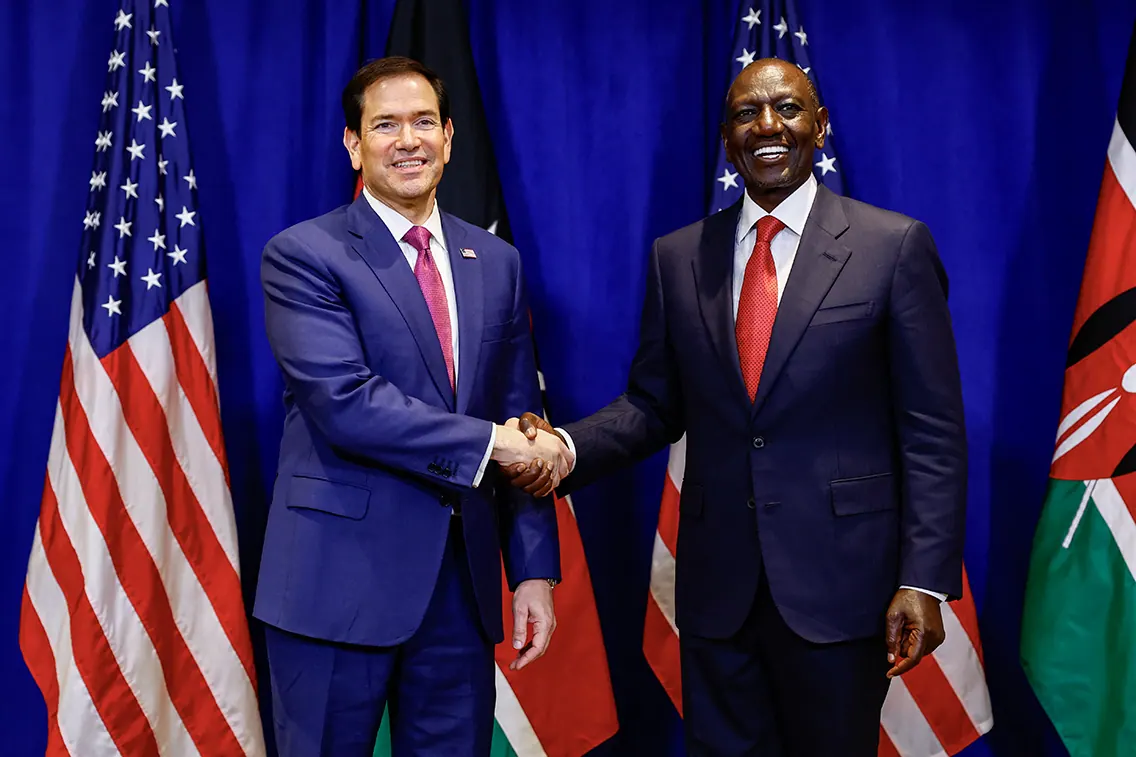
Kenya's President Ruto delivered a speech at the UN General Assembly, reflecting on the current state of the world. He described a grim global backdrop, with ongoing conflicts in Eastern Europe, the Middle East, the Sahel, and the Horn of Africa. Climate disasters are intensifying, inequality is deepening, and pandemics pose a significant threat. Ruto emphasized that instead of trust, mistrust is spreading, and instead of solidarity, fragmentation is taking root.
Ruto outlined the challenges facing the United Nations, stating that the organization is in a deep crisis of credibility and capacity. He noted that funding cuts have paralyzed its operations, and bureaucracy has slowed its response. The Security Council, established in 1945, is unable to act inclusively, fairly, and swiftly. Ruto echoed the concerns of UN Secretary-General Antonio Guterres, warning that the UN's effectiveness is being undermined.
Despite these challenges, Ruto emphasized that Africa is not seeking to undermine the UN. He stated that the organization has been one of humanity's greatest achievements, holding back the specter of global war and calming conflicts worldwide. The UN has stood at the forefront of humanitarian crises, provided famine relief, and championed universal vaccination. Ruto highlighted the UN's role in advancing women's rights, protecting children, and setting global norms on disarmament and climate action.
The Kenyan President highlighted his country's participation in peacekeeping missions, including the recent deployment of Kenyan troops to Haiti. He also emphasized that climate change is a significant threat, but also an opportunity for transformation. Ruto noted that Kenya and Africa are taking bold steps to address climate change, with 93% of Kenya's electricity coming from renewable sources.
Ruto called for a transformation of the global financial architecture, which he believes is no longer relevant to today's world. He argued that the governance of institutions like the IMF and World Bank has not kept pace with the needs of a multipolar world, particularly for poor and developing countries. Ruto emphasized that the current system punishes poor countries while rewarding the rich.
Ruto concluded his speech by emphasizing the need for UN reform, particularly with regards to the Security Council. He echoed the Secretary-General's view that Africa should have permanent seats on the Council, given its large population. Ruto stated that reforming the Security Council is not a favor to Africa, but a necessity for the UN's survival, and that the organization must reflect today's realities, not the post-war power arrangements of 1945.
Key points
- President Ruto calls for UN reform to reflect today's global realities.