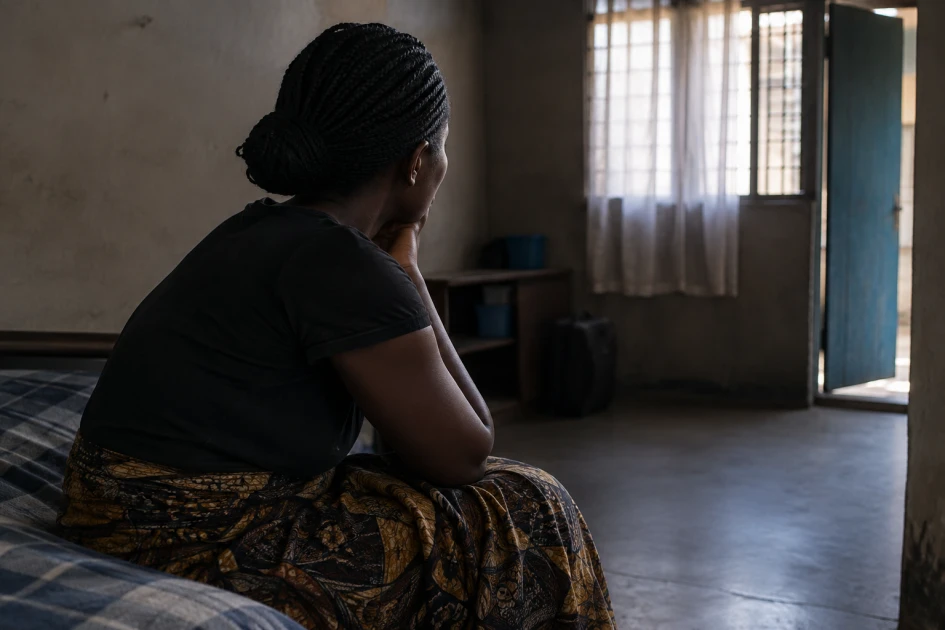
In a quiet sanctuary in Kisumu, 19-year-old Waridi cares for her one-month-old daughter. Waridi's life changed in 2023 when her father sexually assaulted her, and her case is still pending in court. Her paternal relatives have ostracized her for speaking out against the abuse. A field study report released in June 2026 found that only 33% of sexual abuse cases are concluded in court within six months, while nearly half take over a year.
The study, titled "Reporting, Investigation, and Adjudication of Child Sexual Exploitation and Abuse in Kenya," revealed that 7% of cases were formally withdrawn, and another 7% stalled due to perpetrators absconding. Elizabeth Anyango, a research and evaluation officer at MIDRIFT HURINET, noted that delays, weak evidence preservation, and pressure for out-of-court settlements compromise justice and shield perpetrators from accountability. Waridi's experience is a stark reminder of the challenges faced by survivors of gender-based violence.
According to the National Shelter Network, Kenya has only six government-run safe houses, with 56 others run by private entities, often gender rights lobby groups. The ministry of Public Service, Gender, and Affirmative Action plans to set up 17 additional government-run safe houses to address the shortage. However, the lack of safe houses hinders the course of justice for survivors and stifles the healing process, as noted by Mary Makokha, founder of the Rural Education and Economic Enhancement program.
Makokha emphasized that adolescent and young women who become pregnant due to sexual abuse often face community coercion, suppressing any form of justice. The National Police Service, healthcare providers, and the Judiciary form the visible pillars of the criminal justice system, but safe houses represent the bridge holding them together, which remains unbuilt and unfurnished. The 2026 Kenya economic survey showed that 235,938 adolescent and young girls were pregnant, highlighting the need for safe houses.
Despite high-level national policy commitments and international pledges, fiscal allocations at both national and county levels reveal a disconnect between anti-GBV rhetoric and tangible budgetary priority. In the 2026/2027 financial year, the state department of gender was allocated Kshs. 6,261,403,525, with 33% ringfenced for recurrent expenditure. The ministry's role is primarily coordinating, regulatory, and policy-focused, while leveraging localized instruments to set up and equip safe houses.
The State Department for Gender and Affirmative Action Strategic Plan (2023–2027) and the National Policy for Prevention and Response to Gender-Based Violence (2014) outline the ministry's role in addressing GBV. However, the heavy financial burden of providing direct emergency housing, psychosocial support, and legal preparation is thrust almost entirely on non-governmental actors. County governments, such as Kisumu, operate under SGBV policies, but actual line-item allocations are often swallowed by administrative costs.
Advocacy groups, such as Kenya Female Advisory Organization (KEFEADO), emphasize that the absence of state protection mechanisms leaves survivors defenceless against patriarchal coercion. Easter Oketch, Executive Director of KEFEADO, notes that safe shelters are not luxury amenities but mandatory legal infrastructure required to protect the integrity of the judicial process. Civil society networks are pushing for Gender-Responsive Budgeting across county assemblies in Western Kenya to address the shortage of safe houses.
Key points
- Kenya has only six government-run safe houses and 56 private ones, leaving many survivors of gender-based violence vulnerable.
- The lack of safe houses hinders the course of justice for survivors and stifles the healing process.
- Fiscal allocations reveal a disconnect between anti-GBV rhetoric and tangible budgetary priority, with a heavy financial burden on non-governmental actors.