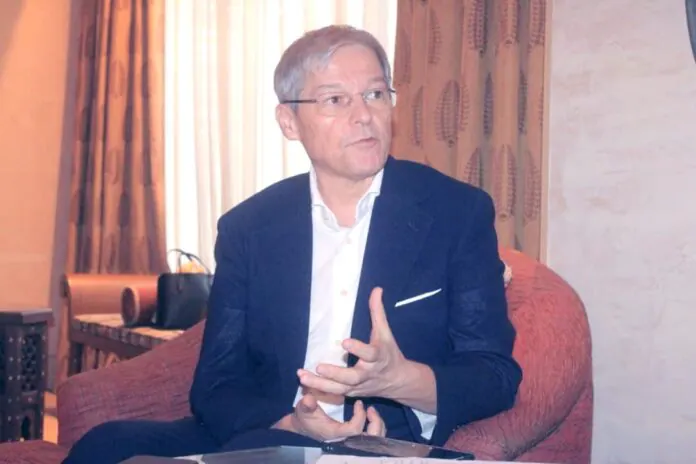
Dacian Ciolos, a former Romanian Prime Minister and European Commissioner, is campaigning for the position of Secretary General of the International Organization of La Francophonie (OIF). During his visit to Djibouti on September 16-17, he outlined his vision for a more relevant and effective Francophonie. Ciolos emphasized the need for the organization to be more closely tied to the realities of its member states and citizens. He aims to make the Francophonie a space that is more focused on employment, training, entrepreneurship, youth, and economic development.
Ciolos's candidacy is motivated by his personal experience with the Francophonie. As a Romanian, he learned French as a foreign language, which allowed him to access a broader world and develop his professional career. He believes that the Francophonie has the potential to be a powerful force for good in the world and wants to use his experience to serve the organization. Ciolos has undertaken a tour of several countries, including Morocco, Cameroon, the Central African Republic, Senegal, Cambodia, Laos, Vietnam, Canada, and several European countries, to present his candidacy and listen to the expectations of member states and populations.
Ciolos's vision for the Francophonie is centered on making the organization more useful to its citizens. He wants to create a Francophonie that is more than just a representative body for its member states. Instead, he envisions an organization that is present in the territories, schools, universities, and communities, and that provides concrete benefits to its citizens. Ciolos believes that the Francophonie should focus on delivering tangible results, such as promoting the use of French as a language of opportunity, and measuring the impact of its programs on the lives of its beneficiaries.
Ciolos also emphasized the need for better governance within the OIF. He proposes reforms to increase transparency and efficiency, including making it clearer how resources are used and what results are achieved. Ciolos also advocates for a more decentralized organization, with regional representations that are closer to the states and populations they serve. He believes that this would allow for more effective coordination and a greater impact on the ground.
The candidate also highlighted the importance of Africa in the Francophonie. He believes that Africa should be at the center of the organization, given its large number of francophone countries and its significant economic potential. However, Ciolos also emphasized that this does not mean excluding other continents. Instead, he wants to create a more inclusive and diverse Francophonie that brings together countries and cultures from around the world.
Ciolos's vision for the Francophonie also takes into account the challenges posed by digitalization and artificial intelligence. He wants to harness the potential of these technologies to promote the use of French and to support the development of its member states. Ciolos also emphasized the importance of promoting African cultures and languages, and of supporting the role of Djibouti as a potential regional hub for the Francophonie.
In conclusion, Dacian Ciolos's candidacy for Secretary General of the OIF is built around a clear vision for a more effective and citizen-centric Francophonie. He wants to create an organization that is more closely tied to the realities of its member states and citizens, and that provides concrete benefits to its citizens. Ciolos's proposals for reform, including better governance and a more decentralized organization, aim to make the Francophonie a more relevant and impactful force in the world.
Key points
- Dacian Ciolos wants to make the Francophonie a more citizen-centric organization that delivers tangible benefits to its citizens.
- Ciolos proposes reforms to increase transparency and efficiency within the OIF, including better governance and a more decentralized organization.
- Africa should be at the center of the Francophonie, given its large number of francophone countries and its significant economic potential.