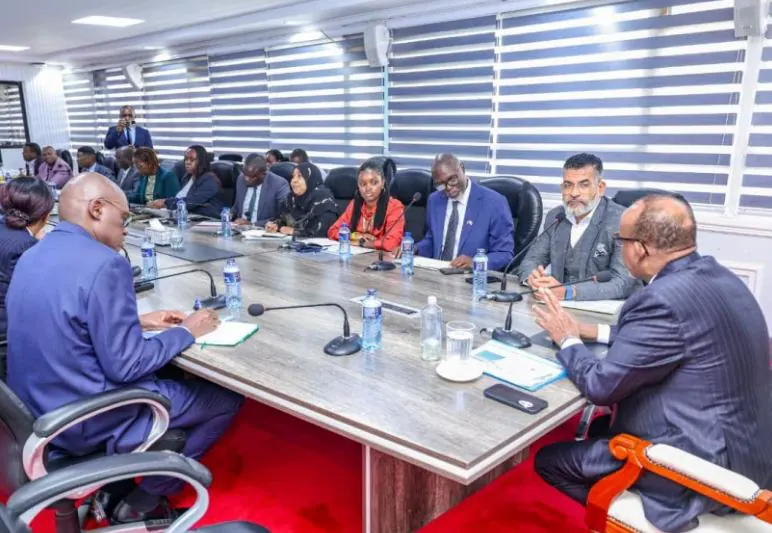
The Ministry of Health, Council of Governors, and Social Health Authority have established a new framework for contracting public health facilities in Kenya, resolving disputes between counties. The agreement was reached after a consultative session at Afya House, chaired by Health Cabinet Secretary Aden Duale and CoG Health Committee Chairperson Abdulswamad Shariff Nassir. This new framework aims to streamline how county healthcare providers execute agreements with the SHA.
The newly adopted framework introduces a modular contracting model, allowing healthcare facilities to sign the Master General Terms and Conditions once before entering into specific service-level agreements. These agreements include the Primary Healthcare Fund, Social Health Insurance Fund, Emergency, Chronic, and Critical Illness Fund, and Public Officers Medical Scheme Fund. Each public health facility will have an individual contract under the Social Health Insurance Act of 2023 and Facilities Improvement Financing Act of 2023.
A key aspect of the new framework is the requirement for the SHA to transfer reimbursement funds directly into each facility's designated Facility Improvement Fund account. County governments are now formal contracting parties, and every agreement must receive clearance from the respective county attorney before execution. This change aims to improve the management and funding of public health facilities across Kenya.
To address administrative bottlenecks, the SHA has agreed to accept county-level documentation during initial registration. Eligible documents include establishment instruments, gazette notices, KRA PINs, tax compliance letters, NSSF verification records, and ODPC registrations. The authority has also granted a 30-day compliance window for health facilities to secure outstanding credentials, ensuring a smoother registration process.
The Ministry, governors, and SHA have also established financial terms for claims processing. All verified "clean claims" must be paid within 90 days of receipt, processed in the order received. In cases of funding shortfalls, the SHA must notify affected facilities within seven days, and unpaid clean claims will become certified liabilities with priority in the subsequent financial year's budget allocation.
To prevent service interruptions during the transition, authorities have extended all existing contracts through October 14, 2026. The SHA will host daily "HAKIKA" contracting clinics to guide county facilities through the registration pipeline and provide weekly progress updates to the Council of Governors until full onboarding is complete. This support aims to ensure a seamless transition to the new contracting framework.
The new framework is expected to improve the delivery of healthcare services in Kenya's public hospitals. By streamlining contracting processes and ensuring timely payment of claims, the Ministry of Health, Council of Governors, and SHA aim to enhance the quality and accessibility of healthcare for Kenyans. The implementation of this framework will be closely monitored to ensure its effectiveness.
Key points
- The new framework introduces a modular contracting model to streamline agreements between county healthcare providers and the SHA.
- County governments are now formal contracting parties, and every agreement must receive clearance from the respective county attorney before execution.
- The SHA will transfer reimbursement funds directly into each facility's designated Facility Improvement Fund account.