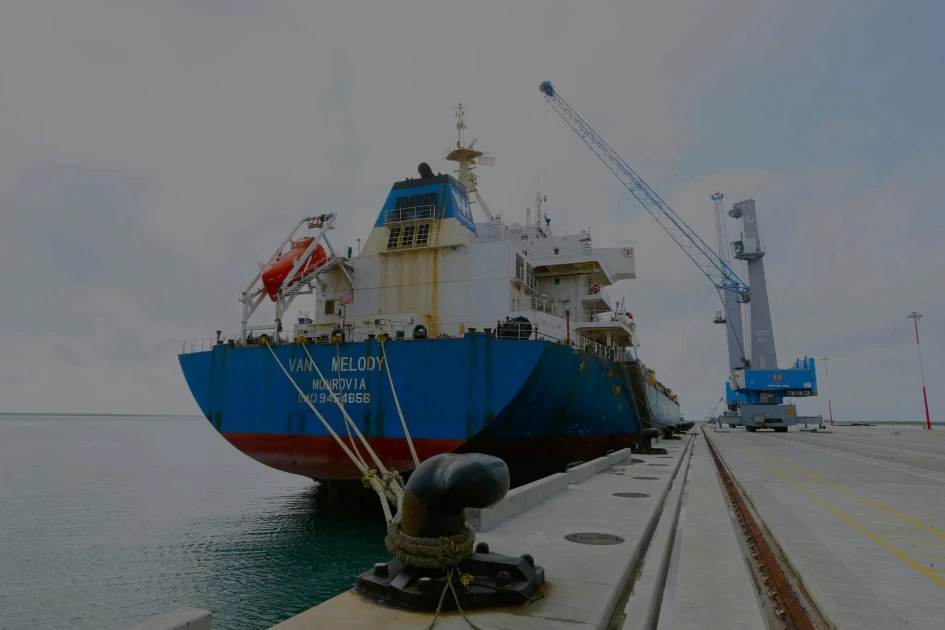
Kenya's maritime sector achieved a significant milestone in 2025, moving more cargo than in any year on record. The sector now supports goods trade worth an estimated Ksh.3.8 trillion annually, equivalent to around 23 per cent of the country's nominal GDP. This growth is attributed to the country's strategic location and investments in its ports, which have made it an essential hub for trade in East and Central Africa.
The country's ports are becoming a crucial part of the regional trade ecosystem, with over 40 shipping lines calling regularly at its ports. This has not only connected Kenyan exporters and importers to global markets but also built value chains to neighbouring countries, including Uganda, Rwanda, Burundi, South Sudan, Ethiopia, and eastern DRC. The growth of Lamu's port is a testament to this expansion, with its throughput increasing more than tenfold in a single year, from around 74,000 tonnes in 2024 to close to 800,000 tonnes in 2025.
The maritime sector's growth has also created new job opportunities for Kenyans, with over 30,000 people employed in customs clearance, freight forwarding, and warehousing alone. Additionally, around 3,500 people are directly employed in shipping and agency operations. The Bandari Maritime Academy has played a crucial role in training over 5,000 people to date, with around 1,500 cadets enrolled annually. This pipeline of skilled Kenyans is essential for the sector's continued growth.
Maritime careers offer a unique combination of hands-on, technical skills and international exposure, making them an attractive option for young Kenyans. The sector's growth has also had a positive impact on local industries, making it more attractive for overseas buyers to source products from Kenya. This has generated more business for Kenyan businesses and farmers, with inputs arriving more reliably and inexpensively for local manufacturing.
To ensure the benefits of maritime growth reach deep into the economy, the government and industry must work together to track and improve key measures of success. These include the number of Kenyans advancing into senior and technical positions within shipping and logistics, skills and technology transfer, local procurement and training, and investment committed to the country. This requires continued investment in terminals, hinterland connections, training infrastructure, and smart-port technology.
A stable and well-coordinated regulatory environment is essential to support continued investment in the maritime sector. The government and industry must work together to create a predictable, proportionate, and responsive regulatory framework. Shipping lines and their agents bring international capital, greener fuels and technologies, and decades of operational expertise, and in return, they need a stable regulatory environment to support their investments.
Kenya's maritime sector has huge potential, both for the country as a whole and for individual Kenyans. The sector's growth is intrinsically connected to the country's trade position and labour market, particularly with the African Continental Free Trade Area opening up new regional demand for efficient logistics. The real measure of Kenya's maritime advantage is not only the tonnes moved through its ports but the people whose futures move with them.
Key points
- The maritime sector now supports goods trade worth an estimated Ksh.3.8 trillion annually.
- Over 30,000 Kenyans are employed in customs clearance, freight forwarding, and warehousing alone.
- The Bandari Maritime Academy has trained over 5,000 people to date.