Water scarcity has long been a challenge in Makueni County, Kenya, where unreliable rainfall and recurring drought threaten livelihoods. The county's 2024 Participatory Climate Risk Assessment identified drought as a major climate-related hazard, alongside flash floods and strong winds. These hazards affect water supplies, crop and livestock production, and household incomes. According to the National Drought Management Authority, households travel an average of 4.6 kilometers to access water, with some areas requiring journeys of up to 7.8 kilometers.
To address water scarcity, the Makueni County Government has established the Makueni Sand Conservation and Utilisation Authority, which has built 26 sand dams across 13 wards. Working with development partners, the county has supported the construction of over 1,000 sand dams, improving water availability, supporting irrigation, and strengthening communities' resilience to drought. Joseph Kioko, the Makueni Civil Society County Coordinator, notes that conserving sand helps raise the water table, encouraging agriculture and water availability in households.
One such sand dam is located in Wote, crossing the Kaiti River, which joins the Thwake dam and then the Athi River. The dam, built by Utooni Development Organisation with the Kaiti River self-help group in August 2013, serves Wote town and neighboring communities, storing 34,390 cubic meters of water. Downstream, farmers pump water from shallow stores to irrigate crops, enabling them to farm year-round, even during severe dry seasons.
Makueni County has regulated sand harvesting, passing an Act in 2015 to establish the Makueni County Sand Conservation and Utilisation Authority. The Authority issues licenses for commercial sand harvesting and monitors adherence to regulations. Community committees oversee soil conservation and sand harvesting, while illegal harvesters face prosecution. Justus Mutuku, a resident working with the Makueni Civil Society Organisation, explains that the Act aims to balance sand harvesting with conservation.
However, sediment carried by rivers into the Sabaki estuary poses a challenge. According to the Sabaki Estuary Management Plan 2023–2028, sediment load has increased from 50,000 tonnes annually in the 1950s to 5-13 million tonnes recently, largely due to poor land-use practices upstream. This threatens the estuary's ecological balance, accumulating in mudflats and affecting mangrove habitats.
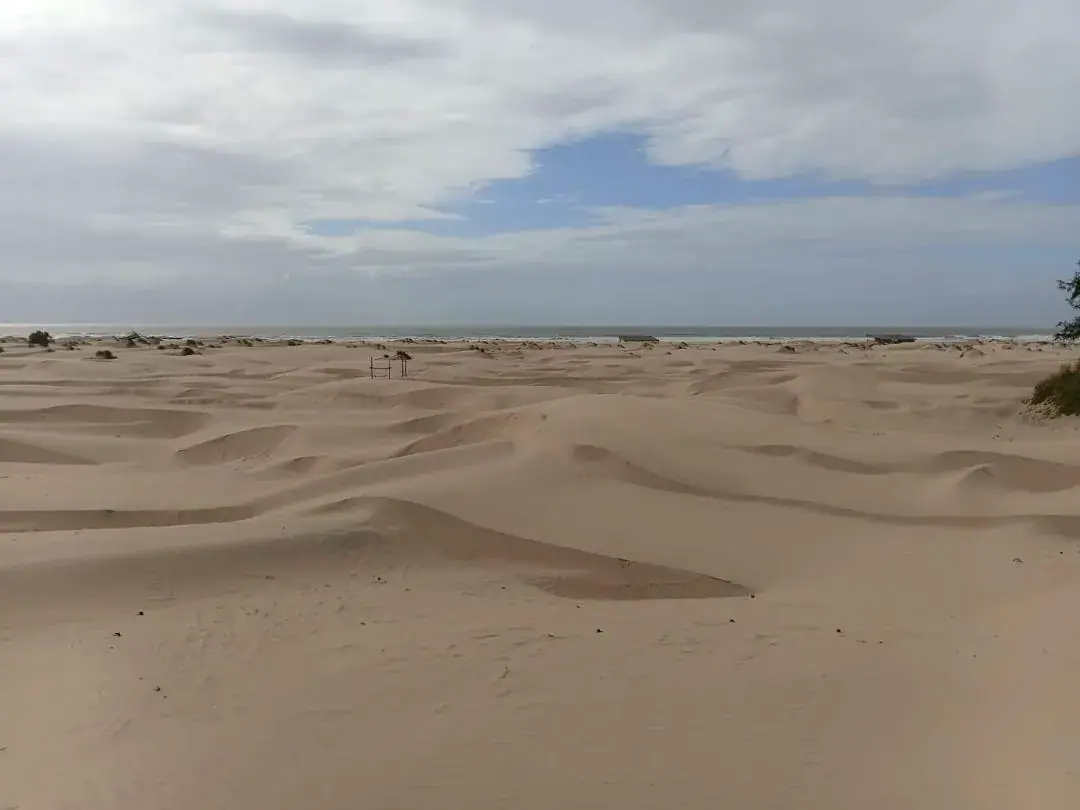
Experts warn that large hydroelectric dams trap sediment, affecting coastal habitats like mangroves. Kimeli notes that measures such as periodically removing accumulated sediment from dams and maintaining environmental flows during dam construction can help balance communities' water needs with downstream ecosystem requirements. Research by geologist J. O. Z. Abuodha found that Sabaki River sediments dominate the Malindi Bay coastline, supplying sand to the dunes.
As climate change poses increasing challenges, finding a balance between water storage and sediment flow is crucial. While dams can provide water to communities facing shortages, they can also trap sand, reducing sediment flowing downstream to the coast. The Makueni County Government's efforts to address water scarcity through sand dam construction demonstrate a step towards achieving this balance and supporting local livelihoods.
Key points
- The Makueni County Government has constructed over 1,000 sand dams to improve water availability and support irrigation.
- Sediment carried by rivers into the Sabaki estuary poses a challenge to the estuary's ecological balance.
- Experts recommend measures such as periodically removing accumulated sediment from dams to balance communities' water needs with downstream ecosystem requirements.
Reporting sources
- Taming the shifting sand dunes of Mambrui: A source to sea story · Kenya Broadcasting Corporation