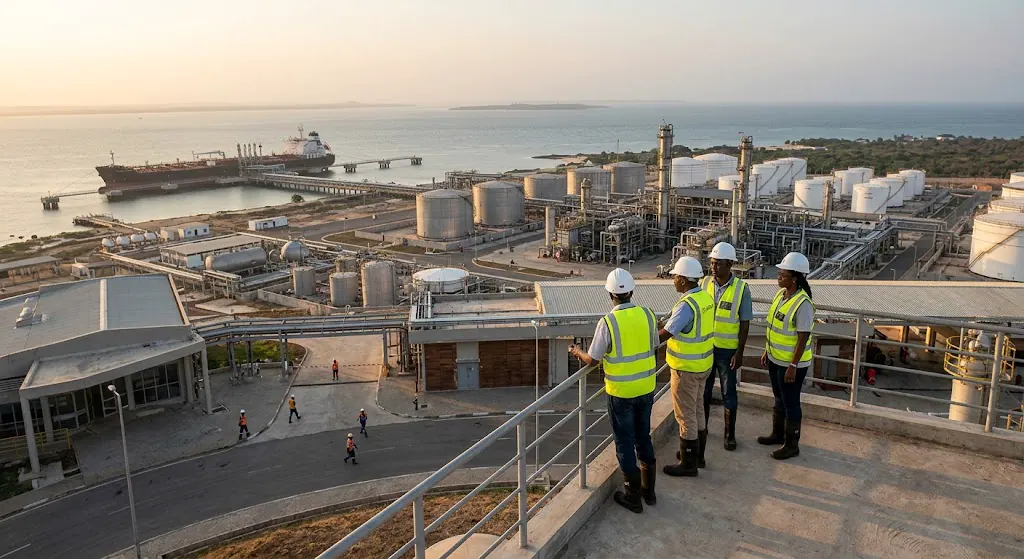
The groundbreaking ceremony for Kenya's new oil refinery at Lamu Port took place on September 30, 2026, marking a significant milestone for the country's energy sector. The Ksh2 trillion facility is expected to create approximately 60,000 direct and indirect jobs across the Coast region. As construction and operational setup commence, young jobseekers have a clear opportunity to position themselves for these roles. Industry experts and technical instructors have identified key areas where hiring will increase rapidly.
The refinery's operations will require qualified engineering experts to design, build, and oversee complex equipment. Process and mechanical engineers will supervise oil refining systems, while electrical engineers manage high-voltage power networks. Civil engineers and environmental specialists will also play a crucial role in maintaining structural integrity and protecting coastal habitats. Degree and diploma programs in these fields offer a direct path into technical management roles.
During the groundbreaking ceremony, Dangote announced plans to establish a training school to train 1,000 individuals. He assured attendees that anyone with an engineering degree or diploma would have a guaranteed job. The refinery's construction and maintenance will require a steady supply of trained technical workers, including pipe fitters, specialized metal welders, electrical installers, machine repairers, and equipment maintenance personnel.
Trade Cabinet Secretary Lee Kinyanjui emphasized the need for a new generation of highly specialized welders in July 2026. His ministry aims to train young people before these roles are filled by foreign workers. Dangote's current job advertisements include positions for mechanical technicians, fabricators, welders, instrumentation roles, electricians, plumbers, and equipment technicians. These roles primarily require certificate and diploma training rather than long university degrees.
The refinery's operations will involve moving raw materials, finished products, and heavy machinery around the clock. This will create steady demand for workers skilled in warehouse management, inventory tracking, forklift operation, and port logistics. Young people trained in stock control, fleet coordination, and transport safety will play an active role in maintaining supply chains.
With thousands of workers coming to Lamu, basic support services will experience a significant surge in demand. Camps, hotels, and corporate dining services will require trained kitchen staff, food safety inspectors, cleaners, housekeepers, and administrative assistants. Simple, hands-on qualifications in food production, hotel management, and hygiene can help young locals secure steady employment as these support businesses open.
Young Kenyans can acquire the necessary skills through registered Technical and Vocational Education and Training (TVET) colleges, national polytechnics, and vocational centers across the country. Most courses take between six months and two years, providing a direct route into employment without incurring significant tuition fees.
Key points
- The Lamu oil refinery project is expected to create 60,000 jobs across the Coast region.
- Key areas of demand include engineers, technical workers, and logistics experts.
- Young Kenyans can gain necessary skills through TVET colleges and vocational centers.