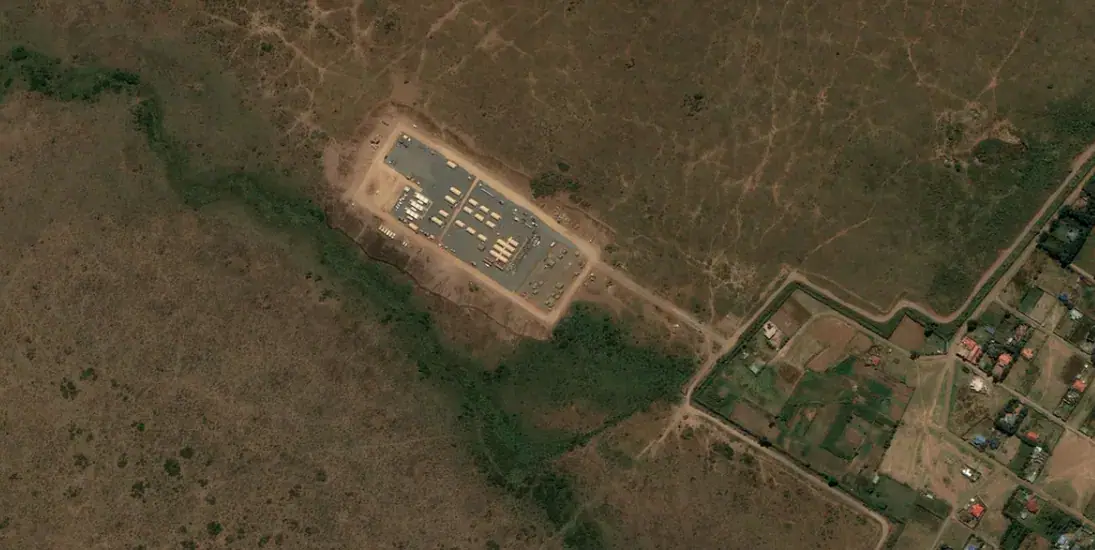
Kenya's High Court has ruled that the government breached parts of the constitution in allowing the construction of a US-backed Ebola quarantine facility at a military air base in central Kenya. The 50-bed facility, located inside Laikipia Air Base near Nanyuki, was intended to quarantine people exposed to Ebola, including US citizens. The court's decision was made in response to a legal challenge sparked by protests from Kenyans who feared the spread of the deadly disease from the Democratic Republic of Congo.
The court ordered that any further works at the quarantine facility be stopped until the government met certain conditions, including disclosing details contained in the agreement it entered with the US government to construct the facility. High Court Judge Patricia Nyaundi stated that the government ought to have disclosed the details in the agreement and sought public input before signing the deal. The judge's ruling emphasized that the people of Kenya, particularly the residents of Laikipia County, have been denied a meaningful opportunity to participate in decisions affecting their community.
The construction of the facility had sparked angry protests from Kenyans, who feared the spread of Ebola from the Democratic Republic of Congo, the epicentre of the latest outbreak. In July, seven American aid workers who had been in Congo to help tackle Ebola were quarantined at the Kenyan facility. The government has said the facility is meant to support Ebola preparedness and to isolate or quarantine people exposed to the virus as part of wider public health contingency planning.
The High Court had previously temporarily suspended the facility's construction in late May and later found Health Minister Aden Duale in contempt for failing to comply with orders halting construction. Duale later told the court he had ordered an immediate halt to construction and related activity at the site. However, the court's latest ruling has raised questions about the legitimacy of the facility and the government's handling of the project.
Kenya reported its first imported case of the Bundibugyo Ebola strain in early October in a traveller who had arrived from Congo via Uganda. As of mid-November, the country had recorded two deaths and seven other cases, all of whom recovered. The government has been working to contain the outbreak, and the 42-day countdown to declaring the outbreak over began on November 11 after the last patient was discharged.
The court's ruling has significant implications for the government's public health contingency planning and its partnerships with international organizations. The government has not commented on the court's decision, but it is expected to review the ruling and determine its next steps. The US government, which provided backing for the quarantine facility, has also not commented on the court's decision.
The case highlights the challenges of balancing public health concerns with community engagement and constitutional obligations. The court's ruling emphasizes the importance of transparency and public participation in decision-making processes, particularly when it comes to projects that may have significant impacts on local communities.
Key points
- The Kenyan government breached the constitution in building the US-backed Ebola quarantine facility.
- The court ordered the government to disclose details of the agreement with the US government.
- The facility's construction was sparked by protests from Kenyans who feared the spread of Ebola.