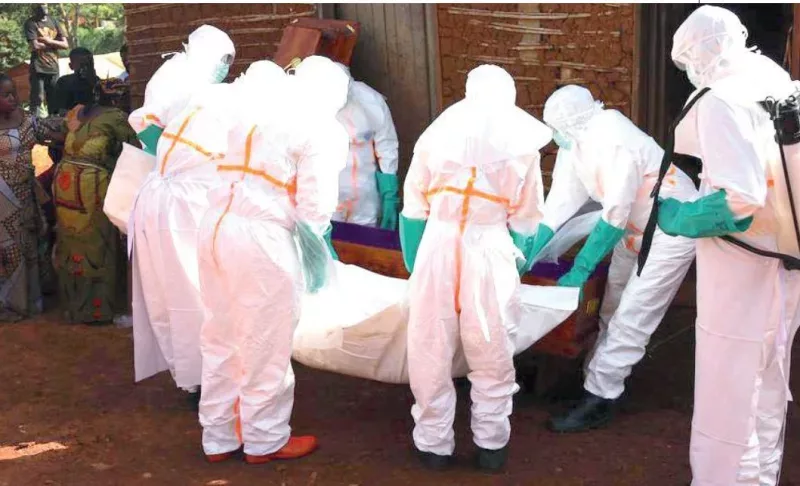
Kenya confirmed its first-ever Ebola case on October 6, 2026, when a patient who had traveled from the Democratic Republic of Congo (DRC) tested positive for Ebola Bundibugyo at Nairobi Hospital. The patient had fallen ill about a month earlier and traveled by road to Kampala before boarding a flight to Kenya on October 3. Health Cabinet Secretary Aden Duale said the government was quick to assure Kenyans that containment measures were already in place to deal with such contingencies.
One of Kenya's key advantages in containing the local spread of the virus is early detection of the confirmed case and prompt contact tracing to prevent people who may have been exposed from coming into contact with others. Early detection of Ebola is critical because identifying cases promptly allows health workers to isolate infected patients before they transmit the virus to family members, communities, or healthcare workers.
The government reported that 27 contacts of the deceased, including family members and healthcare workers who attended to the patient, had been traced and isolated. Efforts were ongoing to trace 23 passengers and four crew members on the flight the patient used from Uganda to Kenya. Identifying an index case early makes it easier for health authorities to trace, monitor, and quarantine people who may have come into contact with the patient during the period when transmission could have occurred.
Kenya's relatively developed healthcare infrastructure and public health network are another advantage in containing the outbreak. Strong laboratory capacity and disease surveillance systems can help diagnose cases early, trace contacts, and isolate infected people before the virus spreads more widely. The government said it had maintained a high level of alert for Ebola since the current Ebola Bundibugyo outbreak was reported in the DRC in May.
Kenya has several laboratories dedicated to Ebola testing, including the National Virology Reference Laboratory (NVRL), KEMRI Nairobi, KEMRI Kisumu, and two mobile laboratories deployed at the Busia border in Busia county and Lwakhakha border in Bungoma county. As of October 6, 2026, Kenya had screened 652,584 travelers and tested 267 samples across five laboratories. A total of 4,971 health workers had been trained at both national and sub-national levels on Ebola prevention and management.
Public awareness is another factor that could work in Kenya's favor in containing the outbreak. Kenyans have previously demonstrated a willingness to follow public health measures during disease outbreaks, as was evident during the Covid-19 pandemic. The Ministry of Health has urged the public to continue washing hands frequently or using alcohol-based hand sanitizers and to avoid close contact with sick people arriving from countries reporting active Ebola transmission.
The government has also put in place measures to prevent the spread of the virus, including strict transportation and burial protocols for people who die from Ebola. President William Ruto directed the National Security Council Committee to convene, assess the situation, and recommend measures necessary to safeguard the country. The government will continue to monitor the situation closely, take all necessary measures to protect the public, and keep the country informed of any further developments.
Key points
- Early detection and contact tracing give Kenya an advantage in containing the local spread of Ebola.
- Kenya's developed healthcare infrastructure and public health network support its ability to diagnose and respond to Ebola cases.
- Public awareness and cooperation will be crucial in preventing the spread of Ebola in Kenya.