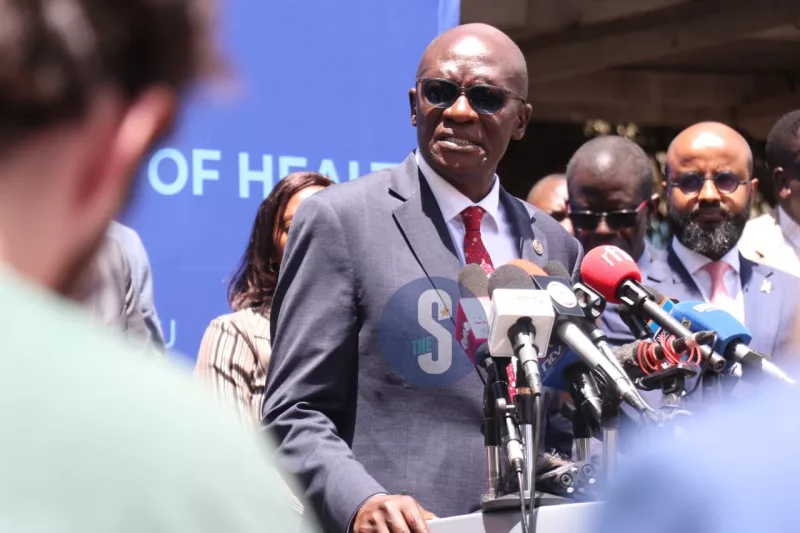
Kenya's Ministry of Health director general Patrick Amoth has revealed that the country's first Ebola patient may have passed through airport screening because the medication the patient was taking could have masked some of the symptoms. The patient had been ill for about a month and had received treatment at several health facilities in the Democratic Republic of Congo (DRC) before travelling to Kenya through Uganda.
According to Amoth, the patient could still have passed through the screening process, particularly because he had been under treatment. Amoth stated that it is potentially possible that some of the medications the patient was taking could have masked some of the symptoms, giving a false positive screening. This allowed the patient to pass through the system.
The patient’s decision to go directly to the hospital indicated that he was aware that he was unwell. Amoth said the government was considering isolation facilities in both public and private health facilities because Ebola posed a public health threat. The patient reportedly died while receiving treatment at the Nairobi Hospital.
Health Cabinet Secretary Aden Duale said the patient underwent normal public health screening at the Port Health facility at Jomo Kenyatta International Airport (JKIA) before proceeding through immigration. He was then transported directly from JKIA to Nairobi Hospital by a relative and a friend. At the hospital, the patient was quickly isolated in a separate room at the Accident and Emergency area.
The patient presented with fever, chills, intense fatigue, weakness, muscle pain, painful swallowing, a sore throat, and bleeding under the skin at the injection site. Based on the presentation and history of travel to DRC, the doctor collected a sample for testing, which turned positive for Ebola. The patient was given supportive treatment but died at around 11:30 pm on Monday.
Amoth said people identified as contacts would remain in isolation for up to 21 days, which is the maximum incubation period for Ebola. The incubation period for Ebola is from two to 21 days, and therefore the isolation will be able to take place up to 21 days. After that, a test will be done to ascertain that they are negative.
Anyone in isolation who develops symptoms would be classified as a case and transferred to an Ebola treatment unit for care. The facility where the patient was treated had previously been selected for Covid-19 treatment and had the necessary facilities to manage the patient. Key points: - Medication taken by the Ebola patient may have masked symptoms, allowing him to pass airport screening. - The patient died while receiving treatment at Nairobi Hospital. - Contacts of the patient will remain in isolation for up to 21 days.