Kenya's inaugural Ebola burial took place at Lang'ata Cemetery on October 6, 2026, after a 40-year-old patient who arrived from the Democratic Republic of Congo via Uganda died. The patient was a Kenyan national who had traveled to the DRC and returned to Kenya via Uganda. The burial was conducted under health precautions, but observers noted differences from World Health Organization (WHO) safe-and-dignified burial guidelines.
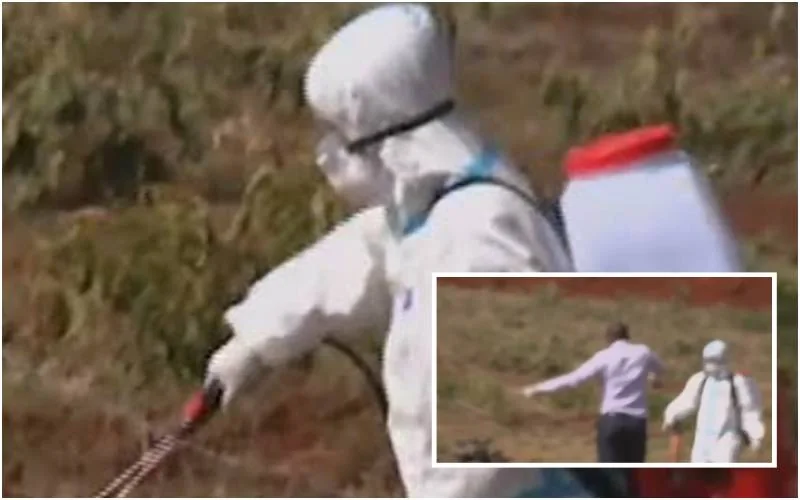
The burial process involved health workers who wore varying levels of protective gear. One individual wore a full hazmat suit, while another wore only a shirt, trousers, gumboots, and a face mask. This contrasted with WHO's requirement for full personal protective equipment (PPE), including coveralls, impermeable aprons, and double gloves. The observed deviations have sparked debate over whether Kenya followed WHO protocols fully or introduced alternative measures for its first Ebola case.
According to WHO guidance, families of Ebola victims must be fully informed and give formal consent before burial begins. However, reports indicate that the family of the deceased was not allowed to view the body prior to interment. Only two officials were seen after the body had been lowered into the grave, and one of them wore thinner rubber gloves rather than the heavy-duty outer gloves specified by WHO.
Despite the deviations, some steps in the burial process aligned with WHO recommendations. Health workers disinfected the body before wrapping it in multiple layers of protective material and transporting it to the cemetery. This step is in line with WHO's recommendations for decontamination. The vehicle that carried the deceased was also cleaned and disinfected after use, complying with WHO's rules.
After the burial, the hazmat-suit wearer removed his equipment layer by layer and set it on fire on site, while a second worker washed his gumboots in a nearby water tank. This reflects WHO's requirement for PPE disposal and decontamination. The same hazmat-clad official later sprayed disinfectant on the interior and exterior of the vehicle that had carried the deceased.
The burial process was conducted by a team of health officials who followed some of the national protocols for Ebola cases. The Kenyan government has since faced scrutiny over the deviations from WHO guidelines. The incident has raised questions about the country's preparedness to handle Ebola cases and its adherence to international health protocols.
The Kenyan Ministry of Health has not publicly commented on the burial process or the deviations from WHO guidelines. However, the incident has sparked a national conversation about the country's Ebola preparedness and response. The government has assured the public that it is taking steps to strengthen its response to Ebola cases and to ensure that it is better prepared to handle future outbreaks.
Key points
- The burial of Kenya's first Ebola victim at Lang'ata Cemetery deviated from WHO safe-and-dignified burial guidelines.
- The deviations included limited team size, incomplete PPE, and lack of family consent.
- The incident has sparked scrutiny of national protocols and raised questions about Kenya's preparedness to handle Ebola cases.